
When people search for symbolism vs metaphor, they usually want a plain answer, not a lecture. They want to know whether these terms mean the same thing, why teachers and readers sometimes use them loosely, and how to tell them apart in a real sentence, poem, story, or film.
The short version is that both are tools for meaning beyond the literal. But they do that job differently. A metaphor makes one thing understood in terms of another. Symbolism gives an object, image, color, character, or repeated detail a larger meaning that grows through context.
That difference matters in modern U.S. culture because Americans meet these terms everywhere: in school reading, songwriting, movie breakdowns, political language, sports talk, advertising, and social media explainers. People often use the words interchangeably in casual speech, but in close reading and careful writing, the distinction helps.
Quick Answer
In modern U.S. usage, symbolism vs metaphor usually comes down to this: a metaphor compares one thing to another to help you see it differently, while symbolism gives a thing a larger meaning beyond itself. A metaphor often works in a line or phrase, while symbolism usually depends more on context, repetition, and the larger work.
TL;DR
- Metaphor is mainly comparison.
- Symbolism is mainly representation.
- Symbols usually need context.
- Metaphors can work instantly.
- The two sometimes overlap.
- Not every repeated image is a symbol.
What people usually mean when they ask about symbolism vs metaphor
Most readers are not really asking for a technical debate. They want a usable distinction. In everyday English, a metaphor is a figure of speech that treats one thing as another to suggest a likeness. “Time is money” is the classic example. No one thinks time is literally cash. The point is to make an abstract idea easier to grasp through a more familiar one.
Symbolism works differently. A symbol is usually a thing you can point to: a rose, a road, a ring, a storm, a flag, a doorway, a color, a bird, a broken window. That thing still exists literally in the story or image, but it also suggests a larger idea. The larger meaning may be emotional, cultural, political, religious, or thematic.
So the key question is not “Which one is deeper?” It is “What kind of meaning-making is happening here?” Is the language asking you to see one thing through another thing? That leans metaphor. Is a concrete detail carrying broader meaning within a larger pattern? That leans symbolism.
The shortest workable distinction: representation vs comparison
The cleanest rule is this: metaphor compares; symbolism represents. That rule is not perfect, but it is useful. A metaphor makes an imaginative identification or fusion between two things. A symbol stands for, points toward, or gathers meaning around something larger than itself.
Take a simple example. If someone writes, “Her anger was a storm,” that is a metaphor. The sentence compares anger to a storm in order to make it vivid. But if a novel keeps returning to storms whenever a family is about to break apart, the storm may become symbolic. It is no longer just one sharp comparison. It has become a recurring carrier of meaning inside the work. This kind of context-based buildup is exactly why good teaching materials warn that symbols must be supported by the text around them.
For most readers, that is the best starting point. Metaphor often lives in phrasing. Symbolism often lives in structure, pattern, and interpretation.
Why symbolism usually depends on context, repetition, and buildup
A symbol rarely comes with a label attached. That is why symbolism is so often overread. Readers see an object, assume it must “mean something,” and jump too fast. In practice, symbols are usually established by emphasis, repetition, placement, or the way the rest of the work keeps returning to them.
Context matters because many symbols are not fixed across all settings. A rose can suggest love, secrecy, beauty, transience, or even political identity depending on the text and tradition. A flag can suggest national belonging, sacrifice, state power, protest, grief, or contradiction depending on who uses it and why. Treating symbols like one-word dictionary entries usually flattens them.
A practical way to spot symbolism is to ask:
- Does this image or object return more than once?
- Does the work give it unusual emphasis?
- Does its meaning deepen as the story continues?
- Does it connect to the work’s bigger themes?
If the answer is yes to several of those questions, you may be dealing with symbolism rather than a one-off image. That is also why symbolism often feels less immediate than metaphor. You usually need more of the work before the meaning settles.
Why metaphor often works faster and more directly
Metaphor is usually quicker. It can do its job in a single line because its power comes from an act of comparison. Traditional literary definitions describe metaphor as saying one thing in terms of another without using “like” or “as.” Britannica goes further and describes metaphor as a kind of identification or fusion that creates a new mental picture.
That speed is part of why metaphor shows up so often in everyday American speech. People say someone “carried the team,” “hit a wall,” “spiraled,” “blew up,” or “has baggage.” These expressions are not just decorative. They make abstract or emotional situations feel concrete. In cognitive-linguistic research, this broader pattern helped fuel the influential argument that metaphor is not only a literary device but also a basic way people structure thought. That view is important, though it is broader than the narrower definition many students first learn in school.
So metaphor is often the better tool when a writer wants compression, immediacy, and force. Symbolism is often the better tool when a writer wants slow accumulation and layered meaning.
Where the two overlap and why people confuse them
People confuse these terms because both move beyond literal description. Both can feel layered. Both can carry emotional and thematic weight. And in some cases, the same image can work as both.
For example, a poet may call hope “a bird.” That is metaphorical because hope is being understood through the image of a bird. But if a bird keeps appearing across a poem, story, or film and starts gathering broader meaning about freedom, fragility, spirit, or escape, it can also become symbolic. The categories overlap because literature is not a filing cabinet. It is normal for one device to feed another.
Here is the simplest side-by-side comparison:
| Feature | Metaphor | Symbolism |
| Main action | Compares one thing to another | Gives a thing larger meaning |
| Usual scale | Phrase, line, or short passage | Image, object, character, motif, or pattern |
| Speed | Often immediate | Often develops over time |
| Depends on context? | Yes, but less heavily | Usually yes, strongly |
| Best question to ask | “What is being compared?” | “What larger meaning gathers here?” |
The overlap is real, but the center of gravity differs. Metaphor usually starts with comparison. Symbolism usually starts with representation and grows through context.
How these ideas developed over time
The basic distinction is old, even if the exact classroom language changed over time. Metaphor comes out of long traditions of rhetoric and poetics in which figurative speech was studied as a craft. Symbolic reading also has deep roots, especially in literary, religious, and artistic interpretation, where visible things were often treated as carriers of larger meaning.
Later, the word Symbolism gained a more specific historical meaning through the late nineteenth-century French-led literary and artistic movement called Symbolism. That movement favored suggestion, indirectness, and images that pointed beyond plain statement. This matters because some modern readers hear “symbolism” and think of the device in general, while others mean that specific movement. They are related ideas, but not the same thing.
In American classrooms today, the older literary-device meaning is usually the one in play. Students are more likely to hear “find the symbolism” in a novel or “explain the metaphor” in a poem than to study Symbolism as a European movement unless they are taking a specialized literature or art course. That is one reason the everyday distinction has become so practical and stripped-down.
How Americans usually encounter symbolism and metaphor now
In the United States, many people first meet these terms in middle school or high school English. Symbolism often enters through novels, short stories, and film discussion. Metaphor often enters through poetry, speeches, song lyrics, and short examples in grammar or literature lessons. The classroom setting shapes how Americans think about both terms: symbolism feels like something you “track,” while metaphor feels like something you “spot.”
Outside school, metaphor is everywhere in public talk. Politics uses it. Sports uses it. Therapy language uses it. Work language uses it. Americans say a campaign “gained momentum,” a market “tanked,” a friendship “hit a rough patch,” or a person is “guarded.” These are not usually studied as poetry, but they show how metaphor helps make social and emotional life speakable.
Symbolism also shows up in ordinary U.S. life, but often through images rather than phrases. Think of national symbols, school mascots, wedding colors, memorial flowers, protest signs, or recurring visual motifs in film and television. Here again, context decides the meaning. The same image can feel patriotic in one setting, ironic in another, and critical in a third. That is why symbolism often attracts stronger disagreement in public interpretation.
Easy tests that help, and the limits of those tests
If you are trying to tell the difference quickly, a few tests help.
Test 1: Can you phrase it as a comparison?
If the line clearly treats one thing as another, metaphor is probably involved.
Test 2: Does meaning accumulate across the whole work?
If the image keeps returning and deepening, symbolism is more likely.
Test 3: Would the meaning disappear without context?
If yes, you may be dealing with symbolism. Symbols often need the larger frame.
Test 4: Is this a sentence-level effect or a work-level pattern?
Sentence-level effects often point to metaphor. Work-level patterns often point to symbolism.
Still, these tests are only guides. Good writing does not always stay inside neat borders. A single image can start as a metaphor and become symbolic through repetition. Or a symbol can be introduced through metaphorical language. The safest habit is to describe what the text is doing before you rush to label it.
Common mistakes, oversimplifications, and bad habits
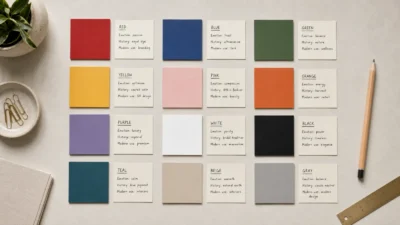
The biggest mistake is treating symbols as fixed codes. Readers often learn a few broad associations early on, such as “red means passion” or “light means hope,” then apply them everywhere. But respected teaching resources stress that symbol meaning must be established by the work itself. A red object in one story may suggest love; in another, danger; in another, shame or warning.
Another mistake is assuming symbolism is automatically deeper than metaphor. It is not. Some metaphors carry immense emotional and philosophical force in very little space. Some symbols are obvious and thin. The value comes from how well the device works, not from the label.
A third mistake is over-decoding. Not every object is symbolic. Not every repeated detail is a clue. Sometimes a chair is a chair, a storm is weather, and a road is just a road. Careful reading means building a case from emphasis, placement, and pattern, not treating literature like a secret codebook. That is where internet explainers and rushed homework habits often go wrong.
A better way to read and use both devices
A better approach is to start with function. Ask what the writer or speaker gains by choosing this image, phrase, or recurring detail. Does the language sharpen perception through comparison? That points toward metaphor. Does a concrete thing gather larger meaning over time? That points toward symbolism.
Then ask what evidence supports your interpretation. In reading, that means looking for repetition, contrast, placement, tone, and surrounding language. In writing, it means choosing the tool that fits your purpose. Use metaphor when you want speed and force. Use symbolism when you want resonance that builds. Use both when the work can sustain both.
That method is more useful than memorizing rigid formulas. Literature, film, speeches, and even everyday talk are messy in productive ways. The goal is not to win a labeling contest. The goal is to explain how meaning is being made.
FAQs
Is symbolism the same as metaphor?
No. They overlap, but they are not the same tool. A metaphor mainly compares one thing to another, while symbolism gives a concrete thing a larger meaning that usually depends more on context and pattern.
Can a metaphor become a symbol?
Yes, sometimes. An image may begin as a metaphor in one line and then become symbolic if the work keeps returning to it and building more meaning around it.
Which is more common in everyday American speech?
Metaphor is usually more obvious in everyday speech because people constantly explain feelings, work, politics, and relationships through comparison. Symbolism also appears in American life, but more often through visual culture, public imagery, and repeated motifs than through quick conversational phrases.
Is symbolism more important in novels and metaphor more important in poetry?
Not strictly. Poetry uses both, and novels use both. The difference is less about genre and more about scale: metaphor often lands quickly, while symbolism often develops across scenes, chapters, or repeated images.
How should students avoid overreading symbolism?
Start with evidence inside the text. Look for repetition, emphasis, unusual placement, and links to larger themes before claiming an object is symbolic.
Does symbolism always have one correct meaning?
Usually not. Some symbols are fairly stable within a culture or text, but many remain partly open to interpretation. The strongest readings are the ones that stay close to context instead of acting like a symbol has one eternal definition.
Conclusion
The clearest way to understand this topic is to stop asking which term sounds more literary and ask what kind of meaning is being made. Metaphor works through comparison. Symbolism works through representation, context, and buildup. That is the core difference most readers need.