People have linked animals to human emotions, fears, strengths, and identity for thousands of years. Today, the phrase “animal energies meaning” is often used to describe the symbolic traits people connect with certain animals, such as courage from lions, intuition from owls, or resilience from wolves.
In the United States, these meanings appear everywhere. They show up in tattoos, sports mascots, meditation culture, personality quizzes, fashion, and social media. Some people treat animal symbolism as spiritual guidance. Others see it more as psychology, storytelling, or personal reflection.
The idea itself is not new. But the modern language around “animal energies” blends many influences together, including folklore, Indigenous traditions, Jungian psychology, self-help culture, and internet spirituality. That mix is why the topic can feel meaningful to some people while also raising questions about accuracy and cultural respect.
Quick Answer
Animal energies usually symbolize personality traits, emotional qualities, or spiritual ideas associated with certain animals. In modern American culture, people often use these meanings for self-reflection, identity, or spirituality, although many interpretations come from folklore, modern spiritual movements, and cultural adaptation rather than one universal tradition.
TL;DR
- Animal symbolism reflects human storytelling and observation.
- Meanings vary across cultures and religions.
- Modern “animal energies” are often highly personalized.
- Many symbolic traits come from visible animal behavior.
- “Spirit animal” language can be culturally sensitive.
- Most interpretations are symbolic, not scientifically proven.
What People Mean by “Animal Energies”
When people talk about animal energies, they are usually referring to symbolic qualities connected to animals. These qualities may represent emotions, personality traits, instincts, or life stages.
For example:
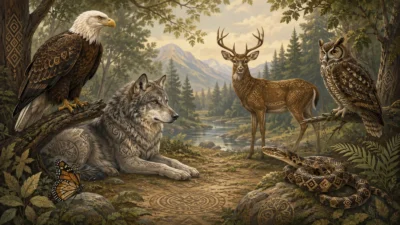
- Wolves often symbolize loyalty or independence.
- Owls are commonly linked to wisdom or intuition.
- Bears are associated with protection and strength.
- Butterflies often represent transformation or personal growth.
In modern U.S. culture, the phrase is especially common in wellness spaces, astrology communities, tarot discussions, and online spiritual content. Some people use it casually. Others connect it to spiritual practice or meditation.
Importantly, “animal energy” does not have one fixed meaning across history. It is a broad modern phrase that combines many older symbolic traditions into a more personal style of interpretation.
Why Humans Attach Meanings to Animals
Humans have always watched animals closely. Early societies depended on them for survival, food, warning signs, labor, and storytelling. Over time, people began assigning symbolic meaning to visible animal traits.
A hawk’s sharp vision could become a symbol of awareness. A fox’s stealth might represent cleverness. A turtle’s slow movement could suggest patience or stability.
These associations usually developed from three major influences:
- Observation of animal behavior
- Religious or mythological storytelling
- Human emotional projection
Psychologists sometimes describe this process as symbolic projection. People recognize qualities in animals that reflect human emotions or social ideals. In that sense, animal symbolism often says as much about humans as it does about animals themselves.
This helps explain why the same animal can mean very different things in different cultures. Snakes, for example, may symbolize healing, danger, wisdom, temptation, renewal, or protection depending on the cultural setting.
Animal Energies in Ancient Traditions and Folklore
Animal symbolism appears across ancient cultures, but the meanings were never fully universal.
Many Indigenous cultures across North America also developed rich systems of animal symbolism and spiritual connection. However, these traditions are highly specific to individual nations and communities. They are not one single belief system.
That distinction matters because modern internet discussions often flatten many traditions into generalized “spirit animal” language. Historically, some animal-related spiritual practices involved ceremony, kinship systems, moral teaching, or sacred responsibilities rather than casual personality labels.
Animal symbolism also appeared in medieval Europe through proverbs, religious stories, and heraldry. Lions symbolized royalty and courage. Ravens could represent prophecy or death. Deer were often linked to purity or spiritual longing in Christian imagery.
Over time, these symbolic meanings mixed together through trade, migration, literature, and modern media.
How Animal Symbolism Changed in Modern American Culture
In the United States today, animal symbolism is often less connected to formal religion and more connected to personal identity.
During the late 20th century, New Age spirituality helped popularize ideas like power animals, spirit guides, and energy alignment. Around the same time, psychology books and self-help culture encouraged people to interpret symbols as tools for personal growth.
The internet accelerated this trend. Social media made animal symbolism more visual, shareable, and personalized. People began identifying with symbolic animals almost like personality categories.
That modern version tends to focus on:
- Self-discovery
- Emotional healing
- Empowerment
- Individual identity
- Intuition and mindfulness
This is also why animal symbolism appears heavily in tattoo culture, branding, fitness culture, and motivational media.
At the same time, modern interpretations often simplify older traditions. A symbolic meaning that once belonged to a specific ceremony or cultural context may now appear as a generalized online list.
Common Animal Energies and Their Popular Meanings
Some animal meanings appear repeatedly in modern American symbolism because they connect easily to recognizable behavior or emotional ideas.
| Animal | Common Modern Meaning | Why People Associate It |
|---|---|---|
| Wolf | Loyalty, instinct, independence | Pack behavior and survival imagery |
| Owl | Wisdom, intuition, mystery | Nocturnal behavior and watchfulness |
| Bear | Strength, protection, resilience | Physical power and protective behavior |
| Butterfly | Transformation, growth | Visible metamorphosis |
| Snake | Renewal, danger, healing | Shedding skin and religious symbolism |
These meanings are not fixed facts. They are cultural interpretations that evolved through stories, religion, observation, and modern media.
For example, wolves are often romanticized in American culture as symbols of freedom and authenticity. Real wolves, however, are social predators with complex pack behavior that does not always match the lone-wolf stereotype common online.
Why Certain Animals Become Emotional Symbols
Animals often become symbols because they help people describe emotions that are difficult to explain directly.
A person who feels emotionally guarded may identify with a turtle. Someone recovering from hardship may connect with the phoenix or butterfly. A hawk may symbolize focus during uncertain times.
This emotional connection works partly because animals feel both familiar and mysterious. Humans recognize shared instincts like fear, protection, nurturing, aggression, and survival.
Certain symbolic patterns also repeat because people naturally respond to visible traits:
- Large predators often symbolize power.
- Birds commonly represent freedom or perspective.
- Nocturnal animals may suggest mystery or intuition.
- Animals that transform physically often symbolize change.
Modern psychology sometimes treats these symbols as archetypes rather than literal spiritual forces. In that view, animals become mental shortcuts for emotional experiences and identity.
Animal Energies in Tattoos, Fashion, and Branding
Animal symbolism is deeply woven into modern American visual culture.
Tattoos are one of the clearest examples. People often choose animal tattoos to represent personal identity, emotional survival, family loyalty, or transformation.
Common examples include:
- Wolves for independence or loyalty
- Lions for confidence and leadership
- Butterflies for recovery and change
- Eagles for patriotism or freedom
- Snakes for rebirth or complexity
Brands and sports teams also rely heavily on animal symbolism because animals communicate emotion quickly. A bear can suggest toughness. A falcon can imply speed. A bull may signal aggression or determination.
Fashion and home decor use similar symbolism. Owl imagery is often marketed as intellectual or mystical. Deer imagery may signal calm natural aesthetics. Snake designs can imply danger, glamour, or rebellion depending on context.
These modern uses are usually aesthetic and emotional rather than religious.
Dreams, Omens, and Spiritual Interpretations
Many people interpret repeated animal encounters as meaningful signs. This idea appears in folklore, dream interpretation traditions, and modern spirituality.
For example, someone may believe:
- A hawk crossing their path symbolizes clarity
- A butterfly signals personal transformation
- A raven represents warning or transition
- A deer encounter reflects gentleness or peace
These interpretations are belief-based rather than scientifically established. Different cultures often assign very different meanings to the same animal.
Dream symbolism works similarly. In psychology, dream animals are sometimes interpreted as reflections of emotion, fear, instinct, or memory. Spiritual interpretations may instead view them as guidance or messages.
Neither framework has universal agreement. That is why it helps to approach animal omens and dream meanings carefully rather than treating them as fixed predictions.
Cultural Sensitivity Around “Spirit Animals”
The phrase “spirit animal” became extremely popular online during the 2010s. People began using it casually to describe favorite animals, personality traits, or even celebrities and hobbies.
However, many Indigenous people and scholars have criticized this casual usage because some traditions involving spirit beings, animal guides, or clan relationships are sacred and culturally specific.
Not every Indigenous nation uses the same beliefs, and many practices are tied to ceremony, ancestry, or community responsibility rather than entertainment or personality quizzes.
That does not mean people must avoid all animal symbolism. Animal symbolism exists across many cultures worldwide. But it does mean people should avoid treating sacred traditions as interchangeable internet aesthetics.
In the United States today, many people instead use terms like:
- animal symbolism
- animal archetype
- symbolic animal
- personal animal connection
Those phrases are often seen as broader and less culturally specific.
Are Animal Energies Meant to Be Taken Literally?
That depends on the person and tradition involved.
Some people view animal energies spiritually. They may believe animals carry guidance, emotional lessons, or intuitive meaning.
Others approach the idea symbolically rather than supernaturally. In this view, animal meanings work more like metaphors that help people understand emotions, goals, fears, or identity.
There is no scientific evidence proving that animals transmit symbolic “energy” in a measurable supernatural sense. But symbolism itself clearly affects human psychology, storytelling, identity, and emotional memory.
That is part of why these meanings continue to feel real and emotionally important to many people even without scientific proof.
Why Animal Symbolism Still Matters Today
Animal symbolism survives because it gives people a simple language for complicated emotions.
A person may not easily explain grief, confidence, fear, resilience, or transformation. But they may immediately connect with the image of a bear, wolf, snake, or butterfly.
Modern American culture also encourages symbolic identity. People build meaning through tattoos, online identity, fashion, wellness culture, and storytelling. Animals fit naturally into that process because they already carry strong emotional associations.
At the same time, modern conversations around animal energies are becoming more careful. More people now recognize the difference between respectful symbolism, commercial spirituality, and sacred cultural traditions.
That shift matters because symbols are never completely neutral. They carry history, emotion, and cultural context with them.
FAQs
What does animal energy mean spiritually?
Spiritually, animal energy usually refers to symbolic traits people associate with certain animals, such as courage, intuition, protection, or transformation. These interpretations vary widely between traditions and are generally based on belief rather than scientific evidence.
Is animal energy the same as a spirit animal?
Not exactly. “Animal energy” is often used broadly and casually, while “spirit animal” may refer to culturally specific spiritual traditions, especially within some Indigenous communities. Many people now prefer less culturally loaded language like “animal symbolism” or “animal archetype.”
Why do people identify with certain animals?
People often connect with animals that reflect qualities they admire, struggle with, or emotionally recognize in themselves. Psychology, storytelling, cultural influence, and personal experiences all shape these connections.
What animal symbolizes strength most often?
In the United States, bears, lions, wolves, and eagles are commonly linked to strength. However, the exact meaning depends on cultural context, since different traditions associate strength with different animals.
Are animal energies scientifically proven?
No. There is no scientific evidence proving supernatural animal energies. The symbolic and psychological impact of animals on human thought and emotion, however, is well documented in culture, storytelling, and identity formation.
Why are animal tattoos so popular?
Animal tattoos often help people express identity, survival, independence, protection, or personal transformation. The symbolism feels visually immediate, which makes animal imagery emotionally powerful in tattoo culture.
Can the same animal have positive and negative meanings?
Yes. Snakes are a strong example. In some traditions they symbolize healing and renewal, while in others they represent danger, temptation, or fear. Symbolic meaning changes across cultures and historical periods.
Conclusion
Animal symbolism remains popular because it helps people translate emotion into imagery. Whether someone sees a wolf as loyalty, a butterfly as change, or an owl as wisdom, those meanings usually come from a mix of storytelling, cultural memory, visible animal traits, and personal interpretation.