Green is one of the easiest colors to recognize, but one of the hardest to reduce to one meaning. At its simplest, green color meaning symbolism begins with nature: leaves, grass, spring, gardens, and living things that keep growing.
In the United States, green also means money, permission, luck, freshness, health, and environmental concern. At the same time, it can suggest envy, sickness, poison, or inexperience. That mix is what makes green so useful in clothing, branding, home decor, tattoos, holidays, and everyday language.
The clearest meaning depends on where green appears. A sage green bedroom does not say the same thing as a neon green sneaker, a green road signal, a green ribbon, or green frosting on March 17. Context matters.
Quick Answer
In the United States, green color meaning symbolism most often points to nature, growth, renewal, money, health, luck, and permission to move forward. Historically, many of these meanings grew from green’s link to plants and spring, while U.S. money, St. Patrick’s Day, religion, fashion, and modern environmental language added more layers.
TL;DR
- Green most often means growth and renewal.
- In the U.S., green strongly suggests money.
- It can mean luck, health, or permission.
- Green also carries envy and sickness meanings.
- Religious meanings depend on the tradition.
- Shade and context change the interpretation.
What Green Most Commonly Means Today
Green’s most common modern meaning is life in motion. It suggests growth, renewal, freshness, and the natural world. People often read green as calm but not sleepy, hopeful but not loud, and clean without feeling empty.
That is why green appears so often in wellness brands, plant stores, grocery labels, financial products, outdoor clothing, and home interiors. It can make a space feel softer. It can make a package feel fresher. It can make a message feel connected to health or nature.
In everyday U.S. life, green often means:
- nature and the outdoors
- money and financial success
- safety, approval, or permission
- health, freshness, and balance
- luck, especially around St. Patrick’s Day
- envy, nausea, or inexperience in negative settings
No single meaning follows green everywhere. A green smoothie, a green sports jersey, a green wedding palette, and a green warning label all use the same color in different symbolic systems.
Why Green Became the Color of Life, Plants, and Renewal
Green’s strongest meaning comes from what people see outside. New leaves are green. Grass returns in spring. Many crops turn green before they ripen. For people who lived close to the land, green was not an abstract idea. It was a sign that life was returning, food was growing, and the season had shifted.
This is why green so easily became linked with fertility, recovery, youth, and renewal. The meaning did not have to be invented from scratch. It came from repeated observation.
Green also sits between yellow and blue on the color wheel. That middle position has helped people describe it as balanced or steady. But the deeper reason is simpler: green is the color many people associate with living landscapes.
Still, this does not mean green has one ancient meaning in every culture. A forest, a garden, a desert oasis, a rice field, and a city park do not carry the same emotional weight for everyone. The plant connection is widespread, but the interpretation changes with place, history, and use.
How Green Changes by Context
Green is a flexible color. It can feel gentle, expensive, playful, sacred, artificial, earthy, or unsettling depending on shade and setting.
| Context | Common Meaning | Why It Reads That Way |
| Leaves, gardens, parks | Growth, nature, renewal | Green is visually tied to plants and spring. |
| U.S. money | Wealth, ambition, finance | American currency made green a money color. |
| Road signals and icons | Permission, movement, approval | Green is used to indicate that action may proceed. |
| Pale or gray-green decor | Calm, softness, rest | Muted greens feel close to plants, stone, and herbs. |
| Bright neon green | Energy, artificiality, attention | The shade feels modern, bold, and highly visible. |
| Sickly yellow-green | Illness, unease, poison | The shade can resemble nausea, decay, or toxic warning. |
This is why a good interpretation starts with the object, not just the color. Ask what green is attached to. A green leaf, green cash, green skin in a cartoon, and a green gemstone invite different readings.
Green and Money in the United States
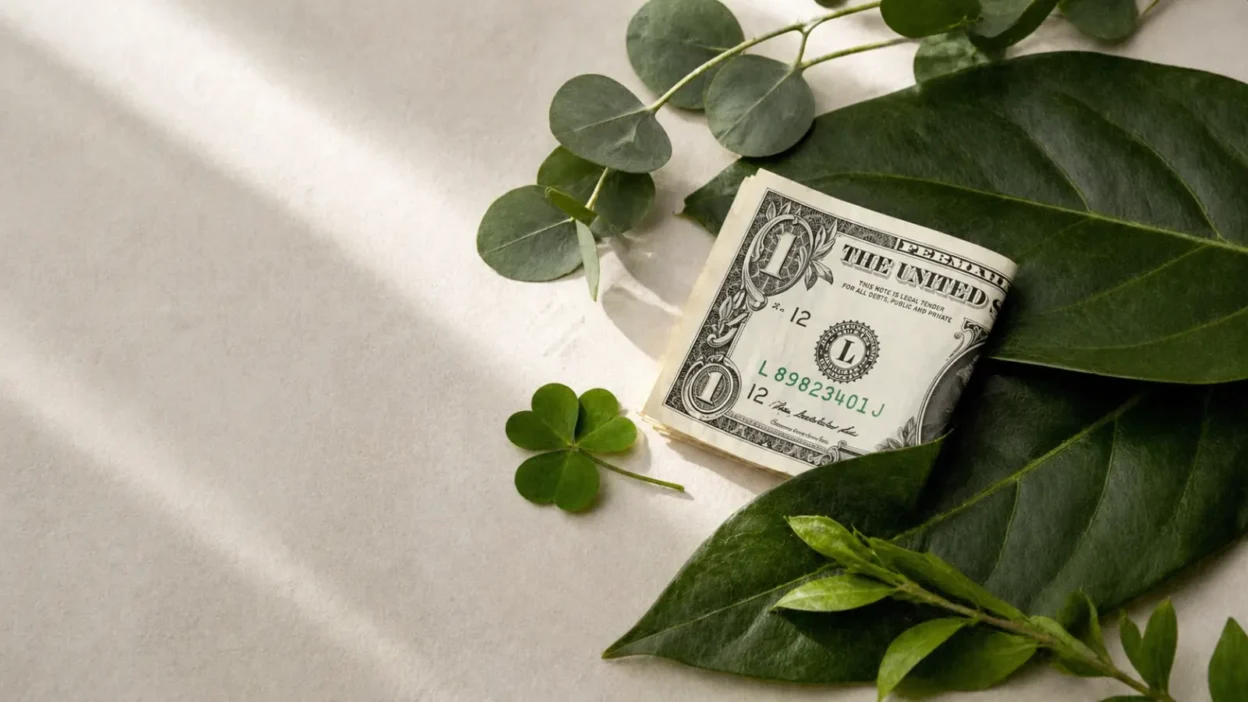
In the United States, green is almost impossible to separate from money. People call dollars “green,” “greenbacks,” and “cash.” This meaning is not only symbolic. It comes from the look and history of U.S. paper currency.
During the Civil War era, government paper notes printed with green backs helped make green part of American money language. Over time, that visual habit turned into a cultural shortcut. Green came to suggest buying power, business, savings, wealth, and financial ambition.
That is why green works so well in bank logos, budgeting apps, investment graphics, and sale signs. It can say “growth” in a financial sense as well as a natural one. A green arrow on a chart suggests improvement. A green label on a price tag can suggest a deal.
But green’s money meaning has two sides. It can suggest security, generosity, and opportunity. It can also suggest greed, materialism, or envy when the surrounding message is negative.
Green as Permission, Safety, and Forward Motion
Green also means “go.” In modern American life, people learn this meaning early through signal lights, buttons, check marks, app icons, and approval messages.
A green light at an intersection does not mean “nothing bad can happen.” It means movement is permitted within rules and conditions. That difference matters symbolically. Green often suggests permission, but not total freedom from responsibility.
This meaning appears in everyday speech. To “give the green light” means to approve a plan. A green check mark means something passed. A green status dot means a person or system is available.
This version of green is active. It is not only peaceful or natural. It says: continue, start, approve, advance.
Green, Luck, and St. Patrick’s Day in American Culture
For many Americans, green also means luck because of St. Patrick’s Day. In March, green shows up in clothing, parades, decorations, shamrocks, school activities, food dye, and city celebrations.
This meaning is partly Irish and partly Irish-American. In the United States, the holiday became a public celebration of Irish heritage, community pride, and festive belonging. Green became the color most people recognize first, even though the older history of the holiday is more complicated than party decorations suggest.
The shamrock adds another layer. It is a small green plant tied to Irish identity and Christian storytelling, but in U.S. popular culture it often becomes a general luck symbol. That is why green hats, green beads, four-leaf clovers, and leprechaun imagery get mixed together, even though they do not all come from the same source.
So green can mean luck, but usually in a holiday, folk, or decorative sense. It is not proof that green itself was treated as lucky in every culture or period.
Religious and Spiritual Meanings of Green
Green has important religious meanings, but they should be handled carefully. It is not respectful or accurate to say green means the same thing in all religions.
In many Christian churches, green is used during Ordinary Time. In that setting, it often suggests ongoing growth, steady life, and the long season of formation outside the major feast seasons. The meaning comes from liturgical practice, not from a vague idea that green is “spiritual” everywhere.
In Islamic contexts, green has a strong association with paradise, beauty, and blessed life, supported by sacred descriptions of green garments, cushions, and lush reward. It also appears in many cultural, artistic, and national settings across Muslim-majority societies. But it is still too simple to say every use of green by Muslims means the same thing.
In modern spiritual communities, green is often connected with the heart, compassion, healing, emotional balance, or personal renewal. Those meanings are real within those belief systems, but they are interpretations. They should not be presented as proven facts about the color itself.
The safest way to read green in a religious or spiritual setting is to ask which tradition, object, ritual, or community is involved.
The Negative Side of Green: Envy, Sickness, Poison, and Inexperience
Green is not only pleasant. It has a long negative side.
In English, green can mean envy. Someone may be “green with envy.” This does not mean the person literally turns green. It is a figure of speech that connects jealousy with an unhealthy emotional state.
Green can also suggest sickness. Cartoons often use green skin or a green face to show nausea. Yellow-green shades can feel uneasy because they are close to colors people associate with bile, decay, or illness.
There is also a real material history behind dangerous greens. Some vivid green pigments used in past centuries contained arsenic. They appeared in wallpaper, clothing, book covers, and decorative goods. This history explains why certain bright historical greens can carry an edge of glamour and danger.
Still, that does not mean green is inherently toxic. The danger came from specific materials, not from the symbolic color itself.
Green can also mean inexperience. A “green” worker, soldier, or driver is new and untested. This meaning likely comes from the idea of unripe fruit or young growth. It is not an insult in every case, but it can suggest someone still needs time to mature.
What Different Shades of Green Suggest
Shade changes the message. A deep green and a fluorescent green can feel almost unrelated.
- Sage green often suggests calm, softness, herbs, domestic comfort, and understated taste.
- Emerald green can suggest luxury, elegance, gemstones, richness, and formal style.
- Forest green feels outdoorsy, grounded, traditional, and connected to trees or wilderness.
- Olive green can suggest earthiness, military influence, utility, endurance, or muted fashion.
- Mint green often feels fresh, clean, sweet, youthful, or lightly nostalgic.
- Neon green suggests visibility, digital culture, speed, nightlife, rebellion, or artificial energy.
- Yellow-green can feel lively in spring settings, but sickly in horror, warning, or medical imagery.
These are not fixed rules. Fabric, lighting, surrounding colors, and cultural setting all change the effect.
Green in Branding, Decor, Fashion, Weddings, and Tattoos
Green is popular because it can carry several useful meanings at once. A brand can use it for freshness. A homeowner can use it for calm. A person can wear it to look bold, earthy, elegant, or relaxed.
In branding, green often appears in food, wellness, finance, gardening, outdoor gear, cannabis products, and eco-focused businesses. It can suggest nature, trust, freshness, savings, or ethical concern. The risk is that green can promise more than it proves, especially when a product looks natural but is not meaningfully better for people or the planet.
In home decor, green usually works as a comfort color. Soft greens can make rooms feel restful. Dark greens can feel cozy and dramatic. Bright greens can energize a space but may become overwhelming if used heavily.
In fashion, green changes with shade. Emerald can look formal. Olive can look practical. Neon can look intentionally loud. Sage can feel gentle and current without drawing too much attention.
In weddings, green often supports themes of growth, harmony, and new beginnings. It appears in foliage, bridesmaid dresses, invitations, table settings, and outdoor ceremonies. It usually works best as a living or grounding color rather than as a forced symbolic statement.
For tattoos, green can mean renewal, resilience, nature, healing, money, luck, or personal growth. The design matters more than the color alone. A green vine, snake, clover, eye, dragon, heart, or flame will not carry the same meaning.
Where Green Symbolism Gets Oversimplified or Misused
Green gets oversimplified in three common ways.
First, people treat it as universally positive. That misses envy, poison, sickness, greed, and inexperience. Green is hopeful in one setting and unsettling in another.
Second, people flatten religious meanings. Saying “green means spirituality” may sound harmless, but it can erase the specific meanings green has within different traditions. A liturgical vestment, a Qur’anic image of paradise, a meditation chart, and a decorative candle are not the same kind of symbol.
Third, green is often used to make products, policies, or lifestyles seem more environmentally responsible than they are. A green package, leaf icon, or nature-themed label can create a feeling of care without proving much. This is where symbolism becomes marketing.
The best reading of green stays grounded. Look at the shade, the object, the setting, the culture, and the purpose. Green can mean growth, but it can also be selling you the idea of growth.
FAQs
What does the color green symbolize most often?
Green most often symbolizes nature, growth, renewal, freshness, and life. In the United States, it also strongly suggests money, permission, luck, and health depending on context.
Is green a positive or negative color?
Green can be either positive or negative. It may suggest calm, prosperity, and renewal, but it can also suggest envy, sickness, poison, greed, or inexperience.
What does a green tattoo mean?
A green tattoo often points to growth, healing, resilience, nature, luck, or personal renewal. The exact meaning depends on the image, since a green clover, vine, snake, gemstone, or flame will each tell a different story.
What does green mean spiritually?
In many modern spiritual systems, green is linked with the heart, compassion, balance, and healing. Those are belief-based interpretations, so they should be understood within the practice or community using them.
Why is green associated with money in the United States?
Green is associated with money in the United States because American paper currency has long used green coloring, and Civil War-era notes helped popularize the term “greenbacks.” Over time, the color became a shortcut for cash, finance, savings, and wealth.
Why does green mean envy?
Green’s link to envy comes through language and metaphor, especially phrases like “green with envy.” It connects jealousy with an unhealthy or unsettled emotional state rather than with the color as a literal physical sign.
Is green a lucky color?
Green can be lucky in some U.S. contexts, especially around St. Patrick’s Day, shamrocks, clovers, and Irish-American celebration. Outside those settings, luck is only one possible interpretation, not a universal meaning.
Conclusion
Green is powerful because it sits between living nature and human culture. It can mean leaves, money, permission, luck, faith, healing, youth, envy, poison, or ambition depending on where it appears.