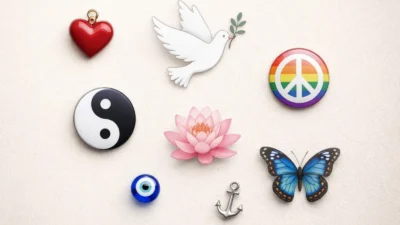
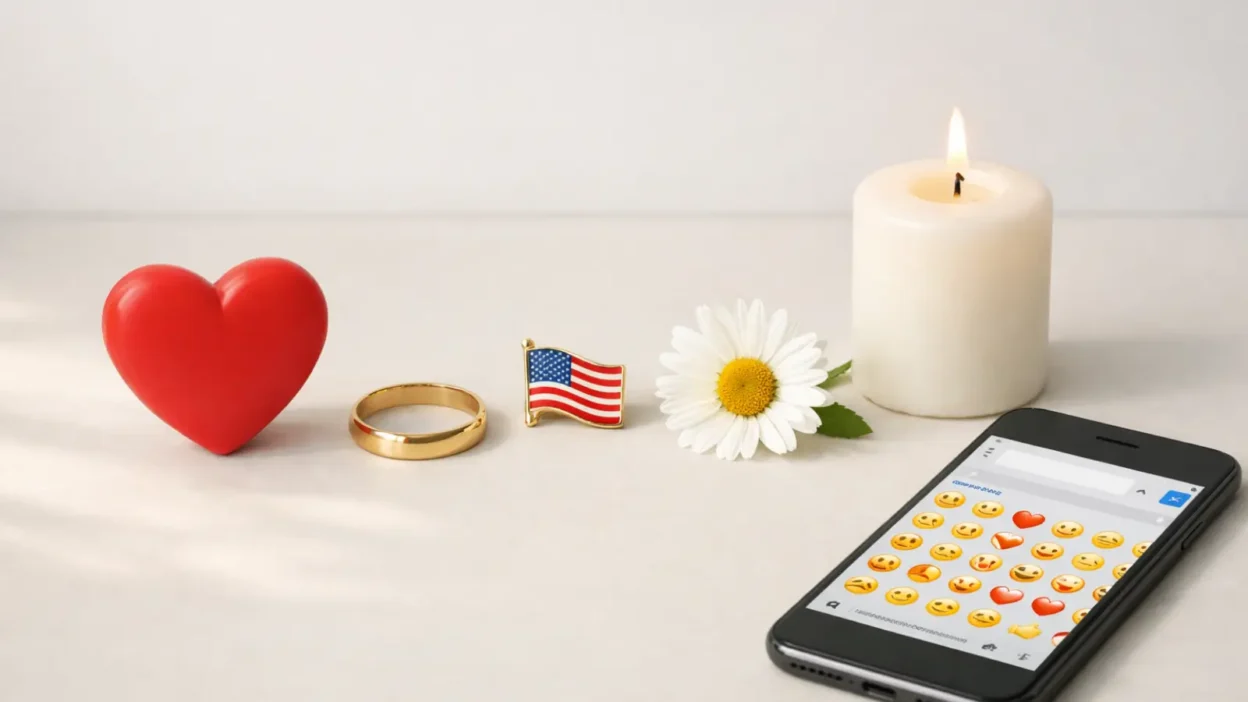
A symbolism guide helps explain one of the most ordinary parts of human life: we constantly give extra meaning to things. A heart can mean love. A flag can mean nationhood. A candle can suggest memory, prayer, or mourning depending on the setting.
That matters because symbols shape how people read art, religion, politics, fashion, and even text messages. They help people express ideas that are hard to say directly, but they can also confuse people when meanings change or travel across cultures.
In modern U.S. life, symbolism shows up everywhere. It appears in weddings, tattoos, team mascots, awareness ribbons, emojis, memorials, brand design, and online identity. The same symbol may feel warm and familiar to one group and loaded or inappropriate to another.
So the real question is not just “What does this symbol mean?” It is “Who uses it, in what setting, and why does that meaning make sense there?”
Quick Answer
A symbolism guide usually points to one main idea: symbols let ordinary images, objects, colors, and actions carry meanings beyond the literal. Today, people most often use symbolism to express identity, emotion, belief, memory, or social values, but those meanings come from shared history and context, not from a fixed rulebook.
TL;DR
- Symbols mean more than what they literally are.
- Meaning comes from culture, use, and repetition.
- One symbol can hold several meanings.
- Context matters more than internet lists.
- Sacred meanings are not the same as decor.
- Modern U.S. use often remixes older symbols.
What a symbolism guide is actually about
At its core, symbolism is the practice of using one thing to stand for something more than itself. Sometimes that meaning is obvious. A black armband at a funeral is meant to be read as mourning. Sometimes it is softer and more layered, like rain in a movie suggesting sadness, cleansing, or change.
A good guide does not treat symbols like secret codes. It treats them like cultural habits. People learn them from stories, religion, family life, schools, ceremonies, media, and repeated social use.
That is why symbols can feel natural even when they are not universal. Once a community keeps using the same image for the same idea, the link starts to feel stable. But it is still a link people built, not a law of nature.
What a symbol is, and what it is not
People often mix up symbols with signs, metaphors, logos, and decorative motifs. They overlap, but they are not identical.
A sign usually gives direct information. A stop sign tells drivers what to do. A symbol often carries a wider social or emotional meaning. The stop sign shape may also suggest caution or authority beyond the road itself.
A metaphor makes a comparison. A symbol can sit inside a metaphor, but it usually gains force through repeated use. A rose in one sentence may just be a flower. Across poems, courtship rituals, gifts, and visual culture, it can become a symbol of romance.
Here is a practical way to separate them:
| Term | What it does | Example | Main caution |
| Sign | Gives direct instruction or information | Exit sign | Usually functional first |
| Symbol | Points beyond the literal | Dove for peace | Meaning depends on context |
| Metaphor | Compares one thing to another | “Time is a thief” | Often works at sentence level |
| Logo | Marks identity or ownership | Company emblem | Not every logo becomes symbolic |
| Motif | Repeated element in a work | Recurring water imagery | Needs pattern, not one-off use |
This matters because not every object with meaning is a deep symbol. Sometimes a thing is just useful, decorative, or conventional. Good interpretation starts by asking whether the extra meaning is really supported.
Why humans use symbols in the first place
People use symbols because they compress meaning. A single image can carry emotion, memory, history, and social belonging all at once. That makes symbols efficient, but also powerful.
They also help groups hold together. Shared symbols give people a quick way to signal who they are, what they value, and what story they believe they belong to. National flags, wedding rings, school colors, and religious signs all do this in different ways.
There is also a psychological side. Symbols help people handle abstract ideas through concrete things. Love, sacrifice, loss, hope, freedom, and danger are hard to hold in the mind by themselves. A physical image gives the idea a shape.
That is one reason symbols show up so often around major life events. Birth, marriage, grief, initiation, graduation, and remembrance usually involve objects, colors, gestures, or clothing that stand for more than their practical use.
Where symbolic meanings come from
Symbols do not appear from nowhere. Most meanings grow from a few common pathways.
Some come from function. A key can symbolize access because keys open things. A crown can symbolize power because crowns mark rulers.
Some come from visible traits. A lion may symbolize courage because people associate it with strength and dominance. A dove may symbolize peace because of gentleness, religious tradition, and long artistic repetition.
Some come from stories and religion. Once a symbol enters scripture, myth, national memory, or a famous artwork, its meaning can become much more stable within that tradition.
Some come from social repetition. A pink ribbon, for example, does not “naturally” mean one thing. It means what public campaigns, institutions, and communities taught people to see in it.
Most symbols actually develop through more than one path at once:
- physical traits
- practical use
- ritual use
- storytelling
- political power
- later media reuse
That mix explains why symbolic meaning often feels deep. It is usually layered, not random.
Why the same symbol can mean different things
One of the biggest mistakes in popular symbolism writing is the promise of one fixed meaning. In real life, symbols travel. When they travel, they change.
A snake is a good example. In some settings it may suggest danger, betrayal, or fear. In others it can suggest healing, wisdom, rebirth, or sacred power. Those meanings come from different stories, religious traditions, and emotional reactions.
Color works the same way. White is often linked in the United States with weddings, cleanliness, peace, and simplicity. In other settings, white may be tied more strongly to mourning or ritual purity. Neither reading cancels the other. They belong to different systems of meaning.
Time changes symbols too. A symbol may begin as sacred, become decorative, then turn commercial or political. Or it may start as an everyday object and later become charged by a major event.
That is why context should come before certainty. You need to know the setting, the community, and the period before claiming what a symbol means.
Symbolism in religion, ritual, and sacred life
Religious symbols deserve slower reading than casual internet lists usually give them. In living traditions, symbols are not just “interesting meanings.” They can be part of worship, teaching, memory, and identity.
A cross in Christianity, for example, is not simply a generic sign of hope. Its meaning is tied to the death of Jesus, salvation, suffering, sacrifice, and resurrection within Christian belief. A lotus in South Asian religious traditions cannot be reduced to a vague idea of “peace.” Its meanings shift by tradition, deity, text, and ritual use.
This is where many modern explainers go wrong. They strip symbols out of the communities that gave them depth. Once that happens, a sacred sign can get flattened into jewelry, wallpaper, wellness branding, or “good vibes” social media language.
That does not mean symbols never move into wider culture. They often do. It means the older meaning should not be erased just because a newer audience uses the image differently.
When you encounter a religious symbol, it helps to ask two questions. What does it mean inside the tradition? And what does it mean in broader public use now? Those answers may overlap, but they are not automatically the same.
Symbolism in literature, art, film, and music
In creative work, symbolism gives artists a way to say more without spelling everything out. A cracked mirror can suggest a fractured identity. A road can suggest freedom, danger, or transition. A repeated color can shape the emotional climate of a whole story.
This does not mean every detail is a hidden code. Strong symbolism usually gains force through pattern. If a film keeps returning to fire, birds, locked doors, or water at key moments, viewers have a reason to read those elements symbolically.
Artists also use symbolism because it invites participation. Instead of announcing a theme directly, they let the audience make connections. That can create richer emotional impact than blunt explanation.
American audiences are especially used to this in film and television. Sports movies use uniforms, hometown landmarks, and trophies as symbols of belonging. Horror films often use houses, masks, or basements as symbols of secrecy and fear. Pop music videos use color, costume, and setting to build symbolic identity fast.
The important part is restraint. Good interpretation follows the work itself. It does not invent hidden meanings that the pattern cannot support.
Symbolism in everyday American life
In the United States, symbolism is not limited to art or religion. It is woven into daily habits and public life.
Some examples are obvious:
- Wedding rings often stand for commitment and continuity.
- Hearts signal love, affection, or care.
- Awareness ribbons connect color with public causes.
- Flags can express patriotism, protest, grief, service, or political identity.
- School mascots and team logos build belonging and group pride.
- Emojis turn tiny images into emotional shorthand.
Other examples are more social than official. Minimalist white decor may suggest cleanliness or modern taste. A black outfit may read as formal, stylish, mournful, or powerful depending on the moment. Red can signal romance, danger, urgency, or celebration.
American use also tends to remix symbols quickly. A symbol can move from religion to fashion, from activism to branding, from internet joke to mainstream marketing in just a few years. That speed makes modern symbolism feel unstable, but it also shows how active symbolic life still is.
How to read a symbol without overreading it
The safest way to interpret symbolism is to work from evidence outward.
Start with the literal level. What is the thing, and what is it doing here? Then look for repeated use. A one-time object may not mean much. A repeated image at emotionally charged moments probably does.
Next, ask what context supports. Is this a religious setting, a political setting, a family ritual, a novel, a tattoo design, or a brand campaign? The same image will not behave the same way in all of them.
A simple method helps:
- Look at the literal object first.
- Notice repetition, emphasis, or placement.
- Check the cultural or religious setting.
- Ask what feeling or idea the symbol seems to carry.
- Separate historical meaning from current reuse.
- Avoid claiming one universal meaning.
This is especially useful for tattoos and decor. Before assigning deep symbolism, it helps to know whether the wearer chose the image for heritage, faith, memory, style, irony, or pure aesthetics. The image may be symbolic, but the meaning may be personal rather than traditional.
To explore deeper academic foundations of symbolism, read our detailed guide on Symbolism Theory Explained: Symbolism Theory Explained
Where symbolism gets misused or oversimplified
Modern symbol culture has a simplification problem. People like neat lists: “This flower means loyalty,” “this animal means strength,” “this shape means protection.” Those lists are easy to share, but they often blur together history, folklore, modern spirituality, and internet invention.
Misuse also happens when a symbol with living religious or cultural meaning gets treated as a neutral aesthetic. That can turn heritage into decoration and erase the people for whom the symbol still carries obligation, grief, devotion, or collective memory.
Another problem is symbolic drift online. A symbol may gain a new meaning through memes, politics, or subcultures that many readers do not know about yet. That does not erase older meanings, but it can change how the symbol is received in public.
There is also the issue of harmful appropriation. Some symbols carry histories of exclusion, nationalism, or extremist use. Others have older sacred meanings that should not be reduced to trend material. Responsible interpretation has to hold both facts at once: where the symbol came from, and what it may signal now.
The best rule is simple. Do not ask only, “What does this symbol mean?” Ask, “Meaning to whom, and under what conditions?”
If you come across unfamiliar symbolism terms, motifs, or literary devices while reading this guide, explore our detailed Symbolism Glossary to quickly understand their meanings, examples, and real-world usage.
FAQs
What does symbolism mean in simple terms?
Symbolism means using a thing to stand for more than its literal form. The extra meaning may come from culture, religion, story, emotion, or repeated public use.
Is symbolism the same as metaphor?
No. A metaphor makes a comparison, while a symbol usually points to a larger meaning through association and repeated use. A symbol can appear inside a metaphor, but the two are not identical.
Can one symbol have both positive and negative meanings?
Yes. Many symbols carry mixed meanings because different communities and time periods use them differently. That is why context matters more than one fixed definition.
How should I think about tattoo symbolism?
Start with the source of the image, not just the image itself. Some tattoo symbols are personal, some come from long traditions, and some can be sensitive if borrowed without understanding their cultural or religious weight.
Are spiritual meanings of symbols historical facts?
Sometimes they are part of a documented religious or ritual tradition, and sometimes they are later interpretations or personal beliefs. It is better to describe them as tradition-based or belief-based unless there is strong historical support.
Does symbolism still matter in the United States today?
Very much. Americans use symbols in memorials, politics, sports, weddings, branding, social media, fashion, and activism all the time. The forms may change quickly, but symbolic thinking is still central to public life.
Conclusion
A clear reading of symbolism starts with one basic fact: symbols are not magic objects with permanent meanings. They are shared meanings attached to things through use, memory, ritual, story, and repetition.