Symbolism in everyday life is not about rare mysteries or secret codes. It is about the ordinary signs, objects, colors, gestures, and images that carry meaning beyond their basic function.
People care about this because symbols help us move fast. A red warning label, a wedding ring, a heart icon, a flag, or a familiar logo can communicate an idea in seconds.
In the United States, that matters more than ever. Americans live inside a dense visual world of apps, brands, school rituals, civic symbols, workplace labels, and online shorthand. A lot of daily meaning is not spoken out loud. It is recognized.
That does not mean every symbol has one fixed meaning. Some are highly standardized. Others depend on culture, religion, region, generation, or context.
Quick Answer
Symbolism in everyday life most often refers to the way common signs, objects, colors, and images stand for larger ideas such as safety, love, authority, identity, danger, belonging, or memory. In modern U.S. life, these meanings come from a mix of shared habit, social agreement, history, religion, law, design, and media rather than from one universal code.
TL;DR
- Symbols turn ordinary things into social meaning.
- Some meanings are learned, not natural.
- U.S. daily life relies on visual shorthand.
- History shapes many modern symbol meanings.
- Digital culture keeps creating new symbols.
- Context changes what a symbol suggests.
What “symbolism in everyday life” means
A symbol is something that points beyond itself. It may be an object, image, color, gesture, word, or shape. The key idea is simple: it means more than what it physically is.
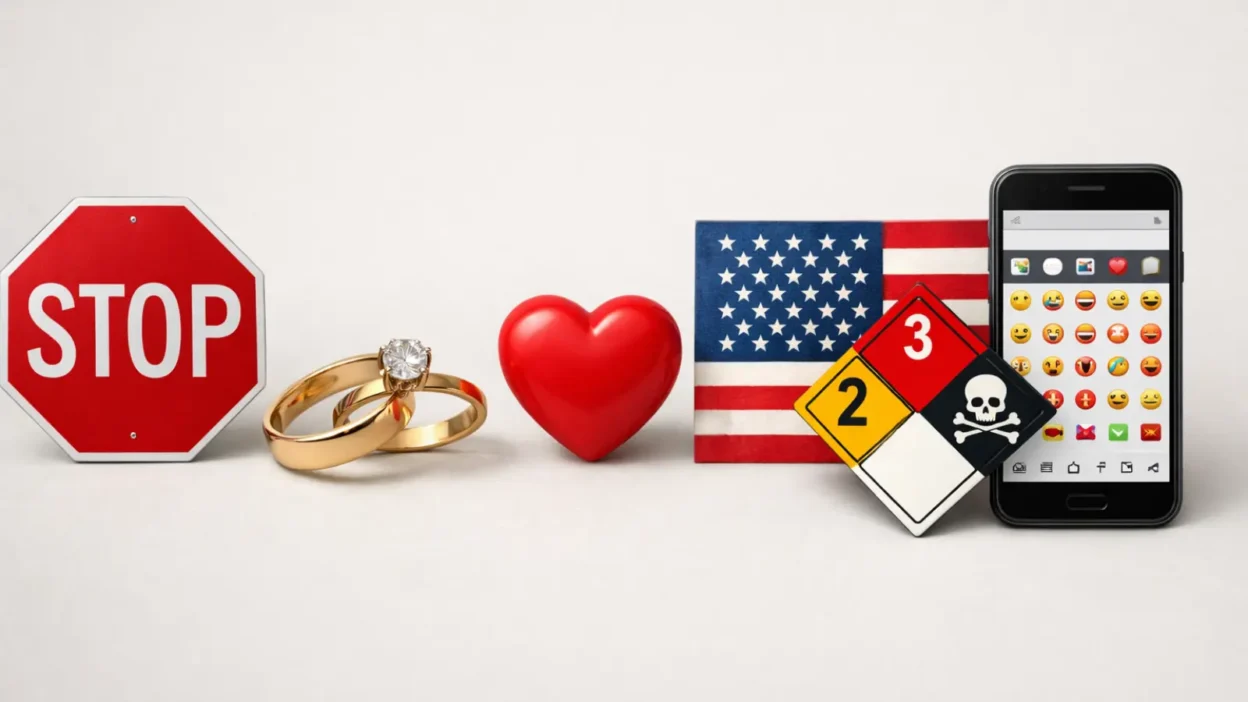
A stop sign is a piece of metal, but nobody treats it as just metal. It stands for a rule. A wedding ring is jewelry, but in everyday use it often stands for marital commitment. A heart emoji is a tiny image, but it can signal affection, support, flirtation, irony, or solidarity depending on context.
That is why symbolism in daily life is broader than literary symbolism. It includes practical systems, social habits, and emotional cues. Some symbols are formal and regulated. Others are informal and cultural.
It also helps to separate three related ideas. A sign gives information. A symbol carries shared meaning. An object can be both at once. That overlap is why everyday symbolism feels so natural even when it is learned.
Why ordinary things gain symbolic meaning
Most everyday symbols do not become meaningful by accident. Their meanings usually grow from one or more of these patterns:
- Function: the object’s use shapes its meaning
- Repetition: people keep seeing it in the same setting
- Ritual: ceremonies attach emotional weight to it
- Authority: schools, governments, religions, and workplaces reinforce it
- Story: art, media, and memory keep the meaning alive
Take the ring. Its circular shape makes it easy to connect with continuity or permanence. But that meaning became powerful because people used rings in promises, marriages, and public rituals over long periods.
Take the flag. Cloth alone is not sacred. Repeated public use in war, schools, memorials, sports, and civic ceremonies gives it emotional force.
Take the warning symbol on a chemical label. Its meaning is stronger than design alone because law, training, and repeated use tell people how to read it.
So when people ask what a symbol “really means,” the best answer is often: it means what communities have repeatedly taught themselves to see there.
Symbols people in the United States meet every day
Americans encounter symbolic systems all day, often without noticing.
Some of the most common are:
- Road and pedestrian signs — These use shape, color, and simplified images to signal action, danger, direction, or caution.
- Workplace hazard labels — Pictograms warn about poison, fire, corrosion, or other risks without requiring long text.
- National and civic symbols — Flags, seals, memorial imagery, and patriotic colors carry ideas about nationhood, duty, freedom, and belonging.
- Relationship symbols — Wedding rings, anniversary gifts, flowers, and hearts often mark care, loyalty, or remembrance.
- Digital symbols — Emoji, app icons, check marks, reaction buttons, and profile images communicate feeling and identity quickly.
- Brand symbols — Logos, color schemes, and mascots stand for reputation, quality, lifestyle, or status.
The important point is that these symbols do not all work the same way.
A hazard label is meant to be read consistently. A heart emoji is more flexible. A national symbol may feel unifying to one person and politically loaded to another. A logo may suggest trust to loyal customers and manipulation to critics.
That range matters. Everyday symbolism is not one giant universal language. It is a stack of smaller systems that overlap.
A quick comparison of everyday symbol types
| Symbol type | Common example | What it usually does | How fixed the meaning is |
| Regulatory | Stop sign, hazard pictogram | Gives action or safety guidance | Usually very fixed |
| Civic | U.S. flag, state seal | Signals identity, allegiance, public memory | Fairly stable, but emotionally contested |
| Personal | Wedding ring, tattoo, keepsake | Marks relationship or self-definition | Mixed and context-based |
| Commercial | Logo, mascot, package color | Builds recognition and association | Managed but changeable |
| Digital | Emoji, reaction icon, app badge | Speeds up tone and social signaling | Fast-changing |
This comparison helps explain why symbol arguments happen. People often assume every symbol works like a stop sign: clear, stable, and shared. In real life, many do not.
Why some symbols feel “natural” even when they are learned
People often say a symbol “just feels obvious.” Usually that feeling comes from familiarity, not from nature.
When a meaning is repeated often enough, it starts to feel built in. That is especially true when symbols are learned early. Children in the United States are taught to read classroom signs, restroom icons, warning colors, and patriotic imagery long before they think about symbolism as a subject.
Emotion helps too. Symbols tied to danger, love, grief, pride, or celebration tend to stick. They become memory shortcuts.
Design matters as well. Simple shapes and strong contrasts are easier to recognize quickly. That is one reason standardized signs work so well in public life. The goal is not deep interpretation. The goal is fast recognition.
Still, “feels natural” should not be confused with “means the same thing everywhere.” A symbol can feel obvious inside one culture and confusing outside it. Even within the United States, age, faith, politics, class, and online culture can change how a symbol lands.
How history shaped the meanings we still use
Many modern symbols look ordinary because they have been repeated for so long.
Wedding rings are a good example. Today many Americans read them as signs of love and commitment. But historically, ring traditions developed across long periods and not always with the same emotional meaning they have now. Over time, a practical marital token became a stronger symbol of romance, fidelity, and public partnership.
The American flag is another example. Its meaning is not just in the design. History, war memory, public ceremony, and national storytelling all shaped its symbolic power. That is also why debates around the flag can become so intense. It is not merely decorative.
The heart symbol shows how meanings can layer rather than replace one another. It has long been linked to feeling and love, but religious art, courtly imagery, popular print culture, greeting cards, and digital media all helped strengthen that reading in different eras. The exact visual origin of the modern heart shape is still debated, which is a useful reminder that common meanings can be clear even when origins are not.
This is a pattern worth remembering: a symbol may have a stable modern meaning while its older history remains messy.
American examples: flag, ring, emoji, and warning symbols
A few examples show how different kinds of symbolism work in modern U.S. life.
The American flag
For many Americans, the flag stands for freedom, national identity, sacrifice, and civic belonging. That meaning is reinforced through schools, holidays, government spaces, military contexts, and sports.
But the flag is not emotionally neutral. It can also be used in partisan ways. So its symbolic force is strong partly because it is public, repeated, and contested.
The wedding ring
In current U.S. culture, the ring most commonly signals marriage, commitment, continuity, and mutual promise. Its circular form helps that meaning, but the real power comes from social recognition. Other people know how to read it.
That public readability matters. A ring is not only personal. It also communicates relationship status in a social setting.
Emoji
Emoji are one of the clearest modern cases of symbolism in action. A small picture can soften a message, signal humor, show support, or change tone entirely.
But emoji are also unstable. Meanings shift by age group, platform, and context. One symbol may read as warm, sarcastic, flirtatious, or outdated depending on who sends it and where.
Warning symbols
Hazard and traffic symbols show symbolism at its most practical. They are designed to cut through language barriers and convey action quickly.
Unlike emoji, these symbols aim for limited ambiguity. Their power depends on standardization.
When symbols are religious, spiritual, or sacred
Some of the most meaningful symbols in everyday life come from living religious traditions. Crosses, crescents, stars, prayer beads, ritual garments, sacred colors, and devotional images can appear in homes, jewelry, holidays, social media, and public space.
This is where care matters.
A sacred symbol is not just an “aesthetic” because it appears on a necklace or in home decor. For believers, it may carry worship, theology, duty, mourning, protection, or community memory. That meaning does not disappear just because the symbol is reused in fashion or marketing.
At the same time, symbols do travel. A design can move from sacred practice into mainstream decoration, then into pop culture. Once that happens, different people may read the same image very differently.
The safest approach is simple: do not assume decorative use cancels religious meaning, and do not assume modern commercial use reflects the symbol’s original purpose.
How symbols shift in digital culture, branding, and personal identity
Modern American life keeps producing new symbolic habits.
In digital spaces, symbols move fast. A check mark can signal approval, verification, completion, or status. A profile image can become part of personal branding. A meme image can carry layers of irony that outsiders miss.
Brands rely on this too. Colors, logos, slogans, and packaging are built to create quick associations. The point is not just recognition. It is identity. People often use branded symbols to signal taste, tribe, nostalgia, aspiration, or values.
Symbols also shape personal expression:
- Tattoos can mark remembrance, faith, grief, survival, or belonging.
- Home decor can signal calm, tradition, luxury, spirituality, or regional identity.
- Fashion can signal subculture, status, politics, or aesthetic taste.
- Gifts often work symbolically even when they are practical.
This is one reason symbolism in everyday life keeps growing instead of fading. New media do not erase symbolism. They multiply it.
Common mistakes people make when interpreting symbols
A lot of bad symbolism advice comes from the same few mistakes.
1. Treating every meaning as universal
A symbol may be widely recognized without meaning the same thing in every culture or context.
2. Confusing modern meaning with original meaning
What a symbol means now is not always what it meant when it first appeared.
3. Repeating neat origin stories without evidence
Popular explanations are often cleaner than the historical record.
4. Collapsing religion, folklore, and internet lore into one category
A sacred symbol, a superstition, and a meme do not carry meaning in the same way.
5. Ignoring power and conflict
Symbols can unite people, but they can also exclude, provoke, or be weaponized.
6. Reading too much into every object
Not everything is symbolic all the time. Context matters. A ring can be meaningful, but it can also just be jewelry. A color can suggest a mood, but not every use of that color carries deep intent.
Good interpretation stays grounded. It asks who is using the symbol, in what setting, for what purpose, and with what audience.
FAQs
What is the simplest definition of symbolism in everyday life?
It is the use of ordinary signs, objects, colors, and images to represent ideas beyond their literal function. In daily life, that can include safety, love, authority, identity, grief, or belonging.
Are symbols in everyday life universal?
Usually not. Some are highly standardized, like traffic or hazard symbols, but many depend on culture, religion, generation, and setting. A meaning can be common without being universal.
Do tattoos count as everyday symbolism?
Yes. Tattoos often act as personal symbols of memory, identity, faith, grief, or affiliation. But their meaning is not automatic; it depends on the wearer and the social context around it.
Are emojis really a form of symbolism?
Yes. Emoji are visual shorthand that add tone, emotion, and social cues to digital communication. Their meanings are real, but they shift quickly and can vary across communities.
Why does a wedding ring symbolize commitment?
Partly because of the ring’s circular form, but mainly because long social practice tied rings to marriage promises and public recognition. The meaning became stronger through ritual, repetition, and shared expectation.
Can a symbol have both positive and negative meanings?
Absolutely. A national symbol may inspire pride in one person and discomfort in another. The same image can carry honor, grief, politics, memory, or conflict depending on who is reading it.
Conclusion
The clearest modern meaning of symbolism in daily life is simple: people use familiar things to carry larger ideas. That happens in practical systems like road signs and hazard labels, in emotional systems like rings and hearts, and in social systems like flags, logos, and emoji.