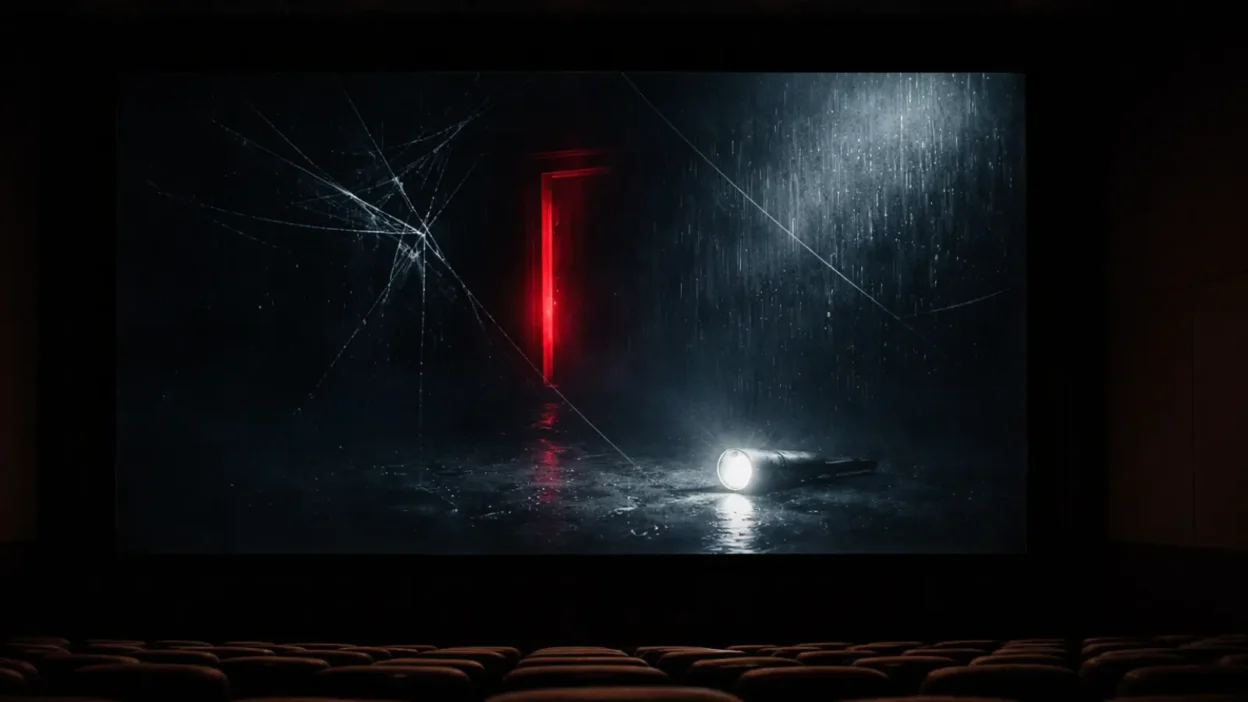
Symbolism in movies means using a visible or audible detail to suggest more than its literal purpose. A color, object, place, gesture, sound, or repeated image can point to an emotion, idea, memory, fear, belief, or social conflict that the movie does not state outright.
People care about this because film is not just plot. It is also design, mood, pattern, and emphasis. A movie can tell you something directly through dialogue, but it can also guide you through what it keeps showing, hiding, or repeating.
In modern U.S. culture, this matters because people do not just watch movies anymore. They also discuss them in classrooms, podcasts, group chats, fan communities, and video essays. Symbolism has become part of how many Americans talk about film, especially horror, prestige drama, science fiction, and animation.
The clearest starting point is simple: symbolism in film usually works by attaching extra meaning to something concrete on screen. But that meaning is not always universal, and it is not always proven. Good interpretation depends on context.
Quick Answer
Symbolism in movies usually refers to a concrete detail on screen that stands for a larger idea, feeling, or theme. In modern U.S. use, people most often mean repeated visual clues like colors, objects, places, or gestures that help explain a character’s inner life or a film’s bigger message. Historically, this grew from older visual-symbol traditions and from cinema’s need to communicate meaning through images, especially in early film.
TL;DR
- Symbols give movies meaning beyond plot.
- Repetition usually matters more than one-off images.
- A symbol is not the same as a theme.
- Context changes meaning.
- Not every detail is intentional symbolism.
- Best readings stay tied to the film.
What symbolism in movies actually means
In plain terms, symbolism is a storytelling shortcut with depth. Instead of stopping the film so a character can explain everything, the movie lets an image carry the weight.
A locked door might be a locked door. But if the film keeps returning to it, ties it to family secrets, and frames it with anxiety, it may also symbolize fear, repression, or forbidden knowledge.
That is the key point. A symbol in film usually becomes a symbol through pattern, not just presence. One image can catch your eye. A repeated image starts building meaning.
This also explains why movie symbolism feels natural when it works well. The audience does not need a lecture. The film teaches us how to read the symbol by showing when it appears, how characters react to it, and what emotional charge gathers around it.
Why film symbolism works so well on screen
Movies are especially good at symbolism because they combine image, movement, sound, and time. A novel can describe a symbol. A film can place it in the frame, light it a certain way, connect it to a musical cue, and repeat it across different scenes.
That gives symbols unusual force. A red coat in one scene may seem like costume design. The same red appears again during danger, shame, desire, or grief, and the meaning starts to build.
Film also works through contrast. A bright room after a long stretch of darkness can suggest relief. A sudden silence after constant noise can feel like death, shock, or spiritual pause. These effects are symbolic when the movie uses them consistently enough to create an idea beyond the literal moment.
Editing matters too. If the movie keeps cutting from one image to another, it invites you to connect them. A child’s toy, then a battlefield, then a funeral photograph may create symbolic meaning even before anyone speaks.
Symbol, motif, metaphor, and theme are not the same thing
These terms often get mixed together, but they do different jobs.
A symbol is a concrete detail that points beyond itself.
A motif is a recurring element.
A theme is the larger idea the story explores.
A metaphor is a comparison, sometimes direct, sometimes structural.
In practice, one thing can do more than one job. A recurring bird may be a motif. If it comes to stand for escape, it is also a symbol. If that pattern supports the film’s interest in freedom, then freedom is part of the theme.
| Term | What it is | What it does | Simple film example |
| Symbol | A detail with added meaning | Points beyond itself | A mirror linked to fractured identity |
| Motif | A recurring element | Builds pattern and emphasis | Rain appearing at major turning points |
| Theme | A central idea | Organizes the story’s meaning | Guilt, class, freedom, grief |
| Metaphor | A comparison in image or structure | Makes one thing stand for another | A sinking house reflecting family collapse |
This matters because people sometimes call every repeated detail a symbol. That weakens interpretation. Repetition alone does not prove symbolism. It may only establish mood, style, or rhythm.
Where movie symbolism came from
Movie symbolism did not appear out of nowhere. It belongs to a much older history of visual meaning. Painters, religious artists, poets, and dramatists all used recognizable images to suggest moral, spiritual, political, or emotional ideas long before film existed.
Cinema inherited that habit, then changed it. Early filmmakers worked in a medium that depended heavily on images, gesture, framing, costume, and lighting. That gave visual suggestion unusual importance. Silent film especially pushed meaning into what audiences could see rather than what characters could say.
Later, film scholars built tools for thinking about movies as systems of signs. That does not mean films are puzzles with one secret answer. It means movies communicate through chosen details, patterns, and codes that viewers learn to read.
By the late twentieth century, symbolism in film became a normal part of criticism, classrooms, and cinephile culture. Today, even casual viewers often talk about “what that object meant” or “why that color kept showing up.”
The most common kinds of symbolism in movies
Some forms of symbolism appear again and again because film is such a visual medium.
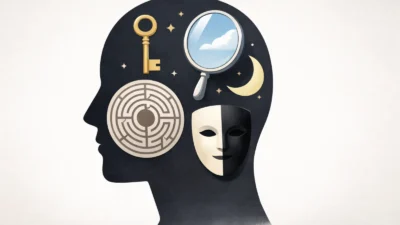
- Objects: keys, doors, masks, mirrors, clocks, photographs, water, fire
- Colors: red for danger or passion, blue for distance or sadness, white for innocence or emptiness, though context can reverse these
- Settings: houses, roads, forests, staircases, bedrooms, borders, oceans
- Weather and nature: storms, fog, birds, flowers, seasons, darkness, drought
- Costume and body details: uniforms, scars, veils, shoes, hair changes
- Sound symbols: a repeated song, church bells, static, breath, a train horn
Objects are often the easiest for audiences to notice because they are concrete and portable. A ring can carry memory, power, duty, or ownership. A window can signal separation, longing, or a split between inside and outside life.
Color is especially popular because it works fast. Viewers may not consciously name what a color scheme is doing, but they still feel its effect. Still, color symbolism is never fully automatic. Red in one film may suggest love; in another it may suggest violence, shame, or political danger.
Places also matter. A staircase may symbolize ambition in one story and threat in another. A home may stand for safety, inheritance, control, or entrapment depending on who has power inside it.
Why the same symbol can mean different things
This is where many articles get too neat. Symbols do not carry identical meaning everywhere.
A snake is a good example. In one context it may suggest evil, deceit, or temptation. In another it may suggest healing, rebirth, wisdom, or danger. The film’s genre, setting, religious background, and character point of view all shape how the audience reads it.
The same is true for color. White can suggest weddings, sterility, heaven, emptiness, wealth, or mourning depending on culture and scene. Water can mean cleansing, rebirth, death, memory, chaos, or simple physical threat.
That is why the best question is not “What does this symbol always mean?” It is “What does this symbol seem to mean here, in this movie, for these characters, in this cultural frame?”
For U.S. audiences, this matters because American viewers often encounter mixed symbol systems at once. A Hollywood film may draw from Christian imagery, horror traditions, corporate branding colors, internet aesthetics, and immigrant family memory all in the same story. No single chart can flatten that honestly.
How American audiences usually read symbolism now
In the United States, symbolism in movies is often taught as part of media literacy. Students learn to notice repeated images, color patterns, and visual clues. That school-based habit still shapes how many adults talk about film.
At the same time, symbolism now lives in a more public culture of interpretation. People pause frames, post theories, debate whether an ending is literal or symbolic, and compare details across sequels, franchises, and director filmographies.
Some genres encourage this more than others:
- Horror often uses houses, blood, monsters, doubles, and ritual imagery symbolically.
- Science fiction often turns technology, aliens, or landscapes into symbols of identity, control, or social fear.
- Prestige drama often uses restrained visual motifs that reward close viewing.
- Animation often makes symbolic design easier to notice because shapes and colors are highly controlled.
American audiences also tend to value “evidence-based” interpretation more than pure guesswork. A reading usually feels stronger if viewers can point to repeated details, not just personal intuition.
Religious, political, and cultural symbols need more care
Some movie symbols are not just artistic tools. They are also living signs inside real communities. That is why religious, political, and culture-bound symbols require more care than generic analysis often gives them.
A cross, veil, prayer object, sacred animal, national flag, or ancestral design may carry deep meaning within a living tradition. When a film uses that image, viewers should ask at least two questions: what does this symbol mean within its own tradition, and what is the movie doing with it?
Those are not always the same.
Sometimes a film uses a sacred symbol respectfully and with knowledge. Sometimes it reduces it to shorthand for “mystery,” “evil,” “purity,” or “the exotic.” Sometimes popular discussion strips away the original meaning and keeps only the dramatic vibe.
Political symbolism also needs precision. A costume color, monument, uniform, or hand gesture may signal ideology, nationalism, class, rebellion, or state power. But interpretation should stay grounded in the story world and historical setting.
This is also where misuse matters. Symbols can be commercialized, aestheticized, or detached from the people who still treat them as meaningful. Good film analysis should notice that, not smooth it over.
When symbolism becomes overreading
Not every detail is a symbol. Sometimes a lamp is just production design.
Overreading usually happens when viewers:
- ignore whether the detail actually repeats
- skip the film’s broader context
- assume one universal meaning chart applies everywhere
- treat accidental pattern as author intent
- force one interpretation when the movie leaves room for several
A stronger reading asks for evidence. Does the image recur? Does the camera emphasize it? Does it appear at emotional turning points? Does it connect to character choice, dialogue, or ending payoff?
Ambiguity is not failure. A symbol can support more than one reasonable reading. In fact, some of the best movie symbols stay open enough to hold tension rather than collapse into a single answer.
How to spot symbolism while watching a movie
You do not need a theory degree to notice symbolism. A simple method works well.
- Watch for repetition. If the film keeps returning to something, pay attention.
- Notice timing. Symbols often appear near turning points, revelations, or emotional breaks.
- Track changes. Ask whether the image changes meaning as the character changes.
- Look at framing. If the camera isolates or highlights something, the film may be directing your attention.
- Check connections. See whether the symbol links to dialogue, music, costume, or setting.
- Stay flexible. Test your reading against the whole film, not one scene.
It also helps to ask a grounded question: if this detail disappeared, would the movie lose some of its deeper meaning? If the answer is yes, you may be looking at a real symbol.
Why symbolism still matters in movies
Symbolism still matters because movies are emotional experiences, not just information delivery. Symbols help films say more with less. They create memory, mood, and depth without stopping the story cold.
They also let films handle difficult subjects indirectly. Grief, guilt, faith, trauma, class tension, and political fear are often easier to feel through recurring images than through speeches.
Most of all, symbolism gives movies staying power. It invites viewers back. A film with meaningful patterns often changes after a second watch because the audience starts seeing how the parts talk to each other.
FAQs
What does symbolism in movies mean?
It means a movie uses a visible or audible detail to suggest something beyond its literal role. That could be an emotion, idea, fear, belief, or social message built through repetition and context.
Is symbolism in movies always intentional?
Not always. Some symbols are clearly planned, while others emerge from performance, production design, editing, or audience interpretation after release. A good reading stays tied to patterns the film actually supports.
What is the difference between a symbol and a motif in film?
A motif is a repeated element, while a symbol is an element that carries added meaning. A motif can become symbolic, but repetition alone does not automatically make it one.
Does color symbolism in movies have fixed meanings?
No. Color often carries strong associations, but those meanings shift by genre, culture, era, and scene. Red, for example, can suggest love, danger, shame, power, or violence depending on the film.
Can movie symbolism be religious?
Yes, but it should be handled carefully. A film may use religious imagery as part of a living faith tradition, as visual shorthand, or as artistic contrast, and those uses are not the same thing.
What does symbolism in movies mean for tattoos or personal identity?
People sometimes take symbols from movies into tattoos, clothing, or identity statements because film images can feel personal and memorable. But once a movie symbol leaves the film, its meaning often becomes more individual and less fixed.
How do I know if I am overanalyzing a movie symbol?
Ask whether your reading is supported by repetition, framing, character response, and story payoff. If the interpretation depends on one stray detail and no broader pattern, it is probably too thin.
Conclusion
At its clearest, symbolism in movies is the use of concrete details to carry meaning beyond the literal scene. It works best when the film builds that meaning through repetition, contrast, emotion, and context rather than through a single “hidden clue.”