People often talk about dreams as if they arrive with hidden messages attached. A falling dream must mean anxiety. A flying dream must mean freedom. A snake must mean betrayal. That way of reading sleep images is familiar, but real symbolism in dreams is more complicated than a simple dictionary.
In modern American life, dream symbols are usually treated as clues. They may point to stress, memory, fear, desire, change, or unfinished emotion. But the same image can mean very different things depending on the dreamer, the situation, and the tradition being used to interpret it.
That matters because dream talk now lives in several worlds at once. It appears in therapy, spiritual practice, social media, pop psychology, and everyday conversation. To make sense of it, it helps to know where dream-symbol ideas came from and where the evidence is strong, mixed, or mostly belief-based.
Quick Answer
Symbolism in dreams usually refers to the idea that dream images stand in for emotions, conflicts, memories, wishes, or concerns rather than functioning as literal messages. Today, the strongest grounded view is that dream symbols often reflect personal and emotional meaning, while broader spiritual or universal meanings come more from tradition, religion, folklore, or interpretive systems than from proven science.
TL;DR
- Dream symbols are often personal, not fixed.
- Context matters more than dream dictionaries.
- Ancient cultures often treated dreams as messages.
- Freud and Jung shaped modern symbol talk.
- Science links dreams to emotion and memory.
- Spiritual readings are beliefs, not settled facts.
What symbolism in dreams usually means today
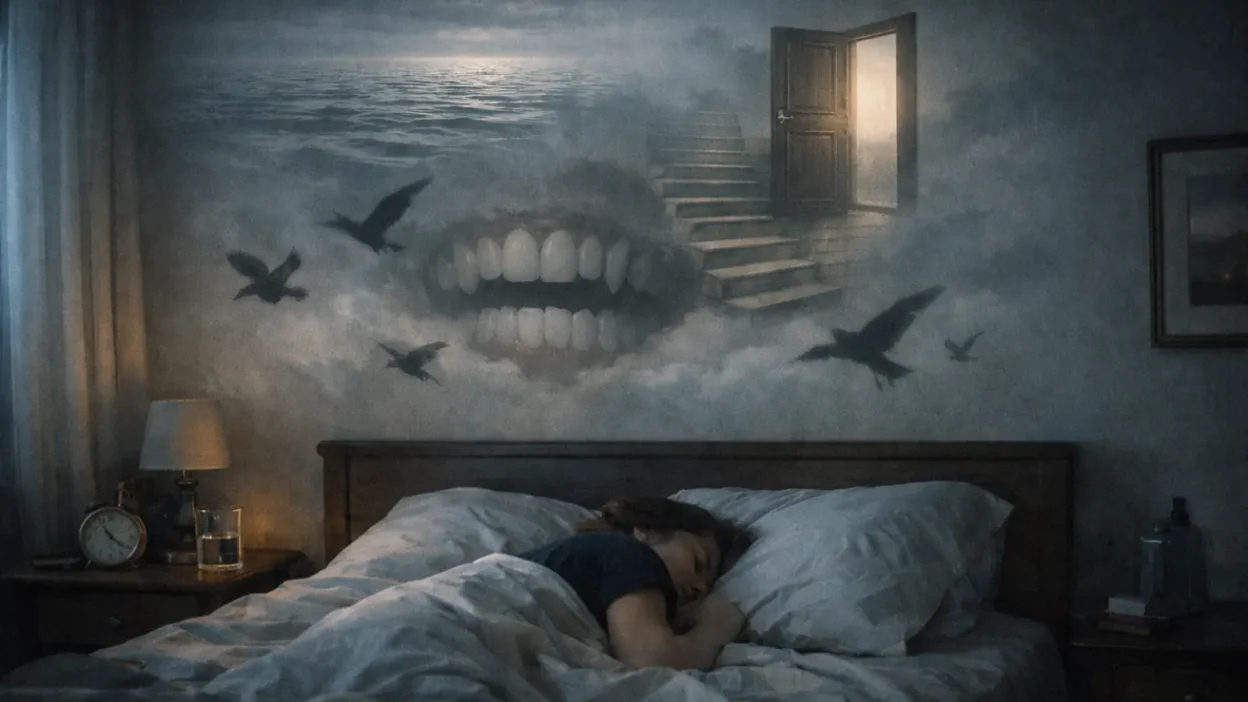
When people use the phrase “symbolism in dreams,” they usually mean that a dream image stands for something else. A locked door may point to blocked progress. Losing teeth may reflect stress, embarrassment, or loss of control. Water may connect to emotional overwhelm or calm, depending on the scene.
The key word is may. In present-day U.S. usage, dream symbolism is usually less about a secret universal code and more about interpretation. The dream image is read as meaningful because it seems emotionally charged, repeated, strange, or memorable.
That is why two people can dream about the same thing and walk away with different meanings. A dog in one dream may signal safety and loyalty. In another, it may bring back fear from a past bite. The image is the same. The symbolic weight is not.
Why people look for symbols in dreams
Humans are built to look for patterns. Dreams are full of vivid images, abrupt shifts, and strong feelings, so they invite interpretation almost automatically.
Part of that comes from the way dreams feel. Even bizarre dreams can seem emotionally real. A person may wake up shaken, relieved, ashamed, or comforted. Once the feeling lingers, the mind starts asking what the scene “meant.”
Dreams also borrow from waking life in broken pieces. They can pull in recent stress, old memory, social fears, and half-finished thoughts. Because dreams mix emotion with imagery, people often experience them as metaphor before they ever analyze them on purpose.
That helps explain why dream symbolism remains so popular in the United States. Even people who do not believe in prophecy or mysticism still talk about dreams as windows into stress, grief, relationships, identity, or change.
How ancient societies understood dream symbols
Long before modern psychology, many cultures treated dreams as meaningful events. In some ancient settings, dreams were seen as divine messages, warnings, or signs about health, power, battle, fertility, or fate.
This does not mean all cultures read dreams the same way. Some traditions relied on priests, rulers, healers, or formal dream interpreters. Others used dream books that attached set meanings to recurring images. In those systems, symbolism was often public and shared rather than personal and private.
That older model matters because it still shapes modern language. When someone says a dream is “a sign,” they are echoing a much older habit of thought. The dream is being treated not just as a private mental event, but as a message with outside meaning.
Still, it is important not to flatten the past into one idea. Ancient dream interpretation was not one universal system. It varied by religion, region, and period. What many traditions shared was the assumption that dreams were worth taking seriously.
How Freud and Jung changed modern dream interpretation
Much of today’s dream-symbol talk in the United States comes through Freud and Jung, even when people do not know their names.
Freud argued that dreams disguise hidden wishes and conflicts. In his view, symbols often mask material that would feel uncomfortable in waking life. A dream, then, is not random decoration. It is transformed content.
Jung moved in a different direction. He gave more room to shared motifs, mythic patterns, and archetypes. Where Freud often stressed repression and disguised desire, Jung was more likely to see dreams as balancing the conscious mind or revealing broader psychic patterns.
Here is the practical difference:
| Framework | Main idea | How symbols are read | Main caution |
| Freud | Dream hides underlying conflict or wish | Symbol points to disguised latent content | Can become overly reductive |
| Jung | Dream expresses deeper psychic patterns | Symbol may carry personal and archetypal meaning | Can become too broad or subjective |
| Modern therapy-informed use | Dream reflects emotional themes and lived context | Symbol is explored through the dreamer’s associations | Less dramatic, but less tidy |
| Popular dream dictionaries | Symbol has a ready-made answer | Image is matched to a preset meaning | Often overconfident |
| Spiritual/folk reading | Dream may carry guidance or warning | Symbol is read through belief or tradition | Not scientifically settled |
Both Freud and Jung had enormous cultural impact. They helped make it normal to think of dream images as layered rather than literal. But neither framework should be treated as final proof that symbols work one exact way.
What modern sleep science does and does not support
Modern research gives strong support to the idea that dreams are tied to emotion, memory, and brain activity during sleep. Dreams are often vivid during REM sleep, though they can happen outside REM as well. They also often pull from emotionally important waking experiences.
That supports a modest version of dream symbolism. Dreams may reflect concerns that matter to us. They may replay, reshape, or dramatize emotional material. They may link memories in loose and creative ways.
But science does not establish a universal symbolic dictionary. It does not show that a snake always means betrayal, that water always means emotion, or that dreaming of death predicts a coming event.
That gap is important. The evidence fits best with dreams as meaningful mental activity shaped by memory, feeling, stress, and association. It fits less well with rigid one-image-one-message systems.
Why the same symbols can mean different things
This is where dream interpretation becomes more useful and more honest.
A dream symbol can shift meaning based on at least four things:
- Personal history: A hospital may mean healing to one person and grief to another.
- Current stress: Being late in a dream may reflect pressure, fear of failure, or simple overload.
- Dream emotion: Calm water and drowning water do not carry the same emotional force.
- Cultural framework: A snake, crow, or moon may be read differently in different traditions.
That is why context beats lists. The dream image matters, but so do the feeling, the setting, the repeated pattern, and what was happening in waking life.
Recurring dreams are a good example. People often treat them as especially symbolic because they return. In many cases, they seem to cluster around unresolved stress, major transitions, anxiety, trauma, or chronic emotional pressure. That does not make them magical. It makes them psychologically persistent.
Common dream symbols and the themes people attach to them
Some dream images show up so often in public conversation that they have become part of everyday symbolic language. That does not make their meanings fixed. It does make them culturally familiar.
| Dream symbol | Common modern reading | Why people connect it to that theme | Caution |
| Falling | insecurity, loss of control, instability | falling feels physically vulnerable | can also reflect body sensations during sleep |
| Flying | freedom, escape, confidence | the image feels expansive and unbound | sometimes paired with fear, not joy |
| Teeth falling out | stress, embarrassment, powerlessness | teeth connect to appearance, voice, aging, control | may also connect to dental discomfort |
| Being chased | avoidance, pressure, fear | chase dreams turn stress into pursuit | not every chase points to one unresolved issue |
| Water | emotional state, uncertainty, overwhelm, renewal | water changes shape and intensity easily | meaning depends heavily on mood and setting |
These symbols stay popular because they are easy to feel. They turn emotion into scene. That is one reason dream symbolism remains so memorable even when people doubt literal dream prophecy.
How symbolism in dreams is used in the United States now
In the United States today, dream symbolism usually appears in four places.
The first is self-reflection. People keep dream journals, track repeated images, and look for patterns during stressful periods, breakups, grief, pregnancy, career shifts, or major decisions.
The second is therapy and mental-health language. Not every therapist uses dreams, but many will explore them as a way to talk about emotion, conflict, identity, or memory. In that setting, the point is rarely to decode a fixed message. It is to notice what the dream reveals about the person’s inner world.
The third is spiritual and wellness culture. Many Americans read dreams as signs, nudges, or intuitive messages. That approach can be meaningful to believers, but it should still be framed as belief rather than as demonstrated fact.
The fourth is internet culture. Social platforms reward short, dramatic answers. That is why viral dream posts often promise simple meanings for snakes, ex-partners, mirrors, elevators, babies, and houses. The format is catchy, but it usually leaves out uncertainty and context.
Spiritual meanings, omen beliefs, and religious interpretations
Dreams have religious and spiritual meaning in many traditions, and that should be treated respectfully. For some people, a dream is not just psychological material. It can be prayer-adjacent, morally important, or part of a living faith.
At the same time, belief-based readings need clear boundaries. A religious interpretation belongs within that religious framework. A folk belief belongs within that folk framework. A superstition belongs within superstition.
Those categories should not be blended carelessly. Saying “dreams have always predicted the future” is too strong. Saying “some traditions understand certain dreams as signs or messages” is more accurate.
This matters especially in the U.S., where people often mix religious imagery, New Age language, pop psychology, and social media advice into one loose idea of dream meaning. That blended style is common, but it can blur real differences between sacred interpretation, folklore, and modern self-help.
Where dream symbolism gets oversimplified
Dream symbolism becomes unhelpful when it is treated like a vending machine: insert image, receive fixed answer.
That oversimplification shows up in a few common ways:
- Dream dictionaries that sound absolute: They may be useful as prompts, but not as final authority.
- Fear-based claims: Saying a death dream means literal death or a cheating dream proves betrayal can cause needless panic.
- Ignoring the body: Sleep position, illness, medication, and stress can shape dream content too.
- Forcing universals: Not every symbol means the same thing across cultures or families.
- Replacing real care with decoding: Disturbing dreams can reflect anxiety, trauma, or poor sleep. Sometimes support matters more than interpretation.
A grounded approach asks better questions. What feeling stayed with you? What in waking life resembles that feeling? Is the image familiar from your own history? Is this a religious reading, a folk reading, a psychoanalytic reading, or a casual internet reading?
Those questions do not make dream symbolism less interesting. They make it more honest.
FAQs
Is symbolism in dreams real or just made up?
It is real in the sense that people often experience dream images as meaningful and emotionally connected to waking life. What is not settled is the claim that there is one proven universal code for interpreting every symbol.
Do dream symbols have universal meanings?
Some themes feel widely recognizable, like falling or being chased, because many people connect them to vulnerability or stress. But broad recognition is not the same as a fixed universal meaning, and personal context still matters a lot.
What does it mean if I keep dreaming the same symbol?
A recurring symbol often suggests that a feeling, conflict, fear, or transition has not fully settled. That does not prove one exact message, but it can be a sign that the same emotional theme keeps returning.
Are dream dictionaries accurate?
They can be helpful as brainstorming tools, especially if they spark useful self-reflection. They become unreliable when they present one answer as certain and ignore your own life, culture, and emotional context.
Do spiritual dream meanings count as fact?
They can be deeply meaningful inside a faith or spiritual practice, but they should be presented as belief-based interpretation rather than established scientific fact. Respect matters, and so does clear labeling.
What do dream symbols mean in tattoos or art?
In tattoos, design, and visual art, dream symbols usually shift from private experience to chosen identity. A person may use a moon, eye, staircase, bird, or water image to represent memory, change, freedom, grief, or intuition, even if the original dream was personal.
Conclusion
The clearest way to understand dream symbols is to treat them as possible expressions of emotion, memory, conflict, and association rather than as a locked code. That keeps the topic useful without turning it into superstition or stripping it of cultural depth.