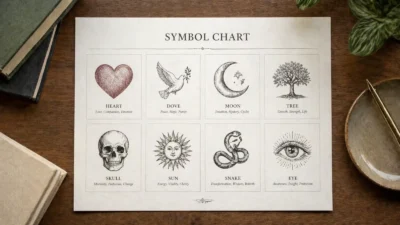
A symbolism books list usually points to one thing: readers want help finding books that explain how symbols gain meaning in art, religion, myth, literature, and everyday life. They are not all looking for the same kind of book, though. Some want a dictionary they can keep on a shelf. Others want a visual guide for paintings or design. Some want Jung, dreams, and archetypes.
That difference matters. A good symbolism book can help you read images more carefully, understand why certain signs carry emotional weight, or recognize when a “universal meaning” claim is doing too much. A weak one can blur cultures together, overstate ancient roots, or treat belief as fact.
In the United States, interest in symbolism shows up in classrooms, museums, tattoo culture, design, book clubs, spiritual self-study, and online visual culture. That means the best list is not just a stack of titles. It is a guide to what each book is actually good for.
Quick Answer
A symbolism books list usually points readers toward books that explain what symbols commonly mean, where those meanings came from, and how interpretation changes across cultures, religions, art, and psychology. Today, the most useful lists mix broad reference books with more focused titles on art symbolism, archetypes, and sacred traditions, because no single book handles every kind of symbol equally well.
TL;DR
- Not all symbolism books do the same job.
- Start with one broad reference.
- Add an art-focused guide if you read images.
- Jungian books are interpretive, not purely historical.
- Be careful with “universal symbol” claims.
- The best shelf mixes scope and caution.
What a symbolism books list usually includes
When people search for symbolism books, they are usually looking for one of five things: a dictionary of symbols, a visual art guide, a Jungian or archetypal interpretation book, a religion-and-myth reference, or a beginner-friendly overview.
Those categories overlap, but they are not identical. A dictionary-style book helps you look up an image fast. An art symbolism guide helps you read paintings and visual motifs in context. A Jungian book treats symbols as expressions of psychic life and inner patterns. A religion-focused book may explain symbols inside a tradition, where meaning depends on belief, ritual, and history rather than personal projection.
That is why the phrase “best symbolism book” never has one simple answer. The better question is: best for what?
Why readers in the United States look for these books now
In the U.S., symbolism is no longer just an academic topic. People run into it all the time.
A few common use cases stand out:
- decoding symbols in paintings, films, and novels
- choosing tattoo or jewelry imagery with more care
- understanding religious or cultural signs before using them
- finding visual ideas for design, branding, or illustration
- reading dreams, myths, or archetypes through a psychological lens
This wider demand helps explain why public-facing book lists keep appearing. But it also creates a problem: the same search can pull together serious reference works, coffee-table image books, and highly interpretive spiritual titles as if they all serve the same need. They do not.
The five main kinds of symbolism books
Before buying anything, it helps to know what kind of book you are choosing.
| Book type | Best for | Main strength | Main caution |
|---|---|---|---|
| Broad symbol dictionary | Quick lookup across many symbols | Wide scope | Can flatten cultural differences |
| Art symbolism guide | Paintings, museums, visual motifs | Better visual context | Less useful for non-art questions |
| Jungian/archetypal book | Dreams, psyche, inner meaning | Deep psychological reading | Not the same as documented history |
| Religion and myth reference | Sacred or traditional meanings | Better tradition context | May still simplify living traditions |
| Beginner overview | Casual readers and first-time buyers | Easy entry point | Often too brief for hard questions |
That framework also explains why strong readers often keep more than one symbolism book. One book gives range. Another gives depth. A third keeps you honest when meanings get speculative.
Best all-around symbolism reference books
If you want a shelf-reference book that covers many symbols, a few titles show up again and again for good reason.
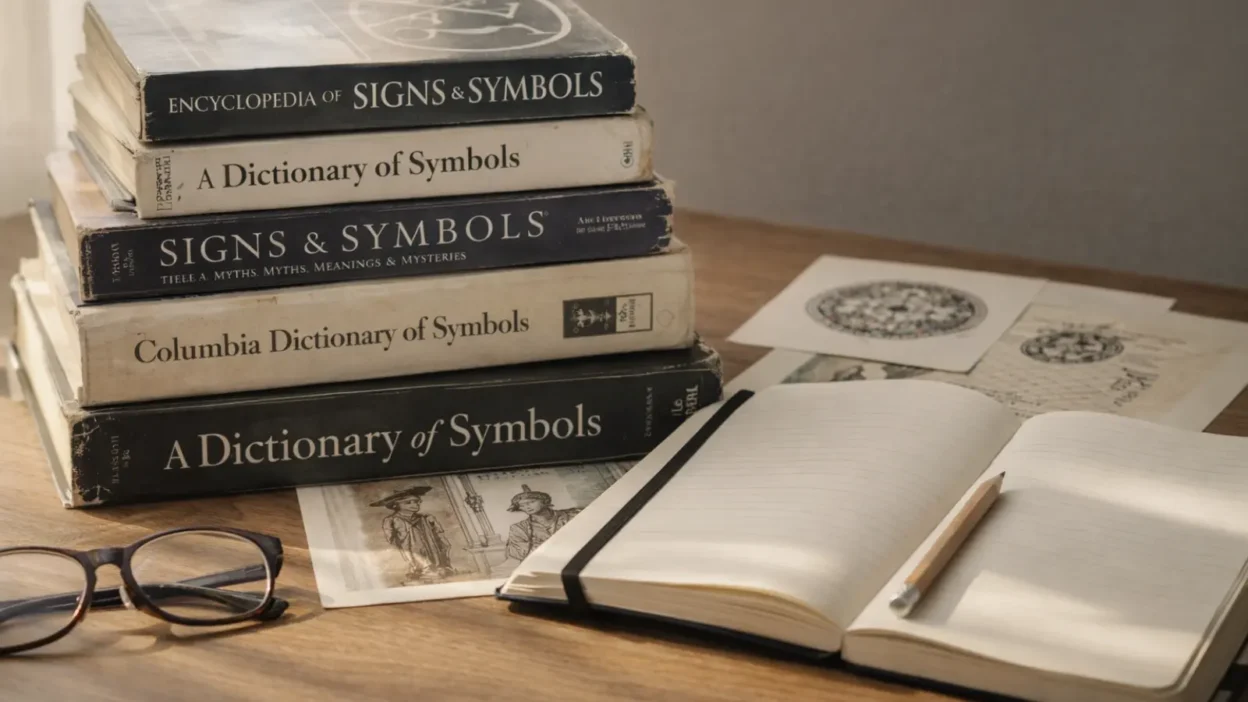
A Dictionary of Symbols by J. E. Cirlot is still one of the best-known broad references in the field. It is wide-ranging, literary, and intellectually ambitious. It works well for readers who want a serious, idea-rich reference rather than a simplified gift-book summary. The tradeoff is that it is not the easiest first book for every beginner, and some entries reflect a style of symbolic synthesis that needs to be read with context and caution.
The Penguin Dictionary of Symbols is another major reference work. Its strength is scope: it pulls together many strands of interpretation, including spiritual, cultural, and literary associations. That can be helpful when you want breadth, but it also means readers should resist treating every listed association as equally grounded or equally relevant in modern U.S. use.
The Book of Symbols: Reflections on Archetypal Images has become a favorite for readers who want something visually rich and inviting. It is beautifully produced and broad in reach, which makes it especially appealing for home libraries and visual thinkers. Still, its angle is more archetypal and reflective than strictly historical, so it works best when paired with a more conventional reference source.
For most readers, this is the most practical place to start: one broad dictionary-style book, plus one book that gives stronger context in the area you care about most.
Best symbolism books for art, images, and visual culture
If your main goal is understanding what symbols mean in paintings, sculpture, religious art, or design history, art-focused books are often more useful than broad symbol dictionaries.
Symbols in Art by Matthew Wilson is a strong example. It is built around recurring symbols in global art history and is designed as a user-friendly reference for interpretation. That makes it especially useful for museum-goers, art students, teachers, and anyone who keeps asking why the same objects, animals, plants, and gestures show up in paintings again and again.
Art-focused symbolism books usually do one thing better than general reference works: they show how meaning changes with medium, period, and setting. A lamb in a painting is not just “innocence.” In Christian art it may point to Christ, sacrifice, or liturgical associations. In another context, it may not carry that meaning at all. That kind of specificity is what makes art-symbolism books worth having.
For U.S. readers, this matters because modern symbolism often gets consumed visually first—through museums, social feeds, tattoos, posters, album art, and design boards. An art-based guide helps slow interpretation down.
Best symbolism books for psychology, dreams, and archetypes
This is where many readers get pulled in first, especially if they are interested in dreams, recurring images, or inner life.
Man and His Symbols remains one of the most accessible entry points into Jungian symbolism for a general reader. It was written for non-specialists, and that still shows. The book is interested in how symbols operate in dreams, myth, identity, and the unconscious, not just in external history.
That is also the reason to read it carefully. Jungian symbolism can be deeply useful if your question is psychological: why certain images recur, why they feel charged, or how symbolic language works in personal experience. But it is not a complete substitute for historical evidence, cultural specificity, or internal religious meaning. An archetypal reading of a snake, tree, or circle does not automatically tell you what that symbol meant in every culture or every period.
That distinction is one of the biggest things weak symbolism lists miss. They often place a Jungian book beside a historical reference and act as if both are offering the same kind of truth. They are not. One is closer to interpretive psychology. The other is closer to lookup, comparison, or documented usage.
Best symbolism books for religion, myth, and sacred traditions
Many readers turn to symbolism books because they want to understand crosses, lotuses, serpents, mandalas, halos, labyrinths, moons, trees, or other symbols that appear in religious or mythic settings.
Books in this lane can be helpful, but they require extra care. A symbol inside a living tradition is not just an abstract image. It may carry devotional, ritual, ethical, or community meaning. That is why “what it symbolizes” can never be separated entirely from who is using it, and why.
Broad references like The Penguin Dictionary of Symbols and A Dictionary of Symbols can introduce these signs, but they are best used as starting points, not final authorities. A book that sweeps across many religions and civilizations may help readers see patterns, but it can also smooth over differences that matter.
For a U.S. audience, that caution is especially relevant now. Sacred symbols often get reused in fashion, tattoos, wellness culture, or decor with very little context. A good symbolism shelf should help you understand both the attraction and the limits of that reuse.
Which symbolism book fits your goal
If you are building your first shelf, match the book to the job.
- For a beginner: start with a broad, readable reference plus one visual guide.
- For an art lover: choose Symbols in Art first.
- For psychology and dreams: start with Man and His Symbols.
- For a deep reference shelf: add Cirlot or The Penguin Dictionary of Symbols.
- For a visually rich home library: add The Book of Symbols.
- For writing or teaching: keep one quick-reference book and one more careful context-heavy title.
That mix works better than chasing a single “perfect” book. Symbolism is too broad for one volume to do every job well.
What weak symbolism books often get wrong
This is where buyers should be careful. Weak symbolism books often make the subject sound simpler than it is.
Common problems include:
- treating symbols as if they mean the same thing everywhere
- mixing folklore, religion, psychology, and internet trend language without warning
- turning one old source into a universal rule
- presenting decorative reuse as if it were original sacred meaning
- claiming ancient origins too confidently when the evidence is mixed or unclear
That does not mean broad symbolism books are useless. It means readers should learn how to read them. Ask three questions:
What tradition is this meaning coming from?
Is this historical usage, religious meaning, folklore, or modern interpretation?
Would this claim still make sense if I changed the culture, period, or medium?
Those questions are especially helpful in the U.S., where symbols move fast across media and markets. A lotus on a yoga studio wall, a raven in a tattoo design, and a crown in a luxury logo may all feel symbolic, but they do not belong to the same interpretive category.
How to build a practical symbolism shelf
A strong symbolism shelf usually has three layers.
First, keep one broad reference for quick lookups. Second, add one context-rich book in the area you care about most, such as art or psychology. Third, keep a habit of checking whether a claimed meaning is historical, religious, folkloric, or modern.
That last habit matters more than any single title. The best symbolism readers are not the ones who memorize the most meanings. They are the ones who notice that symbols change with place, purpose, and time.
If you want the shortest useful answer, build your shelf around one general reference, one art guide, and one interpretive book. That gives you range without pretending all kinds of meaning work the same way.
FAQs
What is the best symbolism book for beginners?
A beginner usually does best with a readable general reference and a clear visual guide rather than a dense theory-heavy text. That combination makes it easier to learn how meanings shift by context instead of memorizing flat one-line definitions.
Is Man and His Symbols a good symbolism book?
Yes, especially if you are interested in dreams, archetypes, and psychological meaning. It is less useful as a stand-alone source for historical or cross-cultural certainty, so it works best when paired with a broader reference.
Are symbolism books reliable?
Some are very useful, but reliability depends on what the book is trying to do. A well-made reference can help you compare meanings, while an archetypal or spiritual book may be more interpretive and less suited to hard historical claims.
What symbolism book is best for art and paintings?
An art-focused title is usually better than a general symbol dictionary for this purpose because it explains how images work inside specific visual traditions. That kind of guide helps readers avoid treating every object in a painting as a free-floating universal sign.
Are symbol meanings universal across cultures?
Usually not in any simple way. Some patterns recur across time, but meaning still depends on culture, religion, medium, and historical moment, so broad claims should be handled carefully.
Can symbolism books help with tattoos or jewelry choices?
Yes, but they should be a starting point, not your only source. If a symbol comes from a living religion or a specific cultural tradition, it is worth checking how that symbol is understood by people inside that tradition today.
Conclusion
A good symbolism shelf does more than tell you what a snake, rose, moon, ladder, or crown “means.” It teaches you how meanings are made, why they change, and when a neat one-line answer is too neat to trust.