People often search for symbol theory explained when they want one simple answer to a messy question: how does one thing come to stand for something else?
That question matters more than it may seem. We read symbols all day long. A stop sign, a wedding ring, a national flag, a heart emoji, a brand logo, a black outfit at a funeral, a white dress at a wedding. None of these objects carries meaning by itself. Meaning comes from shared habits, context, history, and interpretation.
In modern U.S. life, symbol theory helps explain more than literature or art. It helps explain advertising, politics, identity, religion, internet culture, and everyday communication. It also explains why people can look at the same image and read it very differently.
At its core, symbol theory is usually best understood as the study of how symbols work inside larger systems of meaning. In plain English, it asks how people learn symbolic meaning, how that meaning changes, and why certain symbols become powerful in public life.
Quick Answer
In modern U.S. usage, symbol theory explained usually means this: symbols do not have fixed meaning on their own. They gain meaning because people in a culture learn to connect a sign, image, word, or object with an idea, feeling, value, or identity.
Historically, that idea is tied most closely to semiotics, the study of signs and meaning. Over time, the theory grew beyond language and became a way to understand religion, media, ritual, politics, branding, and digital culture.
TL;DR
- Symbols work through shared meaning, not magic.
- Context changes what a symbol seems to say.
- Meaning is learned through culture and habit.
- The same symbol can shift over time.
- U.S. life is full of symbolic systems.
- Overreading symbols can lead to bad conclusions.
Main Article
What “symbol theory” usually means today
The phrase “symbol theory” sounds like one formal school of thought. In practice, it is a loose label.
Most general readers use it to mean the study of how symbols create meaning. In academic language, that usually points to semiotics, which studies signs, symbols, and sign systems. Other fields also matter, including anthropology, literary study, media theory, psychology, and religious studies. But semiotics is the clearest starting point.
That matters because people often expect symbols to have hidden meanings built into them. Symbol theory says something more grounded: symbolic meaning is usually social before it is personal. People inherit meanings, modify them, resist them, and reuse them.
So the real question is not just “What does this symbol mean?” It is also “Who says it means that, in what setting, and since when?”
A symbol is not just a picture with a meaning
In everyday speech, people often use sign and symbol as if they mean the same thing. That is understandable, but theory usually treats them differently.
A sign is anything that points beyond itself. That can be a word, image, gesture, sound, color, object, or pattern.
A symbol is a special kind of sign. It usually works because people have learned a shared convention. A flag means a nation because people have agreed that it does. A wedding band means marriage because a culture teaches that link. A dollar sign means money because users of the system recognize it.
That is different from a direct physical clue. Smoke can be a sign of fire, but it is not a symbol in the same way a flag is. One is tied to a material connection. The other depends mostly on social meaning.
This is why symbols can travel so easily into new settings. A crown can suggest monarchy, luxury, power, performance, or irony depending on who uses it and why.
The two big starting points: Saussure and Peirce
Most beginner explanations of symbol theory start with two thinkers: Ferdinand de Saussure and Charles Sanders Peirce.
Saussure treated the sign as a pair. One side is the signifier, the form we encounter, such as a word, sound, or image. The other is the signified, the concept it brings to mind. His key point was that this link is usually not natural. It is conventional.
That idea helps explain why languages differ. There is nothing built into the sound of a word that forces it to mean what it means. People in a community learn the link.
Peirce offered a three-part model instead. In simple terms:
- the sign is the thing we encounter
- the object is what it refers to
- the interpretant is the meaning formed in the mind
Peirce also gave a famous three-way distinction:
- icon: works through resemblance
- index: works through connection
- symbol: works through convention
A portrait is icon-like because it resembles a person. Smoke is index-like because it points to fire. A national flag is symbolic because its meaning depends on a learned social code.
For most readers, the big takeaway is simple. Saussure helps explain how signs link form and concept. Peirce helps explain that not all signs work the same way.
Why meanings are learned, not built into things
Symbol theory becomes much easier once you stop asking what a symbol “really” means in isolation.
A red octagon on a road means “stop” in the United States because a traffic system taught people to read it that way. A heart shape means love not because it looks like literal anatomy, but because long cultural use attached romance, affection, and care to that shape.
This learning process happens through repetition. Families, schools, faith communities, governments, media, brands, and online platforms all help teach symbolic codes. Once a code becomes familiar, it can feel natural. But feeling natural is not the same as being universal.
That is one of the most useful lessons in symbol theory. Symbols often seem obvious only after a culture has taught them well.
This also explains why symbolic meaning can feel emotional. If a culture repeatedly connects a symbol to grief, loyalty, freedom, danger, or belonging, people may react to it quickly, even before they stop to analyze it.
Why the same symbol can mean different things
One of the biggest mistakes in popular symbolism writing is treating meaning as fixed.
The same symbol can shift across time, region, religion, generation, and platform. A snake might suggest danger in one setting, medicine in another, wisdom in another, and fashion or rebellion somewhere else. A white garment can signal purity in one tradition, mourning in another, and modern minimalism in a design context.
Even within the United States, meaning depends on setting. A flag at a memorial, a protest, a classroom, a sports event, or a campaign rally may not communicate the same thing. The object is the same. The social reading is not.
This is why symbol theory pays so much attention to context. A symbol does not float above history. It arrives with users, audiences, institutions, and emotional baggage.
That does not mean “anything can mean anything.” Context sets limits. But it does mean that symbols are rarely as stable as quick-reference lists make them seem.
How symbol theory moved beyond language
Early theory often focused on language, but the field did not stay there.
Over time, scholars applied symbolic thinking to ritual, clothing, public ceremonies, myth, religion, architecture, media, consumer culture, and national identity. In anthropology especially, symbols became a way to understand how groups organize meaning, not just how individuals decode messages.
That shift was important. It moved the discussion from “What does this word mean?” to “How does a culture build a whole world of meaning?”
In that broader sense, symbols do several jobs at once. They can:
- organize memory
- mark group belonging
- express values
- simplify complex ideas
- give emotional force to public life
This is part of why symbols matter so much in religion and civic life. They do not just label ideas. They help stage shared feeling.
But this broader use also requires caution. Once everything becomes “symbolic,” it is easy to overread. Good interpretation still needs history, context, and restraint.
How Americans meet symbol theory every day
In the United States, symbol theory is not just a classroom topic. It is built into public life.
Americans learn symbolic systems early. Children learn what a stop sign means, what a raised hand in class signals, what a heart means in a card, and what a flag may represent in a school or parade. Later, they learn more layered symbolic codes through sports, religion, politics, marketing, and online identity.
Here is a simple way to see how symbolic meaning changes by setting:
| Setting | Common Symbol Type | Typical Meaning | Why It Works |
|---|---|---|---|
| Roads and public spaces | Traffic signs, icons, colors | instruction, warning, direction | learned public code |
| Civic life | flag, eagle, monuments | nation, memory, identity | shared institutions and ritual |
| Branding | logos, mascots, color systems | trust, status, lifestyle | repeated commercial association |
| Digital messaging | emojis, reaction icons | tone, mood, social intent | platform habit and shared use |
| Personal identity | tattoos, jewelry, clothing | values, belonging, self-story | chosen symbolic display |
This is also where American symbolism can become contested. A symbol that feels patriotic to one person may feel exclusionary, commercialized, or politically charged to another. Symbol theory does not solve that disagreement, but it helps explain why it happens.
Modern digital life: emojis, memes, and platform culture
Digital culture has made symbol theory more visible.
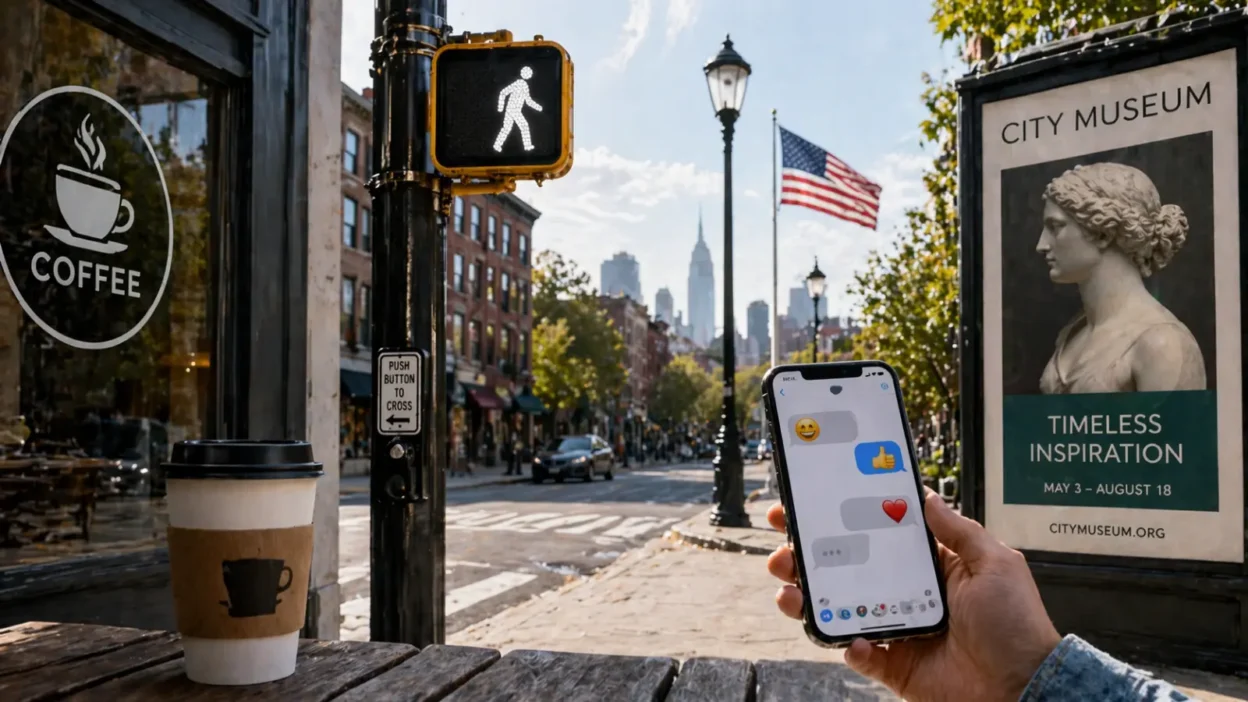
Emojis are a simple example. They help carry tone in text-based communication where facial expression and voice are missing. A message with a period can feel cold. The same message with a smiling emoji can feel warm, joking, or softening.
But emoji meaning is not fixed either. The same symbol can read as sincere, ironic, sarcastic, flirtatious, passive-aggressive, or generationally out of touch depending on context.
Memes work the same way, only faster. A meme template is not just an image. It is a shared symbolic frame. People who know the format catch the reference and the tone at once. People outside that cultural circle may miss the meaning entirely.
This is one reason online communication changes symbolic meaning so quickly. Platforms accelerate reuse. A symbol can move from sincere to ironic, from mainstream to niche, from harmless to controversial in a short time.
For U.S. readers, this matters because so much daily communication now happens in symbol-heavy environments: texting, social media, reaction buttons, brand icons, profile images, and visual shorthand.
Why symbol theory matters in branding, politics, and media
Once you understand symbol theory, a lot of modern persuasion looks different.
Branding rarely sells only a product. It sells a symbolic world. A logo, font, color, slogan, or package shape can suggest tradition, luxury, rebellion, simplicity, trust, health, or exclusivity before anyone studies the details.
Politics works similarly. Campaign imagery, patriotic colors, clothing choices, backdrops, and repeated phrases all carry symbolic force. They signal belonging and frame emotion. This does not mean symbols control people in a mechanical way. It means public meaning is often shaped through symbolic repetition.
Media does this too. An object in a film scene may function as more than a prop. A costume may signal class, danger, innocence, grief, or ambition. A news image may become symbolic of a larger event.
This is also where misuse enters the picture. Symbols can be stripped from their original setting and repurposed for marketing, ideology, irony, or provocation. Sacred signs can be turned into décor. Political symbols can be commercialized. Historical symbols can be simplified until their earlier meanings disappear.
That is why careful interpretation has to ask not only what a symbol once meant, but who is using it now and to what end.
Where people overreach symbol theory
Symbol theory is useful, but it gets stretched too far all the time.
Common problems include:
- treating one culture’s reading as universal
- confusing personal associations with shared meanings
- ignoring historical change
- assuming every design choice carries deep intention
- reading spiritual certainty into ordinary aesthetic reuse
- treating interpretation as proof
This problem shows up in pop explanations of colors, animals, dreams, numbers, and “hidden meanings.” Sometimes a pattern is real. Sometimes it is only a modern habit. Sometimes it is a belief tradition, not an established fact.
A careful reader should be able to say, “This is a strong modern association,” “This is a specific religious meaning,” “This is folklore,” or “This claim is thin.”
That kind of honesty does not weaken symbolic interpretation. It improves it.
A practical way to read symbols more carefully
For everyday use, symbol theory becomes most helpful when it turns into a reading method.
A simple version looks like this:
- Start with the object itself. What are you actually looking at?
- Check the setting. Where does it appear: ritual, ad, protest, text message, museum, street sign?
- Ask who is using it. Institution, subculture, individual, brand, faith group?
- Ask what history travels with it. Old symbol, new reuse, or recent internet shift?
- Separate shared meaning from personal meaning. These can overlap, but they are not identical.
- Look for evidence of change. Has the symbol been rebranded, politicized, joked about, or commercialized?
That method will not produce one permanent answer every time. It will do something better. It will keep you from mistaking the loudest explanation for the best one.
In that sense, symbol theory is not a codebook. It is a way of reading meaning with more care.
FAQs
Is symbol theory the same as semiotics?
Not exactly, but for most readers they overlap a lot. “Symbol theory” is a looser phrase, while semiotics is the more established field for studying how signs and symbols produce meaning.
What is the difference between a sign and a symbol?
A sign is the broader category. A symbol is usually a sign whose meaning depends heavily on shared convention, such as a flag, logo, or heart shape.
Does every symbol have one true meaning?
Usually no. Some symbols have strong common associations, but meaning still depends on context, audience, and history. That is why the same image can read differently in religion, advertising, politics, or everyday speech.
How is symbol theory used in tattoos?
People often use tattoos to turn symbols into personal identity markers. But a tattoo can carry both private meaning and public meaning, and those two layers do not always match.
Is symbol theory spiritual or religious?
It can include religious symbols, but the theory itself is not a spiritual belief system. It is mainly a way to study how meaning works in language, ritual, culture, media, and public life.
Why does symbol theory matter in the United States today?
Because American culture is saturated with symbols: flags, logos, mascots, emojis, memorial imagery, campaign visuals, and identity markers. Understanding how those symbols work helps people read public culture more clearly.
Conclusion
Symbol theory is easiest to understand when you stop treating symbols as secret messages and start treating them as learned forms of meaning. A symbol works because people connect it to an idea, value, feeling, or group story, and those connections are shaped by history and context.