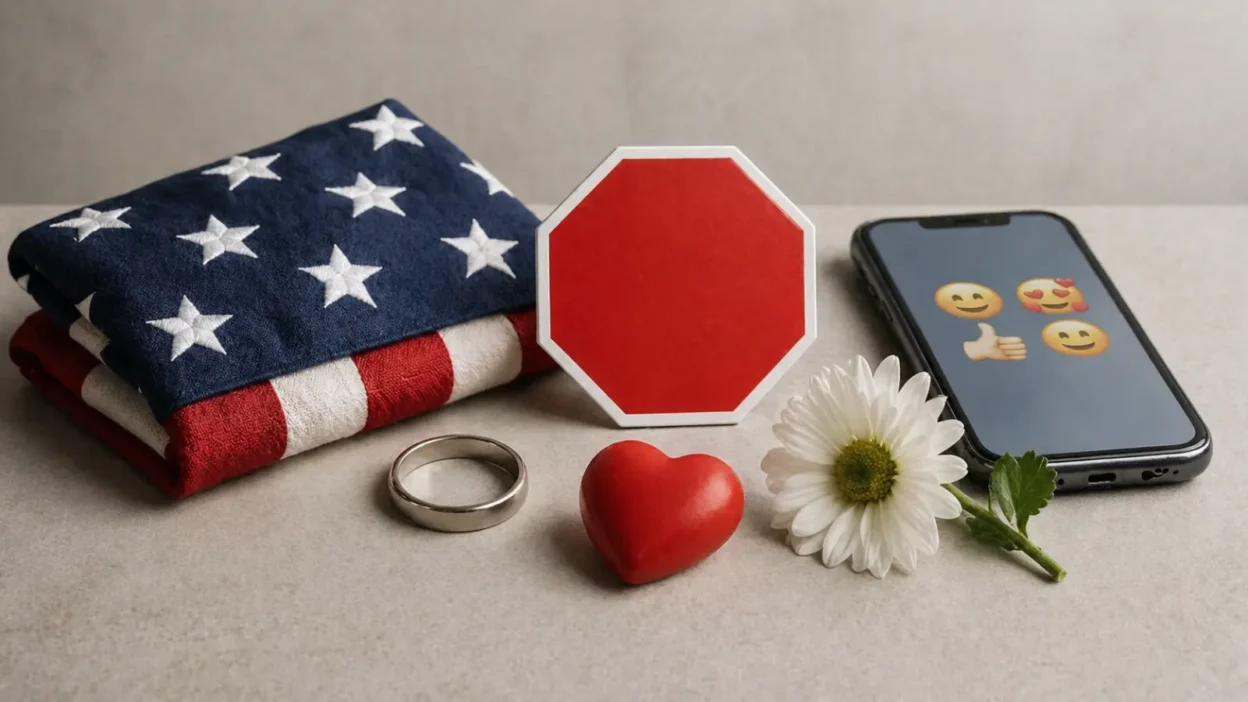
Symbolism and culture examples are everywhere in American life. A flag outside a school, a wedding ring, a red stop sign, a black ribbon, a heart emoji, and a team mascot all carry meanings that go beyond their physical form.
People care about symbols because they help us read the world quickly. They can say “welcome,” “danger,” “belonging,” “faith,” “grief,” “love,” or “protest” before anyone speaks.
In the United States, symbols matter because the country is culturally mixed, politically expressive, and visually saturated. The same image can feel patriotic, sacred, stylish, offensive, nostalgic, or commercial depending on who uses it and where it appears.
Quick Answer
In modern U.S. life, symbolism and culture examples usually represent shared identity, values, emotions, memory, belonging, or warning. Many meanings come from religion, national history, folklore, family customs, art, advertising, or repeated public use, but they can change when a symbol moves into a new setting.
TL;DR
- Symbols work because groups share meaning.
- Context changes how symbols are read.
- U.S. symbols often mix identity and emotion.
- Sacred symbols need careful interpretation.
- Internet culture speeds up symbolic change.
- Not every symbol has one fixed meaning.
Main Article
What Cultural Symbolism Means in Plain Language
A symbol is something that stands for something else. It can be an object, color, gesture, sound, image, word, animal, number, or ritual action.
Culture is the shared pattern of meanings that helps a group understand life. It includes language, values, habits, beliefs, etiquette, memory, food, clothing, ceremonies, and social rules.
Put together, cultural symbolism is the way a group gives meaning to things. A ring is not only metal. In a wedding, it can stand for commitment. A raised hand is not only a body movement. In a classroom, it can mean “I have something to say.”
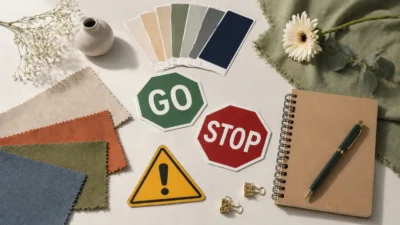
The key point is that symbolic meaning is learned. A stop sign works in the United States because people are taught what the red octagon means. A black suit at a funeral means respect in many U.S. settings because people connect dark formal clothing with mourning.
That does not mean symbols are fake. They can shape real behavior. People stand for a national anthem, keep a family heirloom, wear a cross, avoid the number thirteen, or choose a tattoo because a symbol feels meaningful to them.
Why Symbols Carry More Than One Meaning
Most symbols do not have one clean meaning. They carry layers.
One layer may be practical. A stop sign tells drivers to stop. Another layer may be emotional. Red can feel urgent because it is used for warnings, blood, danger, sale tags, and emergency lights.
Another layer may be historical. The bald eagle became associated with the United States because it was chosen for national imagery in the early republic. Over time, that repeated public use helped tie the bird to ideas of strength, sovereignty, and national identity.
Symbols can also mean different things to different groups. A flag may represent belonging to one person, military service to another, protest to another, and exclusion to someone else. None of those responses can be understood by looking only at the fabric.
This is why careful interpretation matters. The better question is not “What does this symbol always mean?” It is “What has it meant in this setting, to these people, at this time?”
Everyday U.S. Symbols People Read Instantly
Many cultural symbols in the United States are ordinary things that people see daily. Their meaning feels automatic because they have been repeated in schools, media, ceremonies, stores, sports, and family life.
| Example | Common U.S. meaning | Why context matters |
| U.S. flag | Nation, service, civic identity | Can also signal protest, mourning, or political stance |
| Wedding ring | Commitment, marriage, partnership | Meaning shifts by religion, law, family, and personal choice |
| Red rose | Romance, affection, admiration | Can feel formal, commercial, or memorial depending on use |
| Black clothing | Mourning, formality, seriousness | Also used in fashion, music scenes, and professional dress |
| Thumbs-up | Approval, encouragement, agreement | Not read the same way in every culture or situation |
These examples show how symbols work through habit. People do not pause to analyze them every time. The meaning arrives quickly because the culture has trained people to recognize it.
But recognition is not the same as agreement. A person may understand what a symbol is meant to say and still reject it, question it, or feel hurt by it.
National Symbols: Flags, Eagles, Monuments, and Shared Memory
National symbols are among the most visible cultural symbols in the United States. They appear in schools, courtrooms, stadiums, passports, public buildings, campaign materials, currency, and holiday displays.
The U.S. flag is the clearest example. It is often used to represent the nation, civic belonging, military sacrifice, independence, and public unity. It can also appear in protest, memorials, debates over patriotism, and arguments over who is included in national identity.
The bald eagle works differently. It is a living animal turned into a national emblem. Its size, flight, sharp vision, and North American range helped make it useful as an image of power and independence. Its actual behavior as a bird is not the same as its symbolic meaning. The symbolism comes from what people chose to see in it.
Monuments also carry national memory, but they are often more contested. A monument can honor sacrifice for one group and represent oppression to another. This is especially true when public statues, place names, or memorials are tied to slavery, colonization, war, or racial exclusion.
National symbols can unite people, but they can also reveal disagreement. That does not make them meaningless. It shows that public symbols are living parts of culture, not frozen decorations.
Religious and Spiritual Symbols: Meaning Inside Living Traditions
Religious symbols need special care because they are not only design elements. For many people, they are part of worship, identity, discipline, memory, and community life.
A cross may be worn as jewelry in a casual fashion setting, but within Christianity it can refer to Jesus, suffering, sacrifice, salvation, resurrection, or belonging to a church community. A menorah may appear in holiday decor, but in Jewish life it also connects to ritual memory, celebration, and religious history. A crescent and star may be used as a broad visual marker of Islam, even though Islamic traditions are diverse and not all Muslims relate to the symbol in the same way.
Some spiritual symbols move across cultures through migration, art, yoga studios, jewelry, tattoos, home decor, and social media. This can create appreciation, but it can also create flattening. A symbol with deep religious meaning may be reduced to “good vibes,” “protection,” or “balance” without regard for the people who preserve the tradition.
A responsible article about symbols should not treat living religions as a shelf of aesthetics. It should ask what the symbol means within the tradition first, then explain how modern decorative use may differ from that original or ongoing meaning.
Folklore, Luck, and Omen Meanings
Some cultural symbolism comes from folklore rather than formal history or doctrine. These meanings often live in sayings, family habits, local customs, ghost stories, childhood warnings, and seasonal traditions.
In the United States, many people know the idea that thirteen is unlucky, that a black cat crossing your path can be a bad omen, or that finding a penny may bring good luck. These beliefs are not established facts about the world. They are inherited interpretations.
Folklore matters because it shows how symbols help people manage uncertainty. Luck symbols give people a feeling of pattern when life feels random. Omen beliefs turn chance events into messages. Even when people do not literally believe them, they may still enjoy the ritual.
The same symbol can have opposite meanings in different settings. A black cat may be unlucky in one folk tradition, lucky in another, and simply beloved in a pet owner’s home. A horseshoe may be a protective charm in decor, a sign of equestrian life, or a nostalgic farmhouse image.
Folklore should be presented as folklore. It can be culturally important without being treated as proof.
Color, Gesture, and Number Examples in U.S. Culture
Not all symbols are objects. Colors, gestures, and numbers can be just as symbolic.
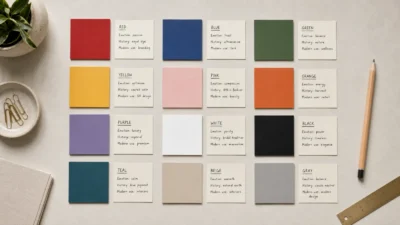
In the United States, red often suggests urgency, love, danger, sales, anger, or political identity depending on context. White can suggest weddings, cleanliness, peace, winter holidays, or blankness. Black can suggest elegance, mourning, seriousness, rebellion, or authority.
Gestures are also learned. A thumbs-up usually means approval in everyday U.S. use. A salute can suggest military respect. A hand over the heart can suggest sincerity, patriotic respect, or emotional attention. These meanings are not universal. They depend on social rules.
Numbers carry meaning too. Thirteen is widely treated as unlucky in U.S. superstition. Seven often appears as lucky in games, religion-influenced language, and popular sayings. Three can suggest completion or rhythm because stories, jokes, slogans, and rituals often group ideas in threes.
The important point is context. Red roses on Valentine’s Day do not mean the same thing as red flashing lights behind a car. Black clothing at a funeral does not mean the same thing as black clothing at a concert.
Tattoos, Decor, Fashion, and Branding
Modern symbols often travel through personal style. A person may wear or display a symbol because it says something about memory, grief, love, faith, heritage, humor, fandom, or identity.
Tattoos are especially personal. A lotus tattoo may refer to resilience, Buddhist imagery, beauty rising from difficulty, or simply a design the person likes. A lion tattoo may suggest courage, family pride, zodiac identity, sports loyalty, or strength. The same image may mean one thing in a tattoo studio and another in a temple, coat of arms, or children’s book.
Home decor works in a similar way. A dreamcatcher, hamsa, evil eye charm, mandala print, cross, Buddha image, sugar skull, or national flag may be displayed for beauty, memory, protection, faith, heritage, or trend. The meaning depends partly on the owner’s relationship to the culture behind it.
Branding uses symbols to create quick emotional messages. Green can suggest freshness, nature, money, or health. A shield can suggest safety. A crown can suggest status. A hand can suggest care. A flame can suggest energy, danger, speed, or transformation.
This modern reuse is not automatically wrong. But it becomes shallow or harmful when sacred, Indigenous, mourning, political, or trauma-linked symbols are treated as empty decoration.
Digital Culture: Emojis, Memes, and Visual Shorthand
Digital life has made symbolism faster and more flexible. Emojis, reaction GIFs, stickers, hashtags, profile frames, and memes let people express mood and identity in small visual units.
A red heart emoji can mean love, support, thanks, approval, or casual warmth. A skull emoji may mean death in a literal context, but in many online spaces it means laughter, shock, or “I’m dead” as slang. A frog, clown face, blue check, or raised eyebrow image can carry meanings that shift by platform and community.
Memes work because people share a visual code. The image alone is not the full meaning. The caption, timing, audience, and prior uses all matter. A meme can be funny inside one group and confusing or offensive outside it.
Digital symbols also change quickly. A symbol that feels current in 2025 may feel dated or altered by 2026. This makes online symbolism different from older public symbols, which usually change more slowly through institutions, ceremonies, and long-term repetition.
Still, digital symbols follow an old pattern. People keep turning images into shared meaning. Only the speed has changed.
How Meanings Change, Split, or Get Reclaimed
Symbols change when history changes around them. War, migration, protest, commerce, religious revival, social movements, and internet use can all alter meaning.
Sometimes a symbol is appropriated in a harmful way. The swastika is one of the clearest examples of a symbol whose older sacred and auspicious meanings in several Asian religious traditions were violently distorted by Nazi use. In much of the modern United States, it is now read primarily through the history of Nazism, antisemitism, white supremacy, and terror. At the same time, many Hindu, Buddhist, and Jain communities continue to use related forms in religious and cultural contexts. Both facts matter.
Other symbols are debated because of cultural appropriation. Dreamcatchers are widely sold as decor, but they are tied to Ojibwe and broader Indigenous histories, with specific meanings connected to protection, childhood, dreams, and community identity. Treating them as a generic boho accessory can erase that context.
Some symbols are reclaimed. Groups may take a symbol once used against them and turn it into a sign of pride or survival. Reclamation is not simple, because outsiders may not know who has the right to use it or how painful the older meaning remains.
A changed meaning does not always erase an older one. Symbols can hold several histories at once. Good interpretation makes room for that tension.
How to Interpret a Symbol Responsibly
A responsible reading starts with humility. No one should assume that a symbol has the same meaning everywhere.
Begin with the setting. Is the symbol in a church, classroom, protest, tattoo, museum, sports arena, advertisement, family altar, cemetery, wedding, or meme? Setting changes meaning.
Next, ask who is using it. A symbol used by a community for itself can carry a different meaning from the same symbol used by a company, tourist shop, costume party, or outsider.
Then look for history. Was the symbol religious, political, seasonal, protective, decorative, national, or commercial? Did it begin in one tradition and later move into another? Did it become controversial because of misuse?
Finally, avoid overclaiming. It is better to say “in many U.S. contexts” than “in all cultures.” It is better to say “some people interpret this as” than to turn folklore into fact.
Symbols are useful because they make meaning visible. They are risky because they make meaning look simpler than it is.
FAQs
What are common examples of cultural symbols?
Common examples include flags, wedding rings, religious icons, national animals, colors, gestures, holiday decorations, tattoos, monuments, and emojis. Their meaning comes from shared use, not from the object alone.
What do cultural symbols mean in the United States?
In the United States, cultural symbols often point to identity, patriotism, faith, memory, grief, celebration, protest, or belonging. Because the country is culturally diverse, the same symbol may be read differently by different communities.
Can a tattoo symbol have a different meaning than the original symbol?
Yes. Tattoos often personalize symbols, so a design may represent grief, resilience, family, beauty, or identity for the wearer. That personal meaning does not erase the symbol’s older religious, cultural, or historical meanings.
Are cultural symbols spiritual?
Some are spiritual, but many are not. A symbol may be religious, national, decorative, commercial, political, folkloric, or personal depending on its source and use.
Why do symbols change meaning over time?
Symbols change when people reuse them in new settings. Migration, politics, war, advertising, pop culture, social movements, and digital platforms can all add new meanings or make old ones less visible.
Can a symbol be positive and negative at the same time?
Yes. A flag, monument, color, animal, or gesture can inspire pride in one setting and pain in another. Mixed meanings are common when a symbol is tied to power, religion, race, national identity, or conflict.
How can I avoid misusing a cultural symbol?
Learn where it comes from before using it. Be especially careful with sacred, Indigenous, mourning, political, or trauma-linked symbols, and avoid treating them as empty decoration.
Conclusion
Cultural symbols help people turn objects, colors, gestures, animals, numbers, and images into shared meaning. They make identity, memory, emotion, belief, and social rules easier to see.