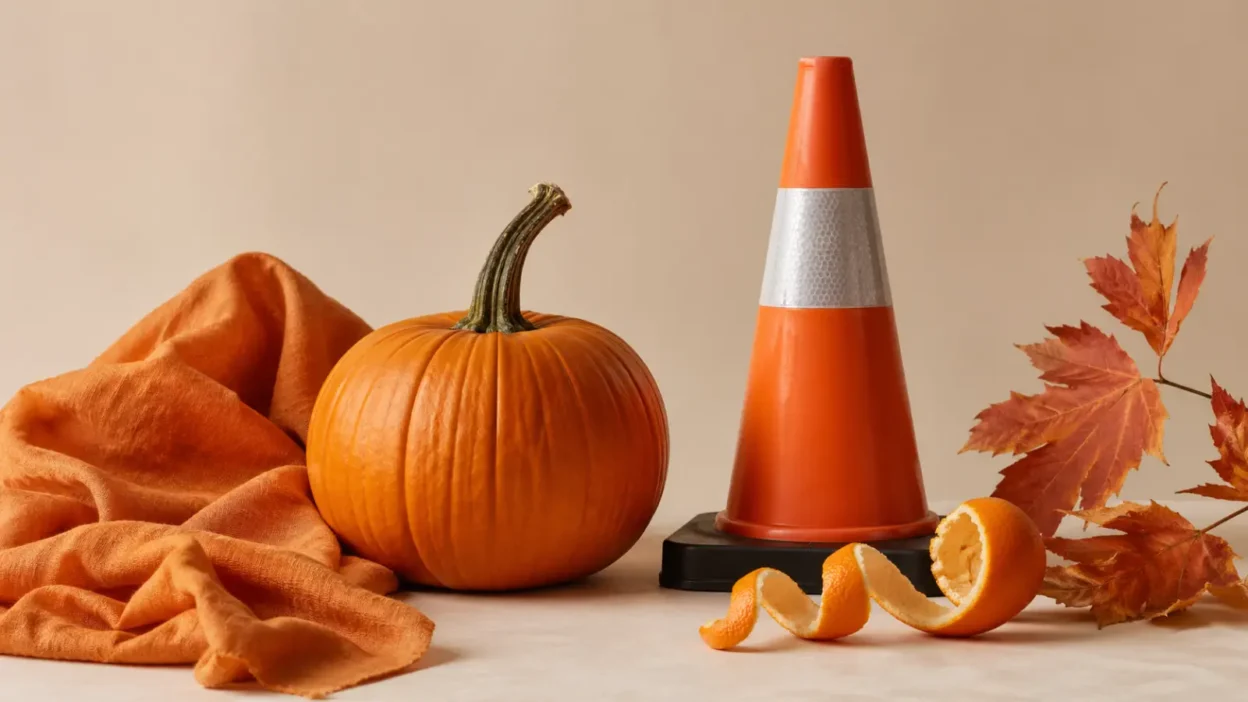
Orange color symbolism often starts with warmth. In the United States, orange usually brings to mind energy, friendliness, autumn, pumpkins, sports teams, traffic cones, and bold brands that want to be noticed.
That range is exactly why orange is interesting. It can feel cheerful in a kitchen, urgent on a road sign, sacred in a robe, playful on a hoodie, or severe on a prison uniform.
The meaning depends on shade, culture, setting, and use. Orange is not one fixed message. It is a color that changes quickly when the context changes.
Quick Answer
Orange color symbolism most commonly represents warmth, energy, creativity, sociability, and attention in modern U.S. culture. Historically, these meanings grew from orange’s visual link to fire, sunlight, fruit, autumn harvests, vivid pigments, and high visibility, but religious, political, and spiritual meanings vary by tradition.
TL;DR
- Orange often means warmth, energy, and friendliness.
- In the U.S., it strongly signals autumn and Halloween.
- Safety orange means visibility more than emotion.
- Saffron-orange has specific religious meanings.
- Orange tattoos usually express bold personal identity.
- Context changes orange faster than most colors.
What Orange Most Often Means in the U.S. Today
In everyday American life, orange usually reads as warm, active, and approachable. It sits between red and yellow, so people often connect it with some of red’s intensity and some of yellow’s brightness.
That does not mean everyone feels the same thing when they see it. A bright orange sneaker may look fun to one person and loud to another. A burnt orange wall may feel cozy in a living room but dated in a medical office.
Still, several meanings show up often:
- energy
- warmth
- playfulness
- creativity
- appetite
- friendliness
- confidence
- warning or caution
Orange rarely feels passive. Even soft peach tones carry some warmth. Stronger oranges tend to demand attention, which is why the color appears often in sports, packaging, sale signs, road work, and emergency visibility gear.
The key is that orange does not only mean “happy.” It can also mean “notice this,” “slow down,” “this is seasonal,” or “this person wants to stand out.”
Why Orange Feels Active Without Meaning the Same Thing Everywhere
Orange is a warm color. Warm colors tend to feel closer, brighter, and more stimulating than cool colors such as blue or green. That visual effect helps explain why orange is so often linked with movement, appetite, and social energy.
But color psychology should be handled carefully. Orange does not automatically change a person’s mood. People bring memories, culture, personal taste, lighting, and setting into the way they read color.
A child may connect orange with Halloween candy. A construction worker may see it as job-site visibility. A Buddhist monk may see saffron-orange robes through monastic tradition. A sports fan may think of a team jersey.
So orange is best understood as a cue, not a command. It suggests energy because of how it looks and where people often meet it. The meaning becomes stronger when the setting supports it.
In a restaurant logo, orange may suggest friendliness and appetite. On a hazard label, it suggests warning. In a fall wreath, it suggests harvest and seasonal comfort. The color stays the same, but the message changes.
How the Fruit Helped Name the Color
One reason orange feels so tied to freshness is that the color name came from the fruit. English speakers had orange-colored things before they commonly used “orange” as a basic color word. Older descriptions leaned on combinations such as yellow-red or comparisons to saffron.
As the fruit became familiar in Europe and later in English-speaking life, its name gradually helped label the color. That matters symbolically because the fruit gave orange a lasting link to citrus, sweetness, peel, fragrance, health, and sunlight.
This does not mean every orange symbol comes from oranges. Fire, autumn leaves, minerals, flowers, cloth dyes, and warning signs all shaped the color too. But the fruit made the name easy to remember.
It also gave orange a friendlier side. Red can feel urgent or aggressive. Yellow can feel bright but sharp. Orange often lands between them as lively, edible, and warm.
That fruit connection still shows up in U.S. advertising. Orange packaging can suggest flavor, vitamin C, breakfast, summer, or energy. A citrus shade feels very different from rust or safety orange because the fruit association softens it.
From Earth Pigments to Modern Bright Orange
Orange did not always have the same visual role it has now. Bright, stable orange pigments were not equally available in every period. Many older orange tones came from earth pigments, minerals, plant dyes, or unstable and sometimes toxic materials.
Realgar, a reddish-orange arsenic sulfide mineral, was used historically as a pigment, though it came with serious toxicity. Ochres could produce earthier yellow-orange and red-orange tones. Later pigments such as chrome orange, cadmium orange, and modern synthetic oranges made stronger, cleaner color effects easier for artists and manufacturers.
This history helps explain why orange in older art often appears as flame, robe, fruit, gold-like warmth, or earthy accent rather than the neon orange familiar from traffic cones and sportswear.
Modern production changed the symbolic range. Once orange could be made brighter, cheaper, and more durable, it became more useful in signs, plastics, packaging, uniforms, toys, and mass-market design.
That shift matters. A medieval saffron robe, a 19th-century orange pigment, and a 21st-century fluorescent vest do not carry the same message. They share a color family, but their meanings come from different materials and social uses.
Autumn, Harvest, Halloween, and the American Seasonal Imagination
In the United States, orange is one of the strongest seasonal colors. It appears in pumpkins, squash, maple leaves, candy corn, school decorations, fall candles, football graphics, and Thanksgiving displays.
This autumn meaning comes from visible life around people. Leaves change. Pumpkins ripen. Fires and candlelight feel welcome as nights grow colder. Orange becomes a color of transition: summer heat giving way to fall gatherings.
Halloween adds a sharper edge. Orange and black together are now a standard American Halloween palette. Orange brings pumpkins, harvest, lantern light, and playful celebration. Black brings night, death imagery, mystery, and fear.
It is tempting to say Halloween orange has one ancient source, but that oversimplifies the story. Older seasonal festivals, immigrant customs, pumpkins in North America, commercial decorations, and mass-produced party goods all helped shape the modern palette.
Thanksgiving uses orange differently. It is less spooky and more domestic. In that setting, orange suggests food, harvest, gratitude, warmth, and family tables.
So autumn orange can mean abundance, change, nostalgia, and celebration. Around Halloween, it can also become theatrical, spooky, or cartoonish.
Safety Orange: When Symbolism Comes From Visibility
Some orange meanings are practical before they are emotional. Safety orange works because it stands out.
In the U.S., bright orange is common in construction zones, traffic cones, road-work signs, hunting clothing, high-visibility vests, machine warnings, and emergency gear. Its symbolism comes from contrast and quick recognition.
This use carries several meanings at once:
- pay attention
- slow down
- a person is nearby
- work is happening
- danger may be present
- visibility matters
Safety orange is not about cheerfulness. It is about being seen before a person has time to read every word.
That is why orange can feel urgent in one setting and friendly in another. The color on a children’s backpack may feel playful. The same brightness on a roadside sign tells drivers to adjust their behavior.
In American life, this practical orange is one of the most important modern meanings of the color. It has trained people to notice orange as a signal.
Spiritual and Religious Meanings of Orange and Saffron
Orange and saffron can carry deep religious meaning, but these meanings should not be blended into one vague “spiritual” claim.
In Hindu traditions, saffron and related orange-yellow tones are often associated with sacrifice, renunciation, fire, courage, and spiritual discipline. In India’s national flag, the saffron band is officially explained in civic terms such as strength and courage. Religious and national meanings can overlap visually, but they are not the same thing.
In Buddhist monastic contexts, saffron, ocher, brown-orange, or yellow-orange robes may signal renunciation, simplicity, humility, and life outside ordinary attachment. The exact shade and meaning vary by region and tradition.
In Sikh contexts, saffron or orange may also appear in religious flags, clothing, and communal identity, with meanings tied to courage, service, and devotion.
For U.S. readers, the important point is respect. A saffron robe, flag, or religious cloth is not simply an “orange aesthetic.” It may belong to a living tradition with rules, memory, and sacred meaning.
Modern wellness culture often links orange with creativity, sensuality, chakras, or emotional expression. Those interpretations may be meaningful to practitioners, but they should be described as spiritual or metaphysical beliefs, not as proven facts or universal history.
Orange in Causes, Politics, and Public Identity
Orange also appears in public causes and group identity. In the United States, orange ribbons may represent different causes depending on the organization and campaign. They can be used for gun violence awareness, leukemia, kidney cancer, multiple sclerosis, hunger, animal protection, work-zone safety, and other issues.
This is why an orange ribbon should not be read without context. The same color can support several unrelated causes.
“Wear Orange” for gun violence awareness is a modern U.S. example. The color is tied to visibility and safety, especially the idea that orange is worn to be seen and protected.
Outside the U.S., orange can carry national or political meaning. The Netherlands is strongly associated with orange because of the House of Orange-Nassau, and Dutch sports fans often wear orange as national identity.
Red and blue dominate national political maps. So orange in U.S. politics is more often issue-based, campaign-based, or design-based than party-based.
How Shades Change the Meaning of Orange
Orange changes meaning quickly by shade. A soft peach room and a fluorescent orange sign are not saying the same thing.
| Shade | Common Meaning | Typical U.S. Context |
| Peach | softness, warmth, approachability | weddings, beauty, interiors |
| Tangerine | freshness, playfulness, energy | packaging, fashion, summer design |
| Safety orange | visibility, warning, protection | roads, vests, hunting, hazards |
| Burnt orange | earthiness, autumn, nostalgia | home decor, sports, fall clothing |
| Saffron-orange | devotion, courage, renunciation | religious cloth, flags, ceremonies |
Shade also affects emotional tone. Pale orange can feel gentle. Red-orange can feel intense. Brown-orange can feel grounded. Neon orange can feel loud or urgent.
This is why context and shade should be read together. A burnt orange bridesmaid dress suggests warmth and seasonal style. A blaze-orange hunting vest suggests safety. A saffron robe may carry religious discipline. A neon orange poster may simply be trying to catch the eye.
Orange in Branding, Clothing, Decor, Weddings, and Gifts
Orange is useful in design because it gets noticed without always feeling as severe as red. Many U.S. brands use it to suggest friendliness, affordability, speed, appetite, creativity, or a practical “let’s get started” mood.
In clothing, orange can show confidence. A bright orange jacket reads bold. A rust sweater reads cozy. A peach dress reads soft and warm. Orange is often chosen by people who do not mind being seen.
In home decor, orange works best when the shade matches the room’s purpose. Burnt orange can make a room feel grounded and autumnal. Peach can feel calm and welcoming. Very bright orange can become tiring if it covers too much space.
In weddings, orange often appears in fall palettes. It pairs with cream, brown, burgundy, gold, olive, or dusty pink. It can suggest warmth, celebration, and seasonal abundance.
In gifts, orange flowers or wrapping can feel cheerful and informal. Orange is usually less romantic than red and less innocent than white. It often says warmth, thanks, encouragement, or celebration.
Orange Tattoos, Personal Meaning, and Common Misreadings
Orange tattoos usually carry modern personal meaning rather than one fixed traditional meaning. People may choose orange ink for creativity, survival, joy, change, fire, autumn, citrus, a favorite team, a loved one’s awareness ribbon, or a spiritual association.
Because orange fades differently than black ink and may look different on different skin tones, the visual result matters as much as the symbol. A tattoo artist can help choose a shade that holds up well and suits the design.
Orange can also be misread. A small orange ribbon tattoo may refer to a cause. A flame may suggest transformation or danger. A pumpkin may feel playful. A tiger lily may suggest confidence, grief, or beauty depending on the person’s story.
The biggest mistake is treating orange as universally positive. In the U.S., orange can also suggest warning, incarceration, emergency, cheapness, overstimulation, or artificiality. Prison uniforms and orange jumpsuits have made the color carry a harsh carceral meaning in some settings.
Orange is flexible, not neutral. It can invite, warn, comfort, energize, or unsettle. The best interpretation starts with the object, shade, culture, and person using it.
FAQs
What does the color orange symbolize most often?
Orange most often symbolizes warmth, energy, friendliness, creativity, and attention. In the United States, it also strongly connects to autumn, pumpkins, Halloween, safety signs, sports, and bold branding.
Is orange a positive or negative color?
Orange can be positive or negative depending on context. It can feel cheerful, social, and creative, but it can also feel loud, artificial, urgent, cheap, or connected to warning signs and prison uniforms.
What does orange mean spiritually?
In modern spiritual interpretation, orange is often linked with creativity, emotional expression, vitality, and change. In specific religious traditions, saffron-orange may have more defined meanings tied to renunciation, courage, devotion, or monastic life, but these meanings should not be treated as universal.
What does an orange tattoo mean?
An orange tattoo may symbolize creativity, confidence, survival, warmth, a favorite season, a cause ribbon, or a personal turning point. The meaning depends on the design, shade, and the wearer’s reason for choosing it.
Why is orange associated with Halloween?
Orange is associated with Halloween because of pumpkins, autumn leaves, harvest imagery, lantern light, and U.S. holiday decoration traditions. Its pairing with black creates the familiar contrast between harvest warmth and spooky darkness.
Why is orange used for safety signs and vests?
Orange is used for safety because it is highly visible and easy to notice quickly. In traffic, construction, hunting, and workplace settings, orange often means caution, warning, or “look here.”
Does orange mean the same thing in every culture?
No. Orange changes meaning by culture and setting. It may suggest national identity in the Netherlands, religious renunciation in some South and Southeast Asian contexts, warning in U.S. safety systems, or autumn celebration in American seasonal decor.
Conclusion
Orange is one of the most context-sensitive colors. It can feel warm and welcoming, but it can also demand caution. It can suggest creativity in a tattoo, harvest in a fall display, devotion in a saffron robe, or visibility on a roadside vest.