What is symbolism? In plain English, symbolism is the use of one thing to represent or suggest something beyond its literal meaning. That thing might be a color, object, animal, image, action, place, or repeated detail in a story.
People use symbolism because a single image can communicate a complex idea quickly. A rose may suggest love. A storm may represent conflict. A broken chain may suggest freedom. A flag may represent national identity, unity, protest, or political disagreement.
Symbolism appears almost everywhere. You can find it in literature, movies, paintings, religion, tattoos, advertising, holidays, public monuments, political movements, and everyday conversation.
However, symbols do not always have one fixed meaning. Their interpretation can change depending on culture, history, audience, and context. Understanding that difference is the key to understanding symbolism correctly.
Quick Answer
What is symbolism? Symbolism is the use of a person, object, image, action, color, or place to suggest a deeper idea beyond its literal meaning.
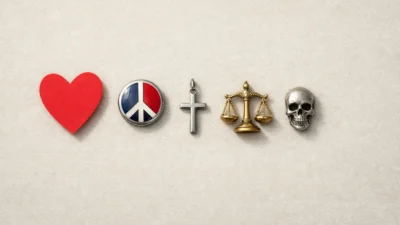
For example, a dove may symbolize peace, while a skull may suggest death or danger. However, neither meaning is universal. The meaning of a symbol depends on how and where it is used.
Symbolism is especially common in literature, art, film, religion, and public culture. The term can also refer to Symbolism, the late-19th-century artistic and literary movement that developed primarily in France.
TL;DR
- Symbolism gives additional meaning to ordinary things.
- A symbol can represent an idea, emotion, belief, or cultural value.
- Context often matters more than a fixed symbol dictionary.
- Symbolism is common in literature, art, film, religion, and public life.
- The Symbolist movement is one historical form of symbolism, not the entire concept.
- The same symbol can have different meanings across cultures and time periods.
- Good interpretation looks at context instead of forcing a single meaning.
What Does Symbolism Mean in Plain English?
Symbolism means using something concrete to communicate an idea that goes beyond the thing itself.
For instance, a rose is literally a flower. Yet roses can also suggest romance, love, beauty, remembrance, or secrecy. The meaning depends on the situation.
Likewise, a skull is literally part of the human skeleton. In different settings, however, it may represent death, danger, mortality, rebellion, or even fashion.
This is what makes symbolism different from ordinary description. A writer does not have to directly say, “This character is afraid of death.” Instead, the writer might repeatedly place skulls, graves, or other death-related images around the character.
Symbolism allows readers and viewers to discover meaning rather than simply being told what to think.
A Symbol Is Not a Code With One Fixed Answer
One of the most important things to remember is that symbols do not have universal meanings.
For example, the color red can represent love, passion, anger, blood, danger, celebration, or political identity. Its meaning depends on the surrounding context.
The same principle applies to animals, colors, objects, and gestures. A snake may represent danger in one story but healing or transformation in another. A white garment may suggest purity in one cultural setting while carrying a completely different association somewhere else.
That is why symbolism should be interpreted carefully.
When you encounter a possible symbol, ask:
- Where does it appear?
- Who is using it?
- What happens around it?
- Does it appear more than once?
- What does the surrounding culture associate with it?
- Does its meaning change during the story or scene?
- What would the intended audience likely recognize?
These questions are usually more useful than searching for one supposedly universal definition.
How Does Symbolism Work?
Symbolism generally develops through association, repetition, cultural tradition, or context.
Sometimes a symbol has a long history. National flags, religious objects, and ceremonial items can carry meanings built over generations.
Other times, a writer or artist creates symbolic meaning within a particular work. An object may seem ordinary at first but become important because it repeatedly appears during major events.
Symbolism can also develop through emotional association. Darkness, for example, may suggest fear or uncertainty in some stories. Light may suggest hope or knowledge.
Another major strength of symbolism is its ability to compress meaning.
Instead of explaining an idea through several sentences, an author can use one carefully chosen image. A broken chain can communicate freedom. An empty chair can suggest absence or loss. A locked door can suggest secrecy, isolation, or an opportunity that remains inaccessible.
The symbol does not necessarily explain everything. Instead, it invites the audience to make connections.
Symbolism in Literature and Storytelling
Literature is one of the most familiar places to find symbolism.
Writers use symbolic characters, objects, settings, colors, animals, and events to develop themes without explaining every idea directly.
For example:
- A storm may represent conflict or emotional turmoil.
- A road may suggest a journey or major life change.
- A house may represent family, security, class, or belonging.
- A broken mirror may suggest a damaged identity.
- A caged bird may represent restricted freedom.
- A seasonal change may suggest growth, aging, or loss.
However, readers should avoid assuming that every object is symbolic.
Sometimes a door is simply a door.
Strong literary symbolism usually has some evidence behind it. The object may appear repeatedly, receive unusual attention, contrast with another image, or become connected to an important theme.
This is why symbolism often overlaps with motif, imagery, and theme.
A motif is a recurring element. A symbol can be an object or image that carries additional meaning. A theme is the broader idea explored by a work.
These concepts can work together, but they are not interchangeable.
Symbolism in Art and Visual Culture
Artists can use symbolism through objects, colors, animals, gestures, bodies, lighting, composition, clothing, and even empty space.
Unlike written language, visual art can communicate several ideas at the same time. A painting may use color to create an emotional atmosphere while also using objects to suggest a larger theme.
Film uses symbolism in similar ways.
A filmmaker might use:
- Repeated colors
- Specific objects
- Mirrors and reflections
- Weather
- Costumes
- Lighting
- Locations
- Framing
- Animals
- Changes in visual composition
For example, a character repeatedly shown behind bars may visually suggest confinement even if the character is not literally imprisoned.
In modern American culture, people encounter visual symbolism every day. Sports logos, school mascots, memorials, advertisements, campaign images, movie posters, and public monuments all depend on visual shorthand.
Once you start looking for it, symbolism becomes much easier to notice.
Symbolism vs. Symbolism as a Historical Movement
There is an important distinction between symbolism as a general concept and Symbolism as a historical artistic movement.
The general concept refers to using symbols to communicate ideas beyond literal meaning.
Symbolism, with a capital S, refers to a late-19th-century literary and artistic movement associated particularly with France.
Symbolist writers and artists often emphasized suggestion, imagination, dreams, emotion, mystery, and subjective experience. They reacted against approaches that focused heavily on realistic description and direct representation.
The movement influenced poetry, painting, theater, and other forms of artistic expression.
Understanding this distinction prevents a common misunderstanding. When someone asks, “What is symbolism?” they are usually asking about the broad concept. They are not necessarily asking about the historical Symbolist movement.
The movement is an important part of the history of symbolism, but it does not define the entire idea.
Symbolism in Religion and Spiritual Traditions
Religious symbolism requires additional care because religious symbols can be connected to worship, doctrine, ritual, history, and community identity.
A cross, crescent, lotus, candle, sacred text, or ceremonial object may carry meanings that are deeply important to a particular religious community.
Those meanings can also have several layers. A symbol may have theological significance while also carrying personal, historical, or cultural meaning.
Folklore and superstition work somewhat differently.
A particular sign may be considered lucky or unlucky within one community without being treated that way elsewhere. Similarly, an omen can have cultural significance without being scientifically established.
For that reason, careful explanations should distinguish between:
- Historical evidence
- Religious belief
- Cultural tradition
- Folklore
- Personal interpretation
- Superstition
These categories should not automatically be treated as the same thing.
Symbolism in Modern American Life
Symbolism is not limited to books and art classes. It is deeply connected to public life in the United States.
Americans encounter symbolic images through flags, monuments, national animals, memorials, sports, political campaigns, holidays, advertising, and popular culture.
The American flag, for example, can represent patriotism and national identity. But its meaning can change depending on the setting.
The American flag can carry different meanings depending on the setting. During a national celebration, it may represent patriotism and unity. At a memorial, the symbol can express remembrance and sacrifice. In a protest, it may communicate disagreement, solidarity, or political identity. Political campaigns can also use the flag to appeal to ideas of national pride.
The physical object is the same, but the message can change.
This illustrates one of the most important principles of symbolism:
Context can change meaning.
A symbol can represent pride in one situation and disagreement in another. It can be personal in one setting and political in another.
Common Symbolism Examples
Here are several familiar examples and some meanings they may suggest in U.S. culture:
| Symbol or Image | Common Association | Other Possible Meanings |
|---|---|---|
| White dove | Peace | Religious or spiritual meaning |
| Skull | Death or danger | Rebellion, mortality, fashion |
| Snake | Danger or deception | Healing, transformation, renewal |
| American flag | Patriotism or national identity | Protest, grief, political identity |
| Rose | Love or romance | Memory, beauty, secrecy |
| Broken chain | Freedom | Resistance, liberation |
| Light | Hope or knowledge | Truth, revelation, safety |
| Darkness | Fear or uncertainty | Mystery, privacy, the unknown |
| Open door | Opportunity | Freedom, transition, invitation |
| Cage | Confinement | Protection, restriction, isolation |
These are common associations, not universal rules.
A symbol’s meaning can change according to the story, culture, audience, historical period, and purpose.
Why Does Symbolism Feel So Powerful?
Symbolism can be emotionally powerful because images are often easier to remember than abstract explanations.
Think about how quickly a familiar symbol can trigger an idea.
A heart can suggest love.
A wedding ring can suggest commitment.
A gravestone can suggest death or remembrance.
A national flag can suggest identity and belonging.
The symbol can activate memories and associations without requiring a long explanation.
Symbols also help communities communicate shared ideas.
A familiar religious symbol can connect people to a tradition. A national emblem can connect people to a country. A memorial can connect a physical place to a shared historical memory.
In this way, symbols can function as a kind of cultural shorthand.
How Symbolic Meanings Change Over Time
Symbolic meanings are not frozen forever.
They can change as societies change. Art movements, political events, religious traditions, technology, and popular culture can all influence how people understand familiar images.
An object may begin with a religious meaning and later become primarily decorative. Another symbol may become political after being adopted by a movement. A once-serious image may eventually become humorous or commercial.
Social media can accelerate this process because images can move between communities and contexts very quickly.
That is another reason to be cautious with claims such as “this symbol always means X.”
Sometimes a traditional meaning is strong. But even strong associations can shift.
Common Mistakes When Interpreting Symbolism
1. Assuming Every Object Is Symbolic
Not everything in a story has a hidden meaning.
Authors need ordinary objects to make stories believable. A character may drink coffee because they are thirsty, not because the coffee symbolizes something.
Look for evidence before assigning symbolic meaning.
2. Treating One Meaning as Universal
A symbol can mean different things in different cultures.
A color, animal, gesture, or religious image should not automatically be interpreted through one cultural lens.
3. Ignoring the Context
The same image can communicate different ideas depending on where it appears.
A skull on a warning sign is different from a skull in a fashion design. The visual element is similar, but the purpose changes the interpretation.
4. Confusing Interpretation With Fact
An interpretation can be reasonable without being proven.
This distinction becomes especially important when discussing folklore, dreams, omens, or spiritual symbolism.
It is better to say that a tradition associates an image with a particular meaning than to present that belief as an objective fact.
5. Overlooking Repetition
In literature and film, repetition can provide important evidence.
If an image appears at several major moments, it may be functioning as a motif or symbol.
One isolated appearance usually provides weaker evidence.
How to Read Symbolism Correctly
A simple four-step method can make symbolism easier to understand.
Step 1: Identify the Literal Object
Start with what you can actually see or read.
Is it a bird, color, building, action, item, or setting?
Do not interpret it yet.
Step 2: Examine the Context
Ask what is happening around the symbol.
Who uses it? When does it appear? What emotions surround it?
Context often provides the strongest clue.
Step 3: Look for Patterns
Does the image appear repeatedly?
Has its meaning changed over time?
Does it appear near important events or characters?
Patterns can reveal whether an ordinary detail has become symbolically important.
Step 4: Consider the Audience
Think about what the intended audience might already know.
A religious symbol may mean something different to a practicing member of that faith than to someone unfamiliar with the tradition.
Likewise, a national symbol may carry different associations for different groups.
The goal is not to find the one “correct” answer immediately. The goal is to build the most reasonable interpretation from evidence and context.
Symbolism vs. Metaphor: Are They the Same?
Symbolism and metaphor are related, but they are not identical.
A metaphor usually compares one thing to another to create a particular effect or idea.
Symbolism gives an object, image, action, or detail a broader meaning beyond its literal form.
For example, saying “time is a thief” is a metaphor.
A repeatedly appearing broken clock that represents lost time, aging, or regret may function as a symbol.
The two techniques can overlap. Writers often use metaphors and symbols together.
What Does Symbolism Mean in Tattoos?
Tattoo symbolism often combines widely recognized associations with personal meaning.
A person might choose a rose because it represents love. Another person might choose the same image to remember someone they lost.
A bird might represent freedom to one person and a specific memory to another.
This is why tattoo symbolism is rarely completely universal. The design may have a traditional meaning, but the wearer can give it a deeply personal interpretation.
Why Does Symbolism Matter?
Symbolism matters because it allows people to communicate ideas that are difficult to express directly.
A symbol can connect an ordinary object with:
- Emotion
- Memory
- Identity
- Belief
- History
- Power
- Loss
- Hope
- Freedom
- Community
It is useful because people do not communicate through words alone.
Stories use symbols. Artists use symbols. Religions use symbols. Governments use symbols. Advertisers use symbols. Individuals use symbols to express personal experiences.
Symbolism therefore remains relevant because human beings continue to attach meaning to images, objects, actions, and traditions.
FAQs
What does symbolism mean in literature?
In literature, symbolism means using a character, object, setting, action, image, or detail to suggest a larger idea or theme. It allows writers to communicate meaning indirectly.
Is symbolism the same as metaphor?
No. Metaphor creates a comparison, while symbolism gives something a broader meaning beyond its literal form. However, the two techniques can overlap.
What is symbolism in art?
Symbolism in art is the use of visual elements to communicate ideas, emotions, beliefs, or themes beyond their literal appearance. Artists can use colors, objects, figures, gestures, and composition symbolically.
Is symbolism always universal?
No. Symbolic meanings can vary across cultures, religions, historical periods, and social groups. Context is usually more reliable than a universal list of meanings.
What does symbolism mean in tattoos?
Tattoo symbolism refers to the ideas or personal meanings associated with a tattoo design. A tattoo may have a traditional meaning while also representing a private memory or experience for the person wearing it.
Why is symbolism important in everyday life?
Symbolism helps people communicate complicated ideas quickly. Flags, logos, religious objects, memorials, clothing, colors, and public monuments can all carry meanings that go beyond their physical form.
Conclusion
So, what is symbolism?
Symbolism is the use of something concrete to suggest an idea, emotion, belief, or meaning beyond its literal form. A color can suggest an emotion. An object can represent a memory. An image can communicate identity. A repeated detail in a story can reinforce an important theme.
The most important thing to remember is that symbols do not always have one permanent meaning.
Context matters.
Culture matters.
History matters.
Audience matters.
When you interpret symbolism, look beyond the object itself. Ask what it means in that particular setting and why the creator chose it.
That approach produces a deeper and more accurate understanding of symbolism in literature, art, religion, film, and everyday American life.