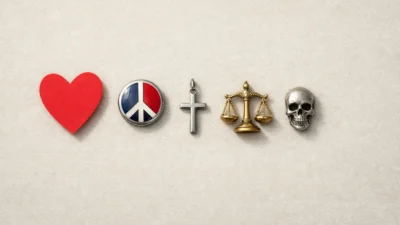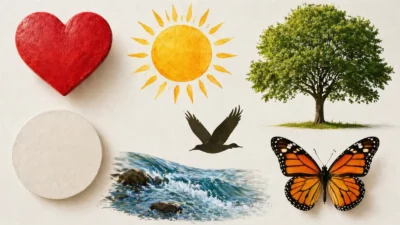
At its simplest, symbolism explained means understanding how a person, object, image, color, gesture, or creature comes to stand for something more than itself. A symbol is not just what you see. It is what a community has learned to connect to that thing over time.
People care about symbolism because symbols do a lot of work very fast. They can signal love, danger, grief, faith, patriotism, rebellion, status, or belonging without a long explanation. That is one reason symbols show up everywhere, from novels and movies to tattoos, logos, sports mascots, and emojis.
In modern U.S. culture, symbolism matters because daily life is full of shared shorthand. A wedding ring suggests commitment. A pink ribbon suggests breast cancer awareness. A school mascot can stand for local pride. A flag can signal unity to one person and something more complicated to another.
That last point matters most: symbolism is not magic, and it is not fixed. Meanings are made by history, habit, storytelling, religion, politics, and social use.
Quick Answer
Symbolism explained in plain English is this: a symbol is something visible or familiar that points to a larger idea, feeling, value, or memory. Today, the most common U.S. understanding of symbolism is shared meaning in everyday life, but those meanings usually come from culture, repetition, and history rather than from the object itself.
TL;DR
- Symbols point beyond their literal form.
- Meanings are learned, not automatic.
- Context changes what a symbol suggests.
- U.S. symbolism is strongly civic and commercial.
- Sacred meanings are not the same as décor.
- Symbols can gain new meanings over time.
What symbolism actually means
Symbolism is the use of something concrete to express something less concrete. That “something” might be an object, an animal, a color, a place, a gesture, or even a repeated action.
A stop sign is one easy example. Literally, it is a red octagon with a word on it. Symbolically, it stands for law, caution, and the social rule that movement must pause here. A heart shape is another example. It does not look much like the real organ, but in American culture it strongly suggests love, intimacy, and care.
This is why symbolism is bigger than decoration. Decoration may simply look pleasing. A symbol carries meaning that people recognize, even if they do not all interpret it the same way.
It also helps to separate a symbol from a sign. A sign often gives a direct instruction or identifies something. A symbol usually carries more layers. In real life, many things do both.
How symbols gain meaning in the first place
Symbols do not arrive with meaning built in. People give them meaning through repeated use.
That usually happens in a few ways. A trait may stand out and invite association. Lions look strong, so they are often linked with courage or authority. A repeated social use may harden into convention. Rings became tied to marriage because they were used in marriage rituals often enough to feel natural. Stories also matter. Once religion, myth, literature, or national memory links a thing to an idea, later generations may inherit that connection.
Power matters too. States, churches, schools, brands, and movements all help fix meaning by repeating the same symbols in public. When a symbol is taught, displayed, sung, worn, bought, or posted often enough, it starts to feel obvious.
That sense of obviousness can be misleading. A symbol may feel natural when it is really historical.
Why symbolism is bigger than literature
Many people first hear about symbolism in English class. That is understandable. Writers use objects and images to hint at deeper ideas all the time.
But symbolism is not just a literary device. It is also a social habit. People use symbols to organize public life, express faith, market products, mourn losses, and build group identity.
Think about how often Americans meet symbolism outside books:
- in national holidays and memorials
- in team logos and mascots
- in wedding and funeral customs
- in awareness ribbons and campaign colors
- in religious jewelry and icons
- in emojis, reaction images, and profile pictures
Once you notice that, symbolism stops looking like a special technique used only by poets. It starts looking like part of how culture works.
The main kinds of symbolism people meet today
Different symbols do different jobs. That is why it helps to sort them by setting instead of treating them as one giant category.
| Type | What it does | Common U.S. example | Main caution |
|---|---|---|---|
| Civic | Builds public identity | Flag, eagle, Liberty Bell | Can unite and divide |
| Religious | Expresses sacred meaning | Cross, crescent, menorah | Not just aesthetic |
| Literary | Adds layered meaning in stories | Storm as turmoil | Depends on context |
| Commercial | Signals brand values or lifestyle | Apple logo, luxury colors | Meaning is managed |
| Digital | Compresses emotion or tone | Heart emoji, fire emoji | Meaning shifts fast |
This comparison matters because readers often mix these types together. A sacred symbol is not interpreted the same way as a logo. A literary symbol inside one novel may not travel well outside that work. A digital symbol can change meaning in just a few years.
Why the same symbol can mean different things
One of the biggest mistakes people make is assuming a symbol has one stable meaning everywhere. Usually, it does not.
Context changes symbolism in at least four ways:
- Culture: A creature or color may carry one meaning in one place and a different one elsewhere.
- Time period: What felt noble, lucky, or fashionable in one era may feel dated or troubling later.
- Community: A church member, tattoo artist, activist, and marketer may all read the same image differently.
- Situation: A black dress at a funeral, fashion event, or graduation does not say the same thing.
That is why broad claims like “the owl always means wisdom” or “the rose always means love” are weak. Those meanings can be common, but they are never the whole story.
Good interpretation starts with the setting, not with a fixed list.
How history changes symbolic meaning
Symbols change because societies change. A symbol can gain layers, lose older meanings, or split into competing meanings.
Sometimes the change is gradual. The American flag has changed in design over time while keeping a broad link to national identity. At the same time, public debates can give that same flag sharper political meanings in different moments.
Sometimes change is dramatic. A symbol once associated with good fortune in several traditions can become widely identified with twentieth-century atrocity after political appropriation. That does not erase the older history, but it does change how the symbol is received in much of modern public life.
This is one reason historical responsibility matters. The oldest meaning is not always the dominant modern meaning. The newest meaning is not always the only meaning either. Both may exist at once, but not with equal weight.
Symbolism in the United States today
In the United States, symbolism is especially visible in civic and commercial life. Americans meet shared symbols through schools, sports, memorials, elections, military imagery, shopping, and digital media.
A few patterns stand out.
First, U.S. symbolism often leans on public identity. Flags, anthems, eagles, monuments, and uniforms help turn abstract ideas like nationhood, sacrifice, or freedom into something visible.
Second, U.S. symbolism is highly branded. Companies do not just sell products. They try to attach images, colors, fonts, and mascots to feelings like trust, speed, luxury, ruggedness, or wellness.
Third, symbolism in the United States is often emotionally condensed. Awareness ribbons, flowers at memorials, black clothing at funerals, and team colors at games all let people communicate loyalty, grief, solidarity, or pride quickly.
That does not mean everyone reads those symbols the same way. In a large and diverse country, shared symbolism is often real but never total.
Spiritual and religious symbolism needs a different kind of care
Religious symbolism is not just a decorative style. For many people, it is part of active belief, ritual life, inherited memory, and community identity.
That means a religious symbol has an internal meaning inside the tradition that may be richer than the meaning outsiders assume. A cross can function as jewelry, but in Christianity it also carries teachings about suffering, redemption, sacrifice, and resurrection. A lotus may appear in wellness branding, but in South and East Asian religious traditions it has deeper doctrinal and devotional meanings that do not reduce neatly to “purity.”
This is where modern culture often oversimplifies. Sacred symbols are regularly lifted into fashion, décor, tattoos, or vague “spiritual” language without much attention to the communities that shaped them.
Respect starts with asking a simple question: is this symbol being used as a living expression of faith, or as a loose aesthetic borrowed from somewhere else?
Branding, tattoos, décor, and emojis: modern symbolic shortcuts
Modern life runs on quick symbolic communication. That is one reason symbolism shows up so strongly in personal style and mass media.
Branding: Logos, packaging, and color choices aim to make buyers feel something before they think much about it. Clean lines can suggest efficiency. Earth tones can suggest nature or honesty. Metallic finishes can suggest luxury.
Tattoos: People often choose symbols to make identity visible. A compass may suggest direction, a memorial date may mark grief, and an animal may stand for a trait the wearer values. The meaning can be public, private, or both.
Home décor and fashion: Snakes, moons, evil-eye motifs, crosses, celestial imagery, and floral symbols often move from tradition into trend. Once that happens, the original meaning may stay, fade, or get simplified.
Emojis and digital culture: These may be the fastest-moving symbols of all. A heart, skull, fire, folded hands, or clown face can shift tone depending on age, platform, group humor, and moment.
In all these spaces, symbolism works as compression. It turns a bigger feeling or idea into a small, repeatable image.
When symbolism gets oversimplified, commercialized, or misused
Not all symbolic reuse is harmless. Some uses flatten cultural meaning. Others create confusion. Some cause real harm.
One problem is oversimplification. Online lists often present symbols as if they have one eternal meaning. That makes symbolism sound neat, but it usually hides history and disagreement.
Another problem is commercial stripping. A sacred image may be turned into a trendy print or accessory with little attention to the people who treat it as holy.
A more serious issue is harmful appropriation or political capture. Some symbols become tied to extremist or violent histories so strongly that public perception changes for generations. In those cases, saying “it originally meant something else” may be historically true, but it may also be socially incomplete.
Responsible interpretation holds both truths when needed: older meanings may matter, and present-day harm may matter too.
A practical way to interpret symbolism without overreading it
You do not need to turn every object into a hidden message. A better approach is simple.
Ask:
- What is this symbol literally?
- Where is it appearing?
- Who is using it?
- What history travels with it?
- Is the meaning widely shared, group-specific, or personal?
- Is this a documented tradition, a modern trend, or just one interpretation?
That method helps you stay grounded. It also keeps symbolism from sliding into guesswork.
The best readings are usually modest. They explain what a symbol most likely suggests in context, while leaving room for overlap, disagreement, and change.
If you’re new to the topic and want a simple starting point, check out our complete beginner-friendly guide on symbolism for beginners to understand the basics before exploring deeper symbolic meanings.
FAQs
Is symbolism the same as a metaphor?
No. A metaphor compares one thing to another, while symbolism uses a person, object, image, or action to carry meaning beyond the literal level. The two often overlap, but they are not identical.
Does every symbol have a universal meaning?
No. Some meanings are widespread, but symbols are usually shaped by culture, community, and situation. A meaning that feels obvious in one place may not carry over cleanly somewhere else.
What does symbolism mean in tattoos?
In tattoos, symbolism usually turns a visual image into a statement about identity, memory, belief, grief, or aspiration. Some tattoo meanings are widely shared, but many are personal and cannot be read accurately without context.
Is religious symbolism different from general symbolism?
Yes. Religious symbols often belong to living traditions and carry meanings formed by ritual, doctrine, and community practice. Treating them as generic design elements can miss what makes them meaningful in the first place.
Why do symbols change over time?
They change because societies change. Wars, migration, politics, media, commerce, and new generations can all add, erase, or reshape what a symbol suggests.
Can a symbol have both positive and negative meanings?
Yes. In fact, many do. A symbol can feel comforting to one group, painful to another, or simply mean different things in different settings.
Conclusion
Symbols matter because they help people carry large ideas in small forms. They make values visible. They turn memory into image. They let communities repeat meaning until it feels familiar.