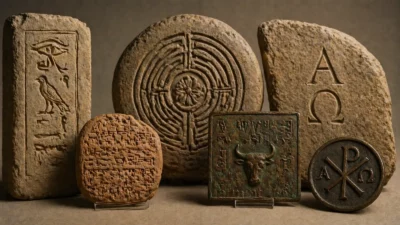
Symbolism in literature is the use of concrete things—such as objects, colors, places, actions, or names—to suggest meanings beyond their literal role in a story. A flower may suggest love or loss. A road may represent a choice or a new beginning. A storm may reflect conflict, fear, or emotional turmoil.
Symbolism matters because literature can communicate ideas without stating everything directly. A writer can use a simple object or image to connect the plot with deeper emotions and themes. Readers may remember a story through its powerful images long after they forget individual plot details.
In the United States, symbolism is also a common part of literary education. Students often learn to identify symbols, examine repeated images, and connect them to a story’s themes. The same kind of analysis appears in book clubs, literary criticism, film discussions, and everyday conversations about what a story “really means.”
The concept may sound simple, but symbolism is easy to misunderstand. A symbol is not simply a secret message hidden inside a story. It is a concrete detail that gains additional meaning because of its context, repetition, contrast, placement, or connection to important events.
Quick Answer
Symbolism in literature is a literary device in which a concrete detail represents or suggests a larger idea, emotion, theme, or concept. Writers may use objects, colors, animals, settings, actions, or other details symbolically.
The meaning of a symbol usually depends on the context of the specific work. A river might suggest freedom in one story but separation or danger in another.
Symbolism is also different from the historical Symbolist movement of the late 19th century. Most readers today use “symbolism” to describe the general literary technique rather than that specific artistic movement.
TL;DR
- Symbols connect concrete details with larger ideas or themes.
- Symbolic meaning depends on context rather than fixed definitions.
- One symbol can have several related meanings.
- Symbolism is much older than the historical Symbolist movement.
- U.S. students commonly study symbolism through close reading.
- Not every repeated object or image is automatically a symbol.
- Strong interpretations should be supported by evidence from the text.
What Does Symbolism in Literature Actually Mean?
In literature, symbolism occurs when a thing in a story carries meaning beyond its literal function. The object, place, action, or image still exists within the story, but it also points toward something larger.
For example, a road is literally a path that characters can travel. However, a writer may use a road to suggest choice, change, freedom, uncertainty, or a journey through life.
The same principle applies to many familiar literary details:
- A window may suggest freedom, separation, or longing.
- A locked door may suggest secrecy, isolation, or a barrier.
- Winter may suggest death, loneliness, or emotional coldness.
- Spring may suggest renewal, growth, or a fresh beginning.
- A mirror may suggest identity, vanity, self-knowledge, or distorted perception.
These associations are not universal rules. Their meaning depends on how the writer uses them.
That distinction is essential. You should not assume that every rose represents love or every storm represents anger. A writer may use a familiar symbol in an unexpected way.
Why Do Writers Use Symbolism?
Writers use symbolism because it allows them to communicate complex ideas without explaining everything directly.
A direct statement might tell readers exactly what a character feels. A symbol can allow readers to experience that feeling through an image or event instead.
For example, imagine a character returning to an abandoned childhood home. The house could simply provide the setting for the scene. However, its condition might also reflect the character’s memories, family history, regret, or emotional distance from the past.
Symbolism can also make a story more memorable. A recurring object can connect different scenes and help readers recognize changes in a character or conflict.
It gives literature another layer of meaning without removing the literal story.
How Does Symbolic Meaning Develop?
Most effective symbols do not receive their meaning from a simple dictionary. Their significance develops within the story.
A writer may introduce an object early, return to it at important moments, and change the circumstances surrounding it. As the plot develops, readers begin to associate the object with particular emotions or ideas.
Symbolic meaning can develop through:
- Repetition — An image repeatedly appears at important moments.
- Contrast — The writer places the symbol against an opposing image or idea.
- Context — The surrounding events give the detail additional meaning.
- Character association — An object becomes connected to a particular character.
- Change — The symbol takes on a different meaning as the story progresses.
- Consequences — Important events repeatedly occur around the symbol.
This is why context matters so much.
A window in one novel might represent freedom. In another, it might represent separation or surveillance. The important question is not simply, “What does a window symbolize?”
Instead, ask:
What does the window suggest in this particular story?
A Brief History of Symbolism in Literature
Symbolic storytelling is much older than modern literary criticism. Myths, religious texts, folktales, epics, and dramas have used objects, animals, landscapes, journeys, numbers, and natural events to communicate ideas beyond their literal meanings.
Ancient and medieval stories often relied on symbols that audiences recognized through religious, cultural, or traditional knowledge. However, the meaning of a symbol could change between cultures and historical periods.
The word Symbolism also refers to a specific literary and artistic movement that developed during the late 19th century, particularly in France and other parts of Europe.
The Symbolist movement emphasized suggestion, mood, imagination, and indirect meaning. Writers and artists associated with the movement often rejected overly literal representation and explored ideas through atmosphere and imagery.
These two meanings should not be confused.
When most U.S. readers today discuss symbolism in literature, they usually mean the general literary device. They are not necessarily referring to the historical Symbolist movement.
Symbolism vs. Metaphor, Allegory, Motif, and Theme
Symbolism is closely related to several other literary concepts, but the terms are not interchangeable.
| Term | What it does | Typical scale | Important distinction |
|---|---|---|---|
| Symbol | Gives a concrete thing additional meaning | A detail or group of details | Meaning depends heavily on context |
| Motif | Repeats an image, phrase, idea, or pattern | Throughout a work | Repetition alone does not prove symbolism |
| Metaphor | Compares one thing with another | Often a phrase or sentence | A metaphor and symbol can work together |
| Allegory | Builds a second level of meaning across a narrative | Much or all of a work | Usually more systematic than ordinary symbolism |
| Theme | Expresses a central idea the work explores | Whole work | Symbols can help develop themes |
Symbolism vs. Motif
A motif is a recurring element in a literary work. That element may become symbolic, but repetition alone does not automatically make it a symbol.
For example, if birds repeatedly appear in a story, they form a motif. If those birds consistently become connected with freedom, confinement, or a character’s desire to escape, the motif may also function symbolically.
Symbolism vs. Metaphor
A metaphor makes a comparison between two unlike things.
A symbol, by contrast, remains a literal part of the story while carrying additional meaning.
The two can overlap. A writer may use a metaphor to establish an idea and then use a related symbol throughout the rest of the work.
Symbolism vs. Allegory
An allegory generally operates on a much larger scale. Characters, events, settings, and actions may consistently correspond to another system of ideas.
Symbolism can exist inside an allegory, but a single symbol does not automatically make an entire story an allegory.
Symbolism vs. Theme
A theme is a larger idea that a literary work explores, such as love, freedom, grief, identity, or power.
Symbols can help communicate those themes.
For example, a recurring cage might symbolize confinement while supporting a broader theme about the struggle for freedom.
What Does Symbolism Usually Mean to American Readers?
In the United States, symbolism is strongly connected with close reading. Students are often encouraged to identify meaningful details, examine patterns, and explain how those details support a work’s larger themes.
That classroom approach has influenced everyday literary discussion.
When an American reader says that a novel is “full of symbolism,” they may mean that its objects, settings, colors, or images appear deliberately chosen and carry multiple layers of meaning.
Symbolism is not limited to literature, either. People regularly discuss symbolism in movies, music, photography, advertising, fashion, sports logos, memorials, and political imagery.
The medium changes, but the basic concept remains similar: a visible or recognizable thing can communicate an idea beyond its literal form.
How Symbolism Appears in Different Literary Forms
Symbolism in Novels
Novels have plenty of space to develop symbolic patterns. An object or setting can appear at different stages of the story and gain new meaning as the characters change.
A family home, for example, might begin as a place of comfort. Later, the same house could become associated with conflict, memory, or loss.
Symbolism in Poetry
Poetry often uses symbolism in a more concentrated way. A single image may carry several meanings within only a few lines.
A tree, bird, river, road, or moon can contribute to the poem’s emotional atmosphere while also supporting its larger ideas.
Symbolism in Drama
Drama can communicate symbolism through props, costumes, gestures, settings, lighting, and stage space.
A chair, door, photograph, or piece of clothing may become meaningful because of how characters interact with it.
Symbolism in Film Adaptations
When literature is adapted for film, symbolic ideas can become visual patterns. A director may emphasize a particular color, object, location, or image.
This can make literary symbolism easier to recognize because viewers can see the pattern rather than only reading about it.
Common Types of Symbols in Literature
Certain categories appear frequently in literary works. Readers often notice them because they already have cultural or emotional associations.
Colors
Colors can suggest mood, identity, danger, purity, grief, celebration, or change.
However, color meanings vary across cultures and individual works. There is no universal rule that says one color must always represent one idea.
Animals
Animals often carry meanings drawn from folklore, religion, mythology, or cultural tradition.
A bird may suggest freedom, but it might also represent vulnerability, observation, death, or captivity depending on the story.
Weather
Rain, storms, snow, sunlight, and fog can help establish atmosphere while also reflecting conflict or emotional states.
A storm may accompany a character’s crisis, for example, but that does not mean every storm is automatically a symbol of anger.
Places and Settings
Houses, forests, gardens, roads, rivers, doors, and windows often become symbolic because of their relationship to characters and events.
A house might represent safety in one work and confinement in another.
Objects
Everyday objects can become powerful symbols when writers connect them with memory or emotion.
A photograph might represent the past. A broken watch might suggest lost time. A wedding ring might suggest commitment, memory, or a complicated relationship.
When Symbolism Draws From Religion or Folklore
Some literary symbols come from religious traditions, mythology, folklore, or sacred texts.
Examples include animals, plants, numbers, natural events, and objects that already have established associations within a particular community.
A writer may use such a symbol in several ways. They might preserve its traditional meaning, reinterpret it, challenge it, or use it mainly for atmosphere.
Readers should therefore avoid reducing religious or cultural symbols to one generic definition.
A serpent, for instance, can have very different meanings depending on the religious, cultural, historical, and literary context.
Folklore works in a similar way. Omens, lucky animals, dream symbols, seasonal traditions, and supernatural beliefs can enter literature with meanings that existed before the story was written.
Once a symbol appears in a literary work, however, its specific meaning still needs to be supported by the text.
Common Mistakes When Interpreting Symbolism
Symbolism becomes difficult when readers treat interpretation like a search for one correct answer.
Mistake 1: Assuming Every Detail Is Symbolic
Not every object has a hidden meaning.
Sometimes a chair is simply a chair. A character may walk through a door because the plot requires it.
Look for evidence before assigning symbolic significance.
Mistake 2: Using a Fixed Symbol Chart
Symbol dictionaries can provide useful starting points, but they should not replace close reading.
A rose may suggest love in one work and decay or danger in another.
Mistake 3: Ignoring Context
The same image can mean completely different things in different stories.
Always examine what happens around the symbol and how characters respond to it.
Mistake 4: Confusing the Symbol With the Theme
A symbol is usually a concrete element. A theme is an idea the work explores.
A cage might symbolize confinement, while freedom could be the larger theme.
Mistake 5: Treating One Interpretation as the Only Possible Answer
Literary interpretation can allow multiple readings.
However, that does not mean every interpretation is equally strong. A convincing interpretation needs evidence from the text.
How to Identify Symbolism in a Literary Work
You do not need to search for hidden meanings in every sentence. Instead, look for patterns that appear meaningful.
Ask yourself:
- What objects or images receive unusual attention?
- Does a particular detail appear more than once?
- Does it appear during important scenes?
- Does its meaning change over time?
- What emotions surround it?
- Do characters react to it in unusual ways?
- Does it contrast with another recurring image?
- How does it connect with the story’s larger conflict?
- Does it support an important theme?
Once you identify a possible symbol, test your interpretation against the entire work.
A strong interpretation should explain several pieces of evidence rather than relying on one isolated detail.
A Simple Example of Symbolic Reading
Imagine a novel in which a character repeatedly looks through a bedroom window while imagining a different life.
At first, the window may simply be part of the setting. Later, the character sees the outside world while feeling trapped inside the house. Near the end, the character finally leaves the house and looks back through the same window.
The window could reasonably be interpreted as a symbol of freedom, separation, or longing.
The interpretation becomes convincing because the writer has connected the window with the character’s emotional conflict throughout the story.
That is how symbolism usually works. The meaning develops through the relationship between the detail and the story.
Can One Symbol Have Multiple Meanings?
Yes. In fact, strong symbols often have several connected meanings.
A river might represent:
- Change
- Passage
- Separation
- Freedom
- Danger
- The movement of time
Which meaning matters most depends on the literary work.
A symbol can also change meaning during the story. Early in a novel, a river may represent freedom. Later, after a character loses someone while crossing it, the same river may become associated with grief.
This flexibility is one reason symbolism can make literature so rich.
Is Symbolism Always Intentional?
Not necessarily in a way that can be proven.
Some symbols are clearly emphasized by a writer through repetition, placement, description, or plot consequences. Other interpretations emerge when readers notice patterns in the completed work.
The safest approach is to distinguish between authorial intention and reader interpretation.
Instead of saying, “The author definitely intended this object to mean X,” a careful reader might say, “The repeated appearance of this object suggests X because…”
That wording keeps the interpretation connected to evidence.
Why Symbolism Still Matters Today
Symbolism remains important because modern life is filled with symbols.
People encounter symbolic meaning in:
- Brand logos
- Memorials
- Emojis
- Wedding traditions
- Political images
- Sports mascots
- Clothing
- Advertising
- Social media images
- Public monuments
Understanding symbolism helps people recognize how images influence emotion and communicate ideas.
Literature offers valuable practice because it teaches readers to slow down and examine those associations instead of accepting the first meaning that comes to mind.
Symbolism can also deepen emotional understanding. A simple object can represent memory, grief, hope, fear, identity, or belonging.
At its best, symbolism does not turn reading into a puzzle where every detail has a secret answer. Instead, it makes readers more attentive to how stories create meaning.
How to Write About Symbolism in an Essay
If you need to discuss symbolism in a literary essay, avoid simply stating what an object “means.”
Instead, explain the connection between the symbol and the story.
A useful structure is:
Identify the symbol → provide textual evidence → explain its context → connect it to a theme.
For example:
The recurring window symbolizes the character’s desire for freedom because it repeatedly appears when she imagines life beyond her home. As the story progresses, the window becomes a visual reminder of the distance between her current life and the independence she wants.
This approach is stronger than writing, “The window symbolizes freedom,” without explaining why.
Frequently Asked Questions
What does symbolism in literature mean?
Symbolism is the use of a concrete detail to suggest a larger idea, emotion, or theme. The detail remains part of the literal story while carrying additional meaning.
Is symbolism a literary device?
Yes. Symbolism is commonly treated as a literary device because writers use concrete elements to communicate ideas beyond their literal meaning.
What are common examples of symbolism?
Common examples include roads representing journeys or choices, seasons representing change, windows representing freedom or separation, and light representing hope or knowledge. However, these meanings depend on context.
Is symbolism the same as a metaphor?
No. A metaphor creates a comparison between unlike things, while a symbol is a concrete element that carries additional meaning. The two can work together but are not identical.
Is symbolism the same as a motif?
No. A motif is a recurring element, such as an image, phrase, object, or idea. A motif may become symbolic, but repetition alone does not make something a symbol.
Is symbolism the same as allegory?
No. Symbolism generally operates through particular details, while allegory usually creates a broader second level of meaning across a large part or the entirety of a narrative.
Can a symbol have more than one meaning?
Yes. A symbol can carry several related meanings, and its significance may change as the story develops.
How do you identify symbolism in a story?
Look for details that receive unusual attention, appear repeatedly, occur during important moments, or connect strongly with a character’s emotions and the work’s larger themes.
Is every repeated object a symbol?
No. Repetition can indicate a motif, but it does not automatically prove that the object has symbolic meaning. The surrounding context should support the interpretation.
Why do students study symbolism in literature?
Symbolism provides a practical way to practice close reading. It helps students connect specific textual details with larger ideas, conflicts, and themes.
Conclusion
The clearest modern meaning of symbolism in literature is the use of a concrete detail to carry meaning beyond its literal role in a story. Objects, colors, animals, settings, actions, and images can all become symbolic when writers connect them with larger ideas.
The most important rule is simple: context comes first.
A road does not always symbolize a journey. A rose does not always symbolize love. A storm does not always represent conflict. The text determines what a symbol means.
Good literary interpretation therefore does not involve memorizing a list of universal symbols. It involves noticing patterns, examining context, considering cultural associations, and connecting details to the work’s larger themes.
That is why symbolism remains such a useful way to read literature. It shows how writers can make ordinary things carry extraordinary meaning—and how readers can discover deeper ideas without losing sight of the story itself.