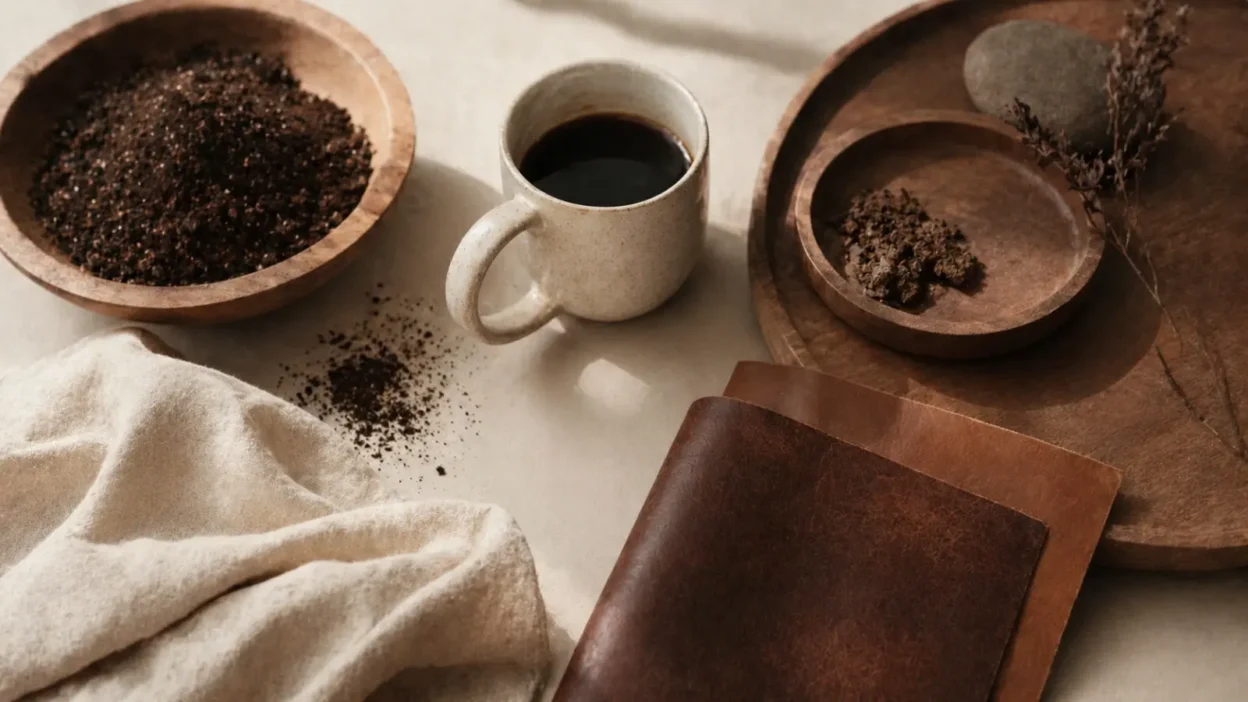
Brown color symbolism usually begins with the earth. In the United States today, brown is most often read as grounded, practical, reliable, warm, and natural.
People care about brown because it appears in so many ordinary places: coffee, chocolate, soil, wood, leather, boots, cardboard boxes, fall leaves, home interiors, and work clothes. It is not a color that usually shouts for attention. Its meaning comes from being close to daily life.
That quiet quality is exactly why brown can be comforting in one setting and dull in another. A chocolate-brown sweater may feel elegant. A muddy wall color may feel heavy. A brown delivery truck may suggest dependability. A brown landscape may suggest dryness or loss.
The best way to understand brown is to look at context. Brown’s meaning changes by shade, material, culture, and use.
Quick Answer
Brown color symbolism most commonly points to earth, stability, comfort, reliability, humility, and practical strength. Its meanings developed from visible connections to soil, wood, leather, food, farming, work, and simple materials, though it can also suggest dullness, dirt, poverty, or heaviness depending on context.
TL;DR
- Brown most often means stability and earth.
- It can feel warm, plain, rustic, or serious.
- Dark brown often feels stronger and richer.
- Beige and tan feel softer and more casual.
- Religious meanings depend on the tradition.
- Modern brown is popular in fashion and decor.
What Brown Usually Symbolizes Today
In modern American culture, brown usually symbolizes being grounded. It suggests something steady, familiar, and close to the natural world.
That meaning is easy to see. Brown is the color of soil, tree bark, coffee beans, bread crust, leather, wood, autumn leaves, and many animals. These are not rare or distant things. They belong to daily life.
Because of that, brown often carries meanings such as:
- stability
- reliability
- comfort
- honesty
- simplicity
- warmth
- usefulness
- endurance
Brown is also a practical color. It hides wear better than white. It feels less formal than black. It can seem more natural than bright synthetic colors. This is why it often appears in workwear, boots, packaging, rustic restaurants, coffee shops, outdoor brands, and home interiors.
But brown is not only positive. In the wrong setting, it can feel dull, muddy, old-fashioned, heavy, or neglected. A warm walnut table may feel beautiful. A flat gray-brown room with poor light may feel gloomy.
Brown does not have one fixed meaning. It works through association.
What the Color Brown Refers To Visually
Brown is a family of dark, warm, earthy colors. It can lean yellow, orange, red, gray, or almost black.
People often describe brown through materials rather than pure color words. We say chocolate, coffee, chestnut, walnut, caramel, tobacco, cinnamon, sand, clay, bronze, bark, taupe, or espresso. Those names show how strongly brown is tied to touch, taste, and the physical world.
Unlike blue or red, brown rarely feels abstract. It usually feels material. It reminds us of things we can hold, smell, wear, eat, or walk on.
Brown is also unusual because it depends heavily on lighting and comparison. A dark yellow-orange may look brown beside white. The same color may look golden beside black or gray. This is one reason brown can shift so much in design.
In real life, people rarely encounter brown as a flat color chip. They encounter it as polished wood, worn leather, roasted coffee, dry leaves, garden soil, cardboard, denim stitching, boots, tree trunks, or chocolate. Those objects give brown much of its symbolic weight.
Why Brown Became the Color of Earth, Work, and Practical Life
Brown became linked with earth because brown is literally one of the main colors people see in soil, clay, bark, roots, and dried plants. Long before modern color theory, brown was a color of the ground.
That earth connection explains many of its later meanings. Soil supports crops. Wood builds homes. Leather protects the body. Clay forms vessels. Bread and grain feed people. Brown materials often stand between people and survival.
This is why brown can symbolize practical strength. It does not suggest speed or glamour. It suggests usefulness.
In older social settings, brown was also connected with labor and ordinary clothing. Natural, undyed, or simply dyed fabrics often appeared in earth tones. Brown could signal modest means, rural life, plain work, or a lack of luxury.
That history still shapes the color today. Brown can look humble, honest, and hardworking. But it can also be unfairly read as poor, plain, dirty, or unfashionable when people attach social judgment to it.
The same roots produce both readings. Brown is close to the ground. Some people see that as strength. Others see it as low status.
Historical Roots: Pigments, Clothing, and Everyday Materials
Brown has a long material history because earth pigments were among the easiest colors for people to find and use. Natural pigments such as ochre, umber, and sienna come from minerals, clay, iron oxides, and earth deposits.
These pigments mattered in art because they were useful. They could create skin tones, shadows, soil, wood, animals, backgrounds, and realistic depth. Brown helped artists make bodies and landscapes look solid.
In painting, brown was often less about symbolic drama and more about making the world believable. It gave shape to faces, folds of fabric, wood panels, and dim rooms. In that sense, brown became a color of realism.
Brown clothing also developed practical meaning. Earth-colored garments were easier to produce in many settings and less likely to show dirt. Simple brown or gray-brown clothing could suggest humility, poverty, work, or religious restraint.
That does not mean brown had one ancient meaning everywhere. It did not. The safer claim is this: brown’s symbolic meanings grew from repeated contact with earth, labor, plain materials, food, shelter, and modest clothing.
That is stronger than saying brown has always meant the same thing in every culture.
Positive and Negative Meanings of Brown
Brown has a wide emotional range. It can be cozy or dreary, elegant or plain, natural or dirty. The difference usually depends on shade, texture, lighting, and setting.
| Brown Context | Common Positive Reading | Common Negative Reading |
| Soil, wood, leather | Natural, durable, grounded | Rough, rustic, heavy |
| Coffee and chocolate | Warm, comforting, indulgent | Overly familiar, ordinary |
| Clothing and fashion | Classic, mature, understated | Plain, dull, conservative |
| Interiors | Cozy, stable, relaxed | Dark, cramped, outdated |
| Branding | Trustworthy, practical, traditional | Unexciting, old-fashioned |
Brown’s positive meanings usually come from safety. It suggests shelter, food, warmth, and things that last.
Its negative meanings often come from dullness or dirt. Mud, decay, dust, and old materials can all be brown. This can make the color feel tired or neglected when used carelessly.
Brown is also less flashy than red, yellow, or bright blue. That can be a strength when a person wants calm. It can be a weakness when a setting needs energy.
This is why brown works best when the material supports the meaning. Brown velvet, walnut, suede, bronze, coffee, and leather usually feel richer than flat brown plastic or poor lighting.
Shade Differences: Beige, Tan, Chocolate, Chestnut, and Espresso
Brown is not one mood. Its shades change the message.
Light brown, beige, and tan often feel casual, soft, sandy, or minimal. They can suggest calm, simplicity, and approachability. In home decor, they often work as warm neutrals.
Caramel and camel tones feel warmer and more polished. In fashion, they can look classic without feeling severe. These shades often carry a sense of ease and quiet confidence.
Chocolate brown feels richer. It can suggest comfort, sweetness, depth, and understated luxury. In clothing and interiors, it often feels softer than black but still serious.
Chestnut and reddish brown bring in warmth, energy, and autumn. They can feel outdoorsy, traditional, or romantic depending on the setting.
Espresso and very dark brown feel strong, formal, and grounded. They can replace black when someone wants depth without sharpness. But in a dim room, very dark brown can feel heavy.
Gray-brown and taupe are more restrained. They can feel refined and modern, but if they are too flat, they may feel lifeless.
The shade matters because brown is highly contextual. A warm brown can comfort. A muddy brown can drain a space. A glossy brown can feel expensive. A rough brown can feel rustic or worn.
Brown in Religion, Humility, and Spiritual Interpretation
Brown appears in some religious contexts as a color of humility, poverty, simplicity, or closeness to the earth. The clearest example for many American readers is the brown Franciscan habit.
In that setting, brown is not just a design choice. It reflects a spiritual ideal of modest living and humility. The color’s connection to earth supports the idea of being lowly, simple, and free from luxury.
This meaning should not be stretched too far. Brown is not “the Christian color of humility” in every church or era. It is more accurate to say that some Christian communities, especially Franciscan ones, have used brown clothing to express poverty, humility, and simplicity.
Brown also appears in modern spiritual writing as a color of grounding, protection, roots, and connection to nature. These meanings are common today, but they are usually interpretive rather than proven historical facts.
In earth-based spiritual practices, brown may be used to represent soil, ancestors, home, stability, or the physical body. In meditation or personal symbolism, someone may choose brown to feel centered or steady.
Those uses are meaningful for practitioners, but they should be named as spiritual interpretation, not universal truth.
Brown in the United States: Branding, Food, Workwear, and Trust
In the United States, brown is often used when a brand or product wants to feel dependable, familiar, rugged, natural, or comforting.
Food is one of the clearest examples. Brown suggests chocolate, coffee, cocoa, bread, caramel, roasted nuts, cinnamon, grilled food, and baked goods. In packaging, brown can make a product feel warm, rich, handmade, traditional, or less artificial.
Coffee shops use brown because it matches the product and the mood. Brown walls, wood counters, kraft paper, burlap, and warm lighting all support a feeling of comfort and craft.
Delivery and logistics also use brown well. In that context, brown can suggest reliability, routine, and practical service. The color does not need to feel exciting. It needs to feel trustworthy.
Workwear gives brown another American meaning. Brown boots, canvas jackets, leather belts, tool bags, and outdoor gear suggest labor, toughness, durability, and rural or trades-based identity.
Brown can also carry nostalgia. It appears in diners, old signs, vintage packaging, heritage brands, country stores, baseball gloves, saddles, and cabin interiors. These uses connect brown with memory, tradition, and a slower pace of life.
Still, brown can fail when it feels stale. In branding, too much flat brown can make a product look dated. The most successful uses usually pair brown with strong texture, clear contrast, and a fitting story.
Brown in Fashion, Decor, and the 2025–2026 Return of Earth Tones
Brown has moved strongly back into fashion and interiors in the 2025–2026 period. Warm browns, chocolate tones, caramel shades, espresso, mocha, and reddish browns are being used as softer alternatives to black, gray, and stark white.
Part of this shift comes from a desire for warmth. After years of cool minimalism, brown offers a more grounded neutral. It can make a room feel lived-in without looking messy. It can make an outfit feel polished without looking harsh.
In fashion, chocolate brown works well because it has depth but less severity than black. A brown coat, boot, handbag, knit dress, or suit can feel mature and warm. Brown also pairs easily with cream, denim, gold, olive, burgundy, navy, blush, and black.
In interiors, brown appears through wood, stone, leather, clay, paint, upholstery, and woven textures. It works especially well when texture is visible. A brown room needs contrast, light, and material variation. Otherwise, it can feel too dense.
The recent popularity of warm brown shades also connects to comfort culture: coffee, chocolate, soft fabric, natural wood, and quiet luxury. Brown is being reframed from “boring” to “calm, expensive, and grounded.”
That does not erase older meanings. Brown still has to be handled carefully. The modern shift is less about inventing a new meaning and more about making an old meaning feel current again.
Brown Tattoos, Personal Symbols, and Identity Meanings
Brown tattoos are less common as a symbolic color than black ink, but brown can matter in tattoo design when the color supports the image.
A brown tree, root system, bear, horse, feather, mountain, soil line, branch, leather object, or animal can suggest groundedness, ancestry, endurance, nature, or a connection to land. Brown may also be used for realistic shading, skin tone, wood, fur, or earth.
As a personal symbol, brown can mean:
- staying rooted during change
- honoring family or ancestry
- valuing simple living
- feeling connected to land or nature
- choosing quiet strength over display
- marking resilience after hardship
These meanings are modern interpretations. They are not fixed rules. A brown tattoo means most when the image, placement, personal story, and cultural context all point in the same direction.
There is one important caution. When brown is tied to cultural identity, land, Indigenous imagery, religious clothing, or ancestral symbolism, it should be handled with respect. A design can be meaningful without borrowing sacred imagery casually.
Brown works best in tattoos when it supports a clear personal or visual idea, not when it is treated as a mysterious code.
Misuse, Oversimplification, and Context Matters
The biggest mistake in brown color symbolism is treating the color as universal. Brown does not mean the same thing in every culture, religion, design style, or personal memory.
For some people, brown feels safe because it recalls wood floors, family kitchens, coffee, books, and fall. For others, it may feel sad, poor, dirty, or restrictive. Both reactions can be real.
Brown can also be used in lazy ways. Calling brown “primitive,” “earthy” in a vague exotic sense, or automatically “natural” can flatten real cultures and people. Earth tones appear in many traditions, but that does not make every brown object spiritual or ancient.
Another issue is racial and skin-tone language. Brown is also a human color. In social and political contexts, “brown” can refer to people and communities, not just design symbolism. A symbolism article should not treat that human meaning as decoration. When skin, identity, or ethnicity is involved, the conversation changes and needs more care.
Brown can also be over-marketed. A package printed in brown kraft tones is not automatically ethical, natural, handmade, or sustainable. Brands often use brown to imply those values. The color may support the message, but it does not prove the claim.
Context is the rule. Brown means more when you ask: brown where, brown with what material, brown in what culture, brown for what purpose, and brown seen by whom?
FAQs
What does the color brown symbolize?
Brown most often symbolizes earth, stability, reliability, comfort, practicality, and natural strength. It can also suggest dullness, dirt, poverty, or heaviness when the setting is flat, neglected, or overly dark.
Is brown a positive or negative color?
Brown can be either. It feels positive when linked to wood, coffee, chocolate, leather, soil, home, and warmth, but it can feel negative when linked to mud, decay, boredom, or lack of energy.
What does brown mean spiritually?
In modern spiritual interpretation, brown often means grounding, protection, roots, and connection to the physical world. These meanings are belief-based and should not be treated as universal religious facts.
What does a brown tattoo mean?
A brown tattoo may suggest nature, roots, resilience, ancestry, simplicity, or quiet strength, especially when paired with trees, animals, soil, mountains, or natural imagery. The exact meaning depends on the design and the person wearing it.
Why is brown associated with humility?
Brown is linked with humility partly because it resembles soil, plain cloth, and simple materials. In some religious communities, especially Franciscan contexts, brown clothing has been used to express poverty, modesty, and a grounded spiritual life.
What does brown mean in home decor?
In home decor, brown often creates warmth, stability, and a natural feeling. It works best with texture, light, and contrast, because too much flat brown can make a room feel dark or dated.
Why is brown popular again in fashion and design?
Brown is popular again because it feels warm, grounded, and softer than black. Chocolate, mocha, camel, and espresso tones fit current interest in comfort, natural materials, and understated style.
Conclusion
Brown is one of the most practical colors in symbolism. Its meanings come from things people know well: soil, wood, coffee, bread, leather, animals, work, shelter, and the changing seasons.