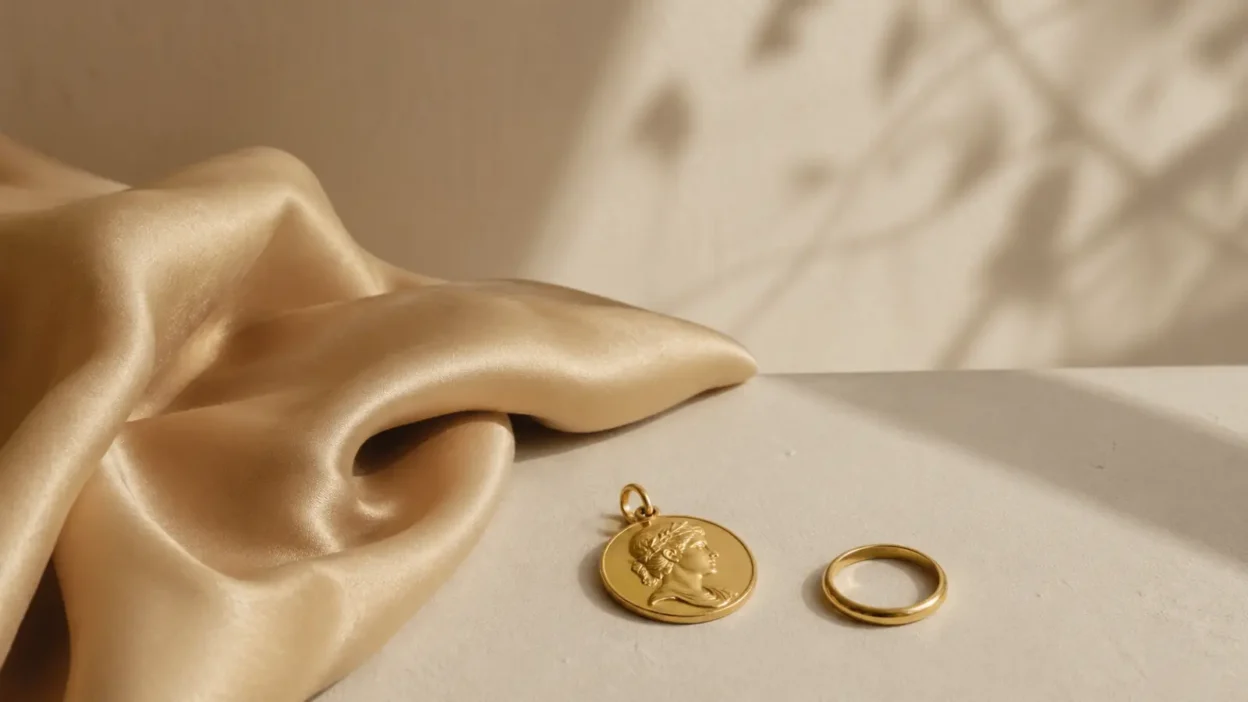
Gold is one of the few colors that almost never feels neutral. Even a small gold detail can change how an object reads. A plain box can feel premium. A trophy can feel earned. A ring can feel ceremonial. A room can feel warmer, richer, or more formal.
Gold color symbolism is closely tied to the metal itself. People did not first see gold as a random shade of yellow. They saw a rare, shining material that could be shaped, worn, stored, offered, traded, and displayed. Over time, the color took on many of the metal’s meanings.
In the United States today, gold is most often linked with wealth, success, luxury, celebration, and achievement. But it can also suggest excess, greed, flashiness, or distance. The meaning depends on where it appears, who is using it, and whether it feels earned, sacred, elegant, or showy.
Quick Answer
Gold color symbolism most commonly points to wealth, success, luxury, achievement, and high value in modern U.S. culture. Historically, these meanings grew from the metal’s rarity, shine, durability, and use in royal, religious, ceremonial, and decorative objects.
TL;DR
- Gold often means wealth, success, and prestige.
- Its symbolism comes from the metal’s value.
- Gold can feel sacred, formal, or celebratory.
- Context decides whether gold feels elegant or excessive.
- Modern gold appears in branding, fashion, decor, and awards.
- Spiritual meanings should be treated as belief-based, not universal fact.
What Gold Most Commonly Means Today
In modern American culture, gold usually means value. That value can be financial, social, emotional, or symbolic.
A gold logo suggests premium quality. A gold medal means first place. A gold ring can mark marriage or commitment. Gold lettering on a diploma, invitation, or award can make the object feel official and important. Even when no real gold is present, the color borrows from the metal’s reputation.
The most common meanings are:
- wealth
- success
- achievement
- luxury
- prestige
- celebration
- importance
- high quality
Gold is also connected with confidence. It does not disappear into the background. It catches light, draws the eye, and signals that something deserves attention.
But gold is not only positive. Too much gold can feel excessive or artificial. It can suggest vanity, greed, or status-seeking. That is why gold can look elegant in one setting and gaudy in another. A thin gold border on a wedding invitation may feel refined. A room covered in shiny gold surfaces may feel overdone.
The color carries weight because people already know what it is trying to say: this matters.
Why Gold Became a Symbol of Value
Gold’s symbolism begins with physical reality. The metal is bright, rare, workable, and resistant to tarnish. Those traits made it useful for objects meant to last, impress, or carry meaning.
Gold can be shaped into jewelry, leaf, coins, vessels, masks, thread, and ornament. It reflects light in a way that feels warm rather than cold. Unlike many metals, it does not easily rust or lose its surface beauty. That helped people connect it with endurance, purity, permanence, and lasting worth.
This does not mean every culture interpreted gold in exactly the same way. It means that many societies noticed similar qualities: shine, scarcity, beauty, and durability. From there, different communities built different meanings.
Gold became a natural material for objects tied to status and ceremony. It was costly enough to show wealth. It was durable enough to preserve memory. It was bright enough to suggest light, power, or the sacred.
The color gold inherited those meanings. A gold-colored object may be plastic, paint, fabric, or pixels on a screen. Still, the mind often connects it back to metal, treasure, jewelry, medals, crowns, coins, and sacred objects.
That is why gold feels different from ordinary yellow. Yellow can suggest sunshine, caution, energy, or cheer. Gold usually suggests value added to warmth.
Gold, Power, and Social Status
Gold has long been used to show rank. Crowns, thrones, royal garments, ceremonial weapons, coins, and official decorations often used gold or gold-like materials because the metal made power visible.
This is one reason gold became associated with kingship, authority, and elite status. It was not only beautiful. It was expensive, hard to obtain, and easy to display. A gold object said, “This person, place, or institution has resources.”
In many historical settings, gold also marked distance. It separated rulers from ordinary people, sacred spaces from daily spaces, and ceremonial moments from common life. That separation is part of gold’s symbolic strength.
In the United States, gold does not usually mean monarchy in a literal sense. Americans are more likely to connect it with success, wealth, celebrity, awards, premium brands, or luxury events. Still, the older royal association lingers in phrases like “fit for a king,” in crown imagery, and in formal design.
Gold can also raise questions about inequality. When gold is used to communicate status, it may imply excellence. It may also imply exclusion. A gold watch can be a personal reward, but it can also be read as a status display. A gold building lobby can feel impressive, but it can also feel cold or inaccessible.
That tension is part of the color’s meaning. Gold can honor value, but it can also advertise hierarchy.
Gold as Achievement and the “Best” Standard
Gold is the color of first place. That meaning is especially strong in sports, awards, competitions, and public recognition.
A gold medal does not simply say “valuable metal.” It says winner. It marks the highest rank in a familiar system: gold, silver, bronze. Because this order is so widely recognized, gold has become shorthand for excellence.
That meaning appears in everyday language too. People talk about the “gold standard” when they mean the best accepted example. A “gold star” means praise. A “gold record” marks major commercial success in music. A “gold-tier” membership usually means a higher level of access or service.
In this sense, gold symbolizes achievement more than wealth. It points to effort, recognition, and distinction. A child’s gold star, an Olympic medal, and a retirement plaque are very different objects, but they share the same basic message: this accomplishment deserves notice.
This is one reason gold works so well in graduations, anniversaries, promotions, and award ceremonies. It turns success into something visible.
Gold can also make achievement feel final. Silver may suggest strong performance. Bronze may suggest honorable placement. Gold says top position. That clarity gives the color unusual force.
Gold in Religion, Sacred Art, and Ritual Objects
Gold has deep religious and ceremonial associations, but those meanings vary by tradition. It is more responsible to say that gold has often been used to mark sacred importance than to claim it has one universal spiritual meaning.
In some Christian art, especially in Byzantine and medieval contexts, gold backgrounds and halos helped represent divine light, heaven, holiness, or a space outside ordinary time. Gold leaf did not work like normal scenery. It created a glowing surface that made holy figures appear set apart from daily life.
In other religious and cultural settings, gold has been used in ritual objects, manuscripts, temples, shrines, icons, offerings, and ceremonial clothing. Its material value made it suitable for things meant to honor the divine, preserve sacred words, or show reverence.
Ancient Egyptian uses of gold are often discussed in this context. Gold appeared in jewelry, funerary objects, temple settings, and royal imagery. It was associated with divinity, the sun, status, and endurance. Still, modern readers should be cautious with simplified claims. “Gold meant immortality” may be partly true in certain Egyptian religious contexts, but it does not cover every use of gold in Egyptian life.
Today, gold religious objects may still hold living sacred meaning for communities that use them. The same color may also appear in commercial holiday decor, costume jewelry, or home design with no sacred intent at all.
That difference matters. A gold icon, a gold altar vessel, a gold Christmas ornament, and a gold phone case are not saying the same thing. They share a color, not a single meaning.
Gold in the United States: Wealth, Celebration, and Aspiration
In the United States, gold has a special cultural layer because of money, expansion, and the idea of striking it rich. The California Gold Rush helped attach gold to ambition, risk, migration, and sudden fortune in the American imagination.
That history was not simple or harmless. Gold rushes brought opportunity for some, but also displacement, racial exclusion, violence, environmental damage, and exploitation. Gold can symbolize prosperity, but American history also shows the cost of pursuing it.
In everyday U.S. life, gold often appears around milestones. People use gold for:
- wedding bands and anniversary gifts
- graduation lettering and honors cords
- birthday decorations
- New Year’s Eve decor
- retirement watches and plaques
- trophies, medals, and award ribbons
- luxury packaging
- formal invitations
Gold also has a strong place in American consumer culture. It sells aspiration. A product with gold packaging may seem premium before the buyer knows anything else about it. A hotel lobby with gold accents may seem more expensive. A gold credit card can imply status and access.
At the same time, Americans often read gold through taste. Understated gold can feel classic. Bright, heavy gold can feel flashy. Rose gold may feel softer and more romantic. Antique gold can suggest heritage or age.
So gold in the U.S. is not one-note. It can mean old money, new money, celebration, faith, glamour, success, or excess.
The Emotional Feel of Gold: Warmth, Confidence, and Distance
Gold is a warm color. It sits near yellow and orange, so it can feel sunny, glowing, or festive. But because it is tied to metal and money, it also has a formal edge.
This mix gives gold an unusual emotional range. It can feel welcoming when used softly, especially in candlelight, textiles, jewelry, or holiday decor. It can feel confident in fashion, awards, and branding. It can feel distant when used to signal wealth or exclusivity.
Gold often suggests:
- warmth without casualness
- confidence without softness
- celebration without playfulness
- luxury without necessarily being comfortable
That is why gold can be tricky in design. A small amount can elevate a space or object. Too much can make it feel staged, loud, or impersonal.
People also bring personal experience to the color. Someone may connect gold with family jewelry, religious ceremony, school honors, or holiday decorations. Another person may connect it with wealth gaps, vanity, or commercial pressure.
Gold does not create one emotion by itself. It amplifies the meaning of the setting.
Shade and Context: When Gold Changes Meaning
Gold changes meaning depending on shade, finish, and use. Metallic gold feels different from matte gold. Pale gold feels different from deep antique gold. A digital gold gradient feels different from hand-applied gold leaf.
| Gold Form | Common Meaning | Where It Often Appears |
| Bright metallic gold | luxury, attention, celebration | trophies, packaging, party decor |
| Pale gold | elegance, softness, romance | weddings, stationery, interiors |
| Antique gold | age, heritage, tradition | frames, heirlooms, vintage decor |
| Rose gold | warmth, romance, modern style | jewelry, phones, beauty products |
| Heavy shiny gold | wealth, flash, possible excess | nightlife, status fashion, bold interiors |
Context matters as much as shade. Gold on a military medal feels solemn. Gold on a chocolate wrapper feels indulgent. Gold on a church object may feel sacred. Gold on a casino sign may feel flashy or theatrical.
This is why gold cannot be interpreted in isolation. The same color can honor, sell, decorate, bless, reward, or boast.
Gold in Branding, Fashion, Decor, and Digital Culture
Gold is widely used in modern American visual culture because it communicates value quickly. It does not need much explanation. People already read it as premium, celebratory, or important.
In branding, gold often appears on products that want to feel expensive or special. Perfume, watches, cosmetics, chocolate, champagne-style packaging, jewelry brands, hotels, and luxury services often use it. Even when a product is not truly rare, gold can make it feel more desirable.
In fashion, gold can mean glamour, confidence, celebration, or tradition. Gold jewelry may be subtle and everyday, or bold and status-driven. Gold shoes, bags, or dresses usually feel dressy because the color catches light and signals occasion.
In home decor, gold accents can warm a room. Picture frames, mirrors, lamps, cabinet handles, and table settings often use gold to add polish. But large amounts of reflective gold can overwhelm a space, especially in small rooms.
In digital culture, gold appears in badges, premium memberships, game rewards, app icons, reaction graphics, and achievement systems. It still carries the old message of rank, but now it may be made of pixels rather than metal.
Common modern uses include:
- “gold” subscription tiers
- gold verification-style badges
- gold trophies in games
- gold foil effects in digital invitations
- gold filters and social media graphics
- gold accents in holiday posts
Digital gold is often symbolic rather than material. It says “top level,” “special access,” or “celebration” without requiring any real metal.
Gold Tattoos, Gifts, and Personal Symbols
Gold is not a standard tattoo ink in the same way black or red is. Metallic effects are hard to reproduce permanently in skin, so “gold tattoos” often use yellow, ochre, brown, white highlights, or temporary metallic foil. The meaning is usually symbolic, not literally metallic.
A gold-inspired tattoo may suggest success, self-worth, royalty, resilience, sacred light, or personal victory. A crown, sun, halo, bee, lion, key, coin, or medal can strengthen those meanings. But the design matters more than the color alone.
For gifts, gold often marks importance. Gold jewelry, gold-trimmed keepsakes, gold frames, and gold anniversary items suggest that the moment is worth preserving. The gift may symbolize love, gratitude, success, or permanence.
Gold also appears in identity and self-presentation. Some people wear gold because it connects them to family, culture, faith, style, or achievement. Others wear it because it feels bold, warm, or classic.
It is best not to assume one meaning from a gold object on someone’s body. A gold ring might be a wedding band, a family heirloom, a fashion choice, or a religious item. A gold chain might be personal style, cultural expression, memory, or status.
Gold is highly readable, but it is still personal.
Where Gold Symbolism Can Go Wrong
Gold is easy to overstate. Because it has appeared in many cultures, some writers treat it as if it means the same thing everywhere. That is not accurate.
Gold may suggest wealth in many settings, but religious, political, artistic, and personal meanings differ. A gold background in a sacred image is not the same as gold foil on a product label. A gold wedding band is not the same as a gold casino sign. A gold crown in a fairy tale is not the same as a gold medal in sports.
Gold symbolism can also become distorted when sacred objects are treated only as decoration. Religious uses of gold should be understood within the traditions that give them meaning. Removing those objects from context can flatten living faith into style.
There is also a moral tension around gold. It can symbolize excellence and beauty, but also greed, conquest, extraction, inequality, and obsession with status. Stories about treasure often use gold as a test of character. The color can show what people value, but also what they are willing to ignore for wealth.
In modern branding, gold can be used honestly or manipulatively. Sometimes it marks real quality. Sometimes it only creates the feeling of quality. That is why gold should be read with context.
The safest interpretation is this: gold signals value, but the kind of value depends on the setting.
FAQs
What does the color gold symbolize?
Gold usually symbolizes wealth, success, luxury, achievement, and high value. In religious or ceremonial settings, it may also suggest sacred light, honor, or reverence, depending on the tradition.
Is gold a positive or negative color?
Gold is often positive because it points to celebration, excellence, warmth, and success. It can become negative when it suggests greed, vanity, excess, exclusion, or fake luxury.
What does gold mean spiritually?
Gold can symbolize divine light, wisdom, blessing, purity, or spiritual richness in some traditions and modern belief systems. These meanings are not universal, so they should be understood as tradition-specific or belief-based rather than proven facts.
What does a gold tattoo mean?
A gold-inspired tattoo often suggests self-worth, victory, confidence, royalty, faith, or personal transformation. Since permanent tattoo ink rarely looks truly metallic, the meaning usually comes from the design, shading, and personal story behind it.
Why is gold linked with wealth?
Gold is linked with wealth because the metal has long been rare, durable, beautiful, and useful for jewelry, money, ritual objects, and status display. The color gold borrows those associations even when no real gold is present.
What does gold mean in U.S. culture?
In the United States, gold often means success, money, luxury, celebration, and achievement. It also carries historical associations with ambition and fortune through gold rush history, along with modern uses in awards, weddings, branding, and decor.
Is gold the same as yellow in symbolism?
Gold and yellow overlap because both are warm and bright, but they are not the same. Yellow often feels cheerful, sunny, or energetic, while gold adds ideas of value, prestige, formality, and lasting importance.
Conclusion
Gold is one of the clearest visual signs of value in modern life. It can point to money, success, achievement, sacred honor, celebration, or personal importance. Its meaning comes from both the metal’s history and the way people continue to use the color today.