Silver color symbolism usually begins with the way silver looks: cool, reflective, polished, and quietly valuable. It is not as warm as gold or as plain as gray. It sits between luxury and restraint.
People care about silver because it appears in daily life. It shows up in jewelry, cars, phones, laptops, holiday decorations, wedding accents, trophies, watches, appliances, fashion, and home decor. It can feel formal, futuristic, calm, expensive, or distant depending on where it appears.
In modern U.S. culture, silver is most often read as a sign of elegance, modern design, money, technology, reflection, maturity, and second-place achievement. Older meanings connected to the moon, sacred objects, protection, and purity still influence how people interpret it, but those meanings need careful context.
Quick Answer
Silver color symbolism most commonly points to elegance, modernity, reflection, value, and cool restraint in the United States today. Historically, these meanings grew from silver’s use as a precious metal, money, jewelry, tableware, sacred objects, and moon-linked imagery.
TL;DR
- Silver suggests elegance without the warmth of gold.
- It often feels modern, sleek, and technological.
- Moon meanings are old, but often expanded today.
- Silver can mean wealth, status, or refinement.
- It may also suggest coldness or distance.
- Context changes the meaning more than the color alone.
What the Color Silver Means Today
In everyday U.S. use, silver usually means polished restraint. It can suggest that something is valuable, but not flashy. It can look expensive without looking loud.
That is why silver is common in watches, cars, laptops, kitchen appliances, jewelry, packaging, and event decor. It gives objects a clean and finished look. It also works well with black, white, navy, red, emerald, and deep purple, which makes it useful in both formal and modern design.
Silver is also tied to reflection. A silver surface catches light and gives some of it back. Symbolically, that makes silver easy to connect with thought, self-awareness, memory, and careful judgment.
But silver does not carry one fixed meaning. A silver wedding invitation may feel elegant. A silver robot may feel futuristic. Silver hair may suggest aging, wisdom, style, or beauty. A silver medal may mean honor, but also second place.
The meaning changes with the setting.
Why Silver Feels Cool, Reflective, and Controlled
Silver is a cool color because it sits close to gray, white, and pale blue in many visual settings. It does not feel warm in the way gold, orange, or red can. That coolness is part of its symbolic character.
Silver often suggests:
- calm thinking
- emotional distance
- careful taste
- clean design
- quiet confidence
- reflection rather than action
These meanings come from appearance more than from one single tradition. Silver shines, but it rarely glows like gold. It reflects, but it does not usually dominate a room. It can make a design feel composed.
This is also why silver can feel emotionally reserved. In a home, too much silver may seem cold. In fashion, it may look sleek or severe. In branding, it may suggest precision, technology, and control.
Color meaning is not a science with one answer for every viewer. People respond to color through culture, memory, lighting, materials, and personal taste. Silver’s calm feeling is common, but it is not automatic.
The Material Roots: Metal, Money, Mirrors, and Status
Silver the color gets much of its meaning from silver the metal.
For centuries, silver was valued because it was bright, workable, durable enough for objects, and rare enough to matter. People used it for coins, jewelry, vessels, religious objects, family heirlooms, and decorative goods. That history shaped the color’s link with wealth and status.
In early American homes, silver objects could mark family pride, social position, and inherited memory. A silver cup, spoon, teapot, or engraved object was not only useful. It could also say something about the family that owned it.
Silver also had public meaning. Churches and houses of worship used silver for ceremonial objects. Civic groups and institutions used silver for presentation pieces. Families marked marriages, births, achievements, and anniversaries with engraved silver.
This is why silver can still feel formal today. Even when an object is not made of real silver, a silver finish borrows some of that older prestige.
The connection to mirrors also matters. Before modern glass mirrors became common, polished metal surfaces were used for reflection. A bright metallic surface naturally became linked with seeing, self-examination, and truth. That is one reason silver can symbolize clarity or insight, though those meanings are interpretive rather than fixed historical facts.
Silver and the Moon: A Strong Link with Many Later Layers
Silver’s bond with the moon is one of its strongest symbolic associations.
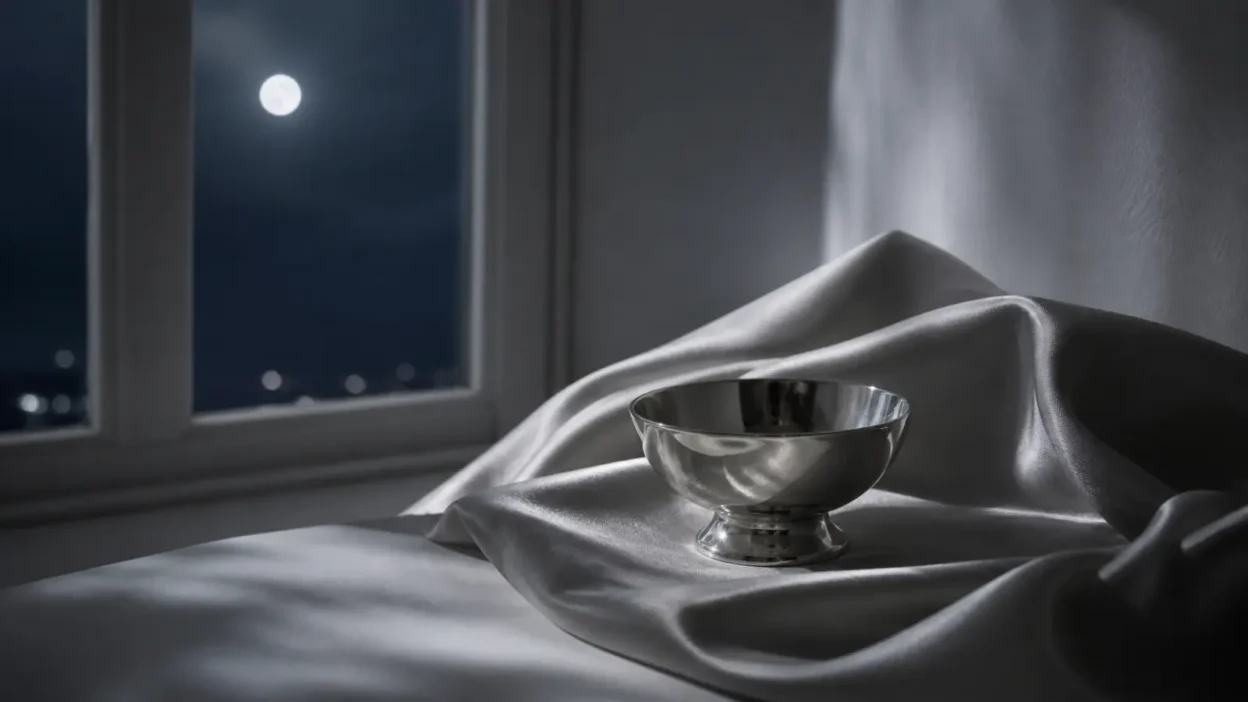
The link is easy to understand. Moonlight often looks pale, cool, and silvery. In art, poetry, jewelry, and myth, silver became a natural way to describe night light. Lunar goddesses such as Diana in Roman tradition also helped strengthen the connection between silver, the moon, hunting, night, and feminine imagery.
But this is where care is needed. The moon-silver link is old and well supported. Many later meanings are not equally proven.
Modern spiritual writing often connects silver with intuition, dreams, emotional healing, feminine energy, psychic awareness, or protection. Some people find those meanings personally useful. Still, they should be understood as belief-based or symbolic interpretations, not established facts.
Silver’s moon meaning is strongest when it refers to:
- night
- reflection
- cycles
- quiet light
- cool beauty
- mystery
- change
It becomes less historically secure when people claim that silver has one universal spiritual effect across all cultures. That kind of claim flattens different traditions into one modern idea.
Silver in the United States: Jewelry, Cars, Tech, Weddings, and Awards
In the United States, silver is especially visible in consumer life.
Silver jewelry is popular because it can feel refined, affordable, classic, or casual depending on the design. Sterling silver rings, chains, bracelets, and earrings often signal taste without the strong wealth message of gold.
Silver cars are common because the color feels clean, practical, and modern. It hides dust better than black and can look professional without being plain. For many buyers, a silver car suggests reliability and neutrality.
Silver is also a technology color. Laptops, phones, headphones, appliances, cameras, and tools often use silver or brushed metal finishes. That look suggests precision, engineering, and current design. Part of this meaning comes from real metal. Part comes from decades of product design.
At weddings, silver can suggest formality, grace, winter beauty, or a cool modern palette. It is often paired with white, navy, black, blush, or deep green. In holiday decor, silver is common in ornaments, ribbon, candles, table settings, and winter themes.
Silver also has a clear awards meaning. A silver medal is honorable, but it usually means second place. This gives silver a mixed emotional tone: achievement with a hint of almost-first.
Silver Compared with Gray, White, and Gold
Silver is often confused with gray, white, and gold, but each carries a different emotional tone.
| Color | Common Meaning | How It Differs from Silver |
|---|---|---|
| Gray | Neutrality, balance, seriousness | Less luminous and less luxurious |
| White | Cleanliness, purity, simplicity | Brighter, plainer, and less metallic |
| Gold | Wealth, warmth, victory, prestige | Warmer, louder, and more triumphant |
| Silver | Elegance, reflection, modern value | Cooler, quieter, and more restrained |
| Chrome | Speed, shine, machinery | More industrial and sharper than soft silver |
Silver is close to gray because both can feel calm and neutral. The difference is shine. Gray can feel flat, practical, or somber. Silver adds light, polish, and value.
Silver is close to white because both can suggest cleanliness and clarity. But white often feels simpler. Silver feels more crafted.
Silver is close to gold because both are metallic and valuable. Gold tends to signal victory, ceremony, warmth, and abundance. Silver feels cooler, quieter, and more reflective.
Positive Meanings of Silver
Silver often has positive meanings when it appears in elegant, careful, or meaningful settings.
Its most common positive meanings include refinement, clarity, maturity, adaptability, and value. These meanings developed because silver has long been used for cherished objects and because its surface reflects light.
Silver can suggest refinement when it appears in jewelry, formal clothing, table settings, or decor. It can suggest clarity when it is clean, bright, and mirror-like. It can suggest maturity because of the phrase “silver hair” and the association between age and experience.
It can also suggest adaptability. Silver works with many palettes. It can look classic, futuristic, wintery, romantic, industrial, or ceremonial.
The strongest positive readings are:
- elegant but not showy
- modern but not childish
- valuable but not aggressive
- calm but not empty
- mature but not dull
That balance is silver’s main strength.
Negative Meanings of Silver
Silver can also carry negative meanings.
Because it is cool, it may feel emotionally distant. A silver room with hard surfaces can seem cold. A silver outfit can look severe. A silver logo can feel impersonal if the brand around it lacks warmth.
Silver can also suggest artificiality. In some contexts, metallic shine feels machine-made, sterile, or too perfect. That can be useful for technology, but less useful for brands or spaces that want to feel handmade, earthy, or intimate.
The “silver medal” meaning is another negative or mixed reading. Silver marks success, but not first place. It can suggest being excellent yet still falling short of the top honor.
Silver also has ties to aging. Silver hair can be beautiful and dignified, but in a youth-focused culture it may also be unfairly read as old, faded, or past its prime. In recent years, that meaning has changed. Many people now embrace silver hair as stylish, confident, and natural.
So silver’s negative side is not bad in a simple sense. It is more about distance, coolness, and comparison.
Spiritual, Religious, and Folklore Meanings
Silver appears in religious, spiritual, and folk settings, but its meaning depends on the tradition.
In some religious contexts, silver objects have been used because the metal is precious, durable, and visually fitting for sacred service. A silver ritual object may symbolize honor, purity, offering, or devotion within that specific setting. The meaning comes from use, tradition, and community, not from the color alone.
In folklore, silver is often linked with protection. Stories about silver bullets, silver charms, or silver against harmful forces are part of European and later popular traditions. These stories should be treated as folklore, not evidence that silver has literal protective power.
In modern spiritual interpretation, silver may be connected with intuition, lunar cycles, emotional balance, dream work, or feminine symbolism. These meanings are meaningful to many people, but they are not universal. They are best framed as symbolic or belief-based.
It is also important not to treat Indigenous silver jewelry as a general “silver meaning.” In the United States, silverwork in Native communities has specific histories, makers, trade patterns, family practices, and cultural meanings. Reducing it to a vague symbol of “spiritual protection” can erase the people and traditions behind the work.
Respectful interpretation asks: Who made it? What tradition is it part of? Is it sacred, decorative, commercial, inherited, or personal?
Silver in Tattoos, Fashion, Decor, and Personal Style
Silver can be hard to show as a tattoo color because skin, ink, and light do not behave like metal. Many “silver” tattoos are created with gray shading, white highlights, or metallic-looking design effects rather than actual shine.
As a tattoo idea, silver may suggest reflection, memory, moon imagery, emotional control, elegance, or resilience. A silver sword may feel precise and protective. A silver moon may suggest cycles and quiet change. A silver rose may suggest beauty with restraint.
In fashion, silver often reads as bold but controlled. A silver dress can feel glamorous. Silver shoes can feel festive. A silver watch can feel classic. A silver jacket can feel futuristic or stage-ready.
In home decor, silver works best when balanced with texture. It can brighten a room, but too much polished metal may feel cold. Silver looks softer when paired with linen, wood, wool, stone, warm white, or deep colors.
In personal style, silver often appeals to people who want polish without the warmth or status signal of gold. It can feel clean, urban, minimal, romantic, or edgy depending on the design.
How Silver Symbolism Gets Oversimplified Online
Silver is often explained online as if it has one hidden meaning. That is misleading.
A color does not carry the same meaning in every culture, object, or period. Silver in a wedding invitation is not the same as silver in a horror story. Silver jewelry made by a living artist is not the same as a mass-produced silver-colored logo. A silver medal is not the same symbol as a silver moon.
The most common oversimplifications are:
- claiming silver always means protection
- treating all moon symbolism as ancient and universal
- calling silver feminine in every context
- presenting color psychology as settled science
- using Indigenous or religious objects as generic aesthetic examples
- ignoring silver’s second-place and coldness meanings
Silver is better understood as a flexible symbol. Its meaning comes from shine, material history, cultural use, and context. It can be sacred, commercial, personal, formal, futuristic, or decorative.
The responsible approach is not to ask, “What does silver always mean?” It is better to ask, “Where is silver appearing, who is using it, and what history is being borrowed?”
FAQs
What does the color silver symbolize?
Silver most often symbolizes elegance, modernity, reflection, value, and cool restraint. It can also suggest the moon, maturity, technology, ceremony, and second-place achievement depending on the context.
Is silver a positive color?
Silver is often positive when it suggests refinement, clarity, achievement, or thoughtful style. It can become negative when it feels cold, distant, sterile, artificial, or less-than-first.
What does silver mean spiritually?
In modern spiritual interpretation, silver is often linked with the moon, intuition, reflection, emotional balance, and protection. These are belief-based meanings, not facts that apply across all religions or cultures.
What does a silver tattoo mean?
A silver-style tattoo may suggest reflection, memory, moon symbolism, resilience, elegance, or emotional control. The meaning depends on the image itself, since silver shading on a sword, moon, flower, or animal will change the message.
How is silver different from gray?
Gray is usually flatter, quieter, and more neutral. Silver adds shine, value, movement, and a more polished or modern feeling.
Why is silver connected with the moon?
Silver is connected with the moon because moonlight often appears pale, cool, and reflective. Art, myth, poetry, jewelry, and later spiritual traditions strengthened that association over time.
Does silver symbolize wealth like gold?
Silver can symbolize wealth, but usually in a quieter way than gold. Gold often feels warmer and more triumphant, while silver suggests refined value, formality, and restraint.
Conclusion
Silver is one of the most flexible symbolic colors because it sits between plain gray and precious metal. It can feel elegant, modern, reflective, mature, sacred, cold, futuristic, or ceremonial depending on its use.