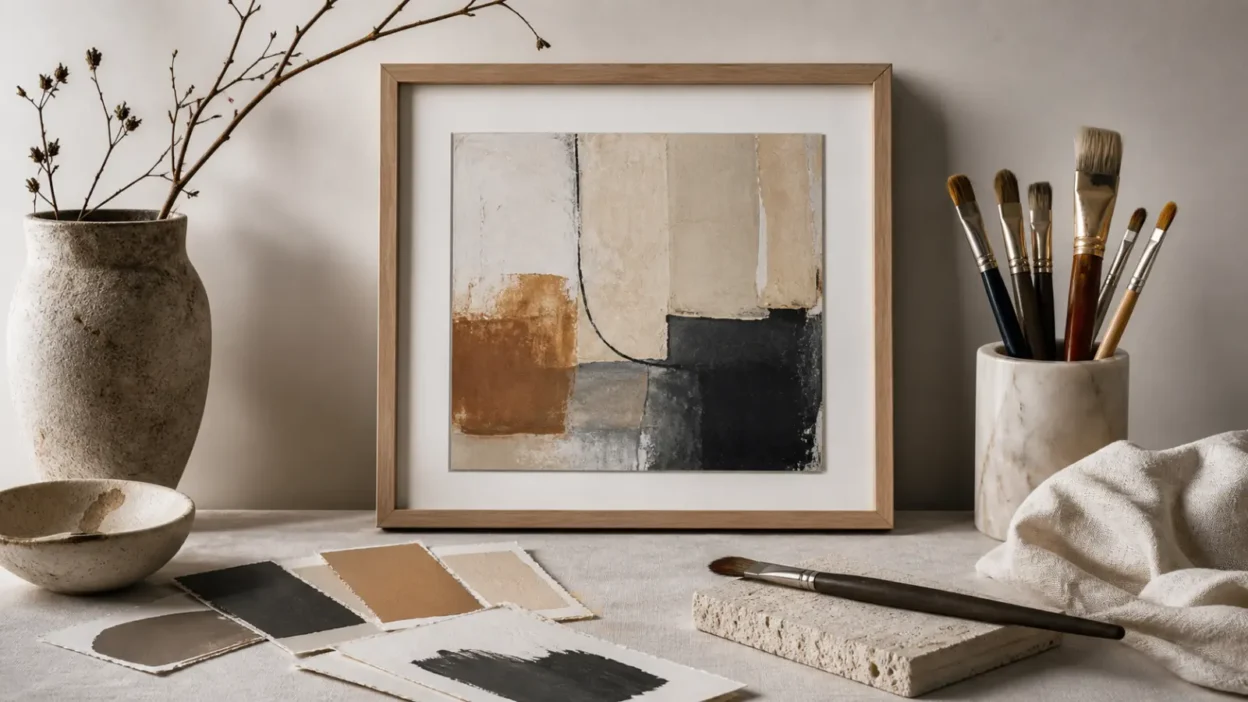
Color is one of the first things people notice in a work of art. Before a viewer studies the figures, symbols, or setting, color has already shaped the mood.
That is why color symbolism in art matters. A red robe, a blue background, a gold halo, or a black field can change how a painting feels and how people read its message.
In the United States today, people meet color symbolism far beyond museums. It appears in tattoos, brand logos, murals, sports uniforms, holiday decor, political signs, awareness ribbons, fashion, and home design.
Still, color is not a fixed code. The same color can suggest love in one artwork, danger in another, mourning in one culture, and celebration in another. Good interpretation starts with context.
Quick Answer
In modern U.S. culture, color symbolism in art most often refers to the way artists use colors to suggest emotion, identity, mood, spiritual meaning, or social ideas. Many meanings grew from nature, religion, pigment history, politics, and shared cultural habits, but no color has one meaning in every artwork.
TL;DR
- Color meaning depends on context.
- Red can suggest love, danger, or power.
- Blue often suggests calm, faith, or distance.
- Black and white carry mixed meanings.
- Modern use includes tattoos, decor, and branding.
- No color meaning is truly universal.
What Color Symbolism Means in Art
Color symbolism means that color does more than describe what something looks like. It helps carry meaning.
A painter may use green because the landscape is green. That is descriptive color. But the same green may also suggest growth, sickness, envy, money, nature, or renewal. That is symbolic color.
In art, color can work in several ways at once. It can show light, separate figures, create depth, guide the eye, mark a sacred figure, or make a scene feel peaceful or tense.
This is why color symbolism is useful but also easy to oversimplify. A color does not work like a dictionary entry. It works inside a full image.
A red dress in a romantic portrait may feel passionate. A red sky in a war painting may feel violent. A red banner in a protest mural may feel political. The color is the same, but the meaning changes.
Why One Color Can Mean More Than One Thing
Color meanings shift because people do not see color in isolation. They see it through memory, culture, religion, language, design habits, and the subject of the artwork.
A viewer in the United States may connect white with weddings, cleanliness, innocence, hospitals, winter, or minimal design. In some other contexts, white can be tied to mourning or spiritual release. Neither meaning cancels the other.
Several things shape interpretation:
- Subject matter: Red flowers read differently from red blood.
- Placement: A small red accent feels different from a red background.
- Shade: Pale blue feels different from navy or electric blue.
- Culture: A color used for luck in one setting may mark grief in another.
- Time period: Medieval, modern, and digital color habits are not the same.
- Personal memory: A viewer’s life can change how a color feels.
This does not mean color symbolism is meaningless. It means color should be read with care.
Where Color Meanings Came From
Many color meanings began with visible life. Green became linked with plants, spring, and growth because people saw it in living landscapes. Red became linked with blood, fire, heat, danger, love, and force because those associations are immediate and physical.
Other meanings came from materials. Some pigments were rare, costly, or hard to make. When a color was expensive, it could suggest rank, sacred value, or importance. Gold did not only look bright. It also carried associations with wealth, light, permanence, and divine presence in many forms of art.
Blue offers a good example. In some periods of European religious art, strong blue pigment was costly, so its use in important garments could signal honor and devotion. That does not mean every blue painting is religious. It means material history helped shape some symbolic habits.
Color also came from social codes. Purple became tied to royalty in many Western traditions partly because purple dyes were historically difficult and expensive to produce. Black became linked with mourning in much of Western dress culture, but also with formality, authority, rebellion, elegance, and danger.
Over time, artists inherited these associations, challenged them, or used them in new ways.
Religious and Sacred Uses of Color in Older Art
Religious art often uses color as part of a larger visual system. In Christian art, gold can suggest heavenly light, halos, or sacred space. Blue may appear in devotional images to signal dignity, heaven, or spiritual calm. White may suggest purity, resurrection, or holiness in some contexts.
But sacred color meaning is not the same across all religions. It is also not the same across all periods inside one tradition.
In Buddhist, Hindu, Islamic, Indigenous, Jewish, Christian, and other sacred or spiritual contexts, colors can carry meanings shaped by ritual, scripture, local custom, materials, and community practice. These meanings should not be treated as decoration alone.
A respectful reading asks: Who made the image? For whom? In what tradition? For what use?
A museum object, a church icon, a temple painting, a ceremonial textile, and a modern spiritual poster may all use color. But they do not all use it in the same way.
For a U.S. audience, this matters because sacred colors are often reused in fashion, decor, tattoos, and commercial design. Reuse is not automatically harmful, but it can become shallow when living traditions are reduced to a mood board.
How Modern Artists Changed Color Meaning
Modern art changed how many viewers understand color. Color became less tied to realistic description and more tied to perception, emotion, structure, and inner experience.
In the late nineteenth and early twentieth centuries, many artists began using color in less naturalistic ways. A face might be green, a shadow purple, a tree blue, or a sky orange. The goal was not always to copy nature. It could be to show feeling, rhythm, pressure, memory, or spiritual tension.
In abstract art, color can become the main subject. A large field of red, blue, black, or yellow may not point to a single object at all. It may ask the viewer to experience scale, silence, energy, grief, or intensity.
This is where simple color lists become weak. A modern painting may use black not only for death, but for depth, elegance, emptiness, resistance, or formal balance. A yellow painting may feel joyful, harsh, sickly, sacred, artificial, or unstable depending on how it is used.
Modern artists did not erase older meanings. They widened the field.
Common Color Meanings in U.S. Art and Visual Culture
The meanings below are common in the United States, but they are not fixed rules. They are starting points for interpretation.
| Color | Common U.S. associations | Possible darker or alternate readings |
|---|---|---|
| Red | love, passion, danger, power, urgency | violence, anger, warning, sacrifice |
| Blue | calm, trust, sadness, distance, spirituality | coldness, isolation, authority |
| Yellow | warmth, optimism, light, energy | caution, illness, anxiety, artificiality |
| Green | nature, growth, health, money, renewal | envy, toxicity, decay, inexperience |
| Black | mourning, elegance, power, mystery | death, fear, oppression, emptiness |
| White | purity, peace, simplicity, cleanliness | absence, sterility, ghostliness, mourning in some cultures |
These meanings often overlap. Red and white together can suggest national identity in one setting, medical urgency in another, and romance in another. Blue and gold may feel royal, collegiate, religious, or corporate depending on the image.
The best question is not “What does this color mean?” but “What is this color doing here?”
Shades, Pairings, and Placement Change the Message
A color’s meaning changes when its shade changes. Pale pink does not carry the same mood as hot pink. Deep burgundy does not feel like bright candy red. Olive green does not suggest the same thing as neon green.
Pairings matter too.
Blue beside white can feel clean, cold, patriotic, medical, or spiritual. Blue beside orange can feel energetic because the colors intensify each other. Red beside black can feel dramatic, dangerous, elegant, or political.
Placement is just as important. A small red mark in a gray painting may feel urgent. A full red background may feel overwhelming. A gold detail around a figure may suggest importance, while an entire gold surface may create a sacred, luxurious, or artificial atmosphere.
Artists know this. They use color relationships to guide emotion and attention.
So when interpreting a work of art, look at:
- what color is dominant
- what color is rare
- what colors are paired
- whether the color looks natural or unexpected
- whether the color repeats
- where the color appears in the composition
The meaning often comes from the pattern, not the color alone.
Color Symbolism in the United States Today
In the United States, color symbolism moves easily between art, public life, and everyday design.
Red, white, and blue often suggest national identity because of the American flag. But those colors can also suggest sports teams, campaign signs, July Fourth decor, uniforms, or commercial packaging. Context decides the reading.
Pink is often tied to femininity, romance, sweetness, and breast cancer awareness. It can also be used critically to question gender norms or commercial “pinkwashing.”
Green has strong ties to nature, environmentalism, money, health, and “go” signals. It can suggest eco-friendly values, but it can also be used in marketing that only appears environmentally responsible.
Black in U.S. visual culture can signal grief, luxury, protest, authority, subculture, elegance, or danger. White can suggest weddings, purity, hospitals, minimal design, peace, or emptiness.
Orange appears in autumn decor, prison uniforms, construction signs, sports branding, and warning systems. Purple can suggest royalty, creativity, spirituality, luxury, or certain awareness causes.
In modern U.S. art, these public meanings are often layered. An artist may use familiar color codes to support them, question them, or expose how quickly viewers make assumptions.
Tattoos, Fashion, Decor, and Branding
Color symbolism is not limited to framed art. People use color to say something about identity, taste, memory, and belonging.
In tattoos, color can sharpen meaning. A red rose may suggest love, grief, beauty, danger, or remembrance. A black rose may suggest mourning, rebellion, transformation, or personal loss. A blue butterfly may suggest calm, change, or a tribute. But tattoo meaning is often personal, so outside viewers should avoid assuming too much.
In fashion, color can signal mood and social role. Black may read as formal, stylish, protective, or rebellious. White may read as clean, bridal, simple, or severe. Bright colors can suggest play, confidence, youth, or visibility.
In home decor, color often works emotionally. Soft blues and greens are commonly used to create calm. Warm yellows and oranges can make a room feel lively. Dark colors can feel cozy, serious, or dramatic.
Branding uses color because people make fast associations. Blue often appears in banks, technology, and healthcare because it can suggest trust and stability. Green often appears in wellness, food, finance, and environmental branding. Red often appears in food, sports, entertainment, and sale signs because it attracts attention.
These uses are symbolic, but they are also practical. Color helps people recognize, remember, and feel.
Cross-Cultural Meanings Without Oversimplifying Them
Color symbolism becomes risky when people turn broad cultural patterns into rigid rules.
It is true that colors carry different meanings around the world. Red may be linked with luck and celebration in some Chinese contexts, while in the United States it is often tied to love, warning, passion, or urgency. White may suggest weddings in much of mainstream U.S. culture, while in some Asian mourning traditions it can be connected with death or funerary practice.
But even those examples need care. “Asian culture,” “Western culture,” or “African culture” are not single systems. Countries, religions, regions, generations, and communities differ.
Art also travels. A contemporary artist in New York may use color traditions from family heritage, art school, street culture, digital media, religion, protest movements, or all of them at once.
For that reason, cross-cultural color reading should be humble. It is better to say “in this context, this color may suggest…” than to claim a universal meaning.
When Color Symbolism Gets Misused or Overread
Color symbolism can be misused in two main ways.
The first is overreading. A viewer may treat every color choice as a secret message. Sometimes a blue cup is blue because the artist wanted balance, had that pigment, copied a real object, or liked the contrast.
The second is flattening. This happens when people claim a color has one ancient meaning in all cultures. That erases real differences and can turn living traditions into vague decoration.
Color symbolism can also carry social harm. Color words have been used in racial language, class judgments, gender stereotypes, political propaganda, and advertising that manipulates emotion. In art, color can question those systems, but it can also repeat them.
A responsible reading does not strip color of meaning. It asks better questions.
Who is using the color? What tradition or setting is involved? Is the meaning documented, personal, religious, political, commercial, or later interpretation? Does the artwork support the claim?
That kind of reading makes color symbolism stronger, not weaker.
FAQs
What does color symbolism in art mean?
It means artists use color to suggest ideas, emotions, identity, status, spirituality, or mood. The meaning depends on the artwork’s subject, culture, period, and visual context.
What color symbolizes sadness in art?
Blue is commonly linked with sadness in modern U.S. language and visual culture. But sadness can also be shown through gray, black, pale colors, muted tones, or color contrast, depending on the artist’s style.
Is red always a symbol of love in art?
No. Red can suggest love, passion, danger, anger, blood, power, sacrifice, or political force. The surrounding image determines which meaning is most likely.
What does color symbolism mean in tattoos?
In tattoos, color often adds emotional tone to the design. A black, red, blue, or green version of the same symbol can feel very different, but personal meaning matters more than a general color chart.
Are color meanings the same in every culture?
No. Some associations are widespread, but color meanings change across cultures, religions, and historical periods. A careful interpretation avoids treating any color as universal.
Does color psychology prove what colors mean?
Not in a simple way. Research suggests color can affect associations and responses, but context, culture, shade, lighting, and personal experience all matter.
How do artists use color in modern abstract art?
Modern abstract artists often use color as the main subject rather than a symbol for a specific object. A color field, contrast, or repeated hue may create emotion, space, tension, or silence without offering one fixed meaning.
Conclusion
Color is one of art’s most flexible tools. It can describe the world, shape emotion, mark sacred meaning, signal identity, or challenge a viewer’s assumptions.