The phrase dragon symbolism meaning usually points to one question: why does this imagined creature still feel so important? A dragon is not one fixed symbol. It can be a monster, a guardian, a ruler’s emblem, a bringer of rain, a tattoo of survival, or a fantasy creature with a personality of its own.
In the United States, people usually meet dragons through fantasy books, movies, games, tattoos, jewelry, decor, festivals, and zodiac references. That makes the symbol feel familiar, even when its older meanings come from very different traditions.
The safest way to read a dragon is to ask where it appears, what style it uses, and what story surrounds it. A Chinese festival dragon does not mean the same thing as a medieval saint fighting a dragon, and neither means exactly the same thing as a modern tattoo.
Quick Answer
The most common dragon symbolism meaning in modern U.S. use is strength: a dragon often represents power, courage, protection, and the ability to face danger. Historically, the symbol has also carried very different meanings, from good fortune and rain in many East Asian traditions to chaos, greed, or evil in parts of medieval European storytelling.
TL;DR
- Dragons often symbolize strength and danger.
- East Asian dragons are often lucky or protective.
- European dragons often test heroes.
- Tattoo meanings depend on design style.
- Modern fantasy has softened many older meanings.
- Context matters more than one universal answer.
What a Dragon Symbol Refers To
A dragon is a mythical creature, usually shown with reptile, serpent, bird, or beast-like features. Some dragons have wings and breathe fire. Others are long, flowing, horned, whiskered, and linked to clouds or water.
This variety matters. The word “dragon” can cover many creatures that do not share the same look or meaning. A Western fantasy dragon may guard treasure in a cave. A Chinese dragon may move through clouds during a festival. A Japanese-style dragon tattoo may twist with waves, wind, or flowers.
So the symbol is less about one animal and more about an imagined being that gathers traits humans already find intense: scales, claws, flight, storms, heat, venom, water, age, hidden treasure, and watchfulness.
That mix helps explain why dragons can feel both dangerous and protective. They are made from the language of power.
The Core Meaning Today: Strength, Danger, and Self-Mastery
In modern U.S. culture, the dragon most often means strength. It suggests someone or something hard to defeat. This is why dragons appear in games, team names, tattoos, fantasy art, and personal symbols of resilience.
But that strength is not simple. A dragon can also mean danger, anger, greed, temptation, or a force that must be controlled. In many stories, the hero does not become great because the dragon is easy to beat. The dragon matters because it is almost too much.
That gives the symbol a psychological meaning in modern use. A dragon may stand for fear, trauma, ambition, desire, or a challenge that tests a person’s character. When someone says they are “facing the dragon,” they usually mean they are facing something large, frightening, and personal.
This modern reading is not an ancient universal rule. It is a later interpretation shaped by myth, fantasy, therapy language, gaming, and self-development culture. Still, it works because dragons have long been used to picture forces bigger than everyday life.
Why Dragons Became Symbols of Power
Dragons became power symbols because their imagined bodies combine threatening traits. A creature with claws, teeth, scales, wings, fire, or storm control would outrank ordinary animals in the human imagination.
Their settings add to that meaning. Dragons often live in mountains, caves, rivers, skies, seas, ruins, or hidden palaces. These are boundary places. They sit between the known world and the unknown. A being that lives there can seem like a guard at the edge of human control.
Treasure is another reason. In many Western stories, dragons guard gold, sacred objects, or trapped people. That makes them symbols of desire and danger at the same time. The dragon blocks access to what people want, so defeating it becomes a story about courage, discipline, or rightful claim.
In other traditions, the dragon’s power is not something to defeat. It may be something to honor, invite, or respect. A rain-bringing dragon is powerful because water decides whether crops live. A ruler’s dragon is powerful because it connects authority with cosmic order.
The same basic idea appears in many forms: dragons mark power that must be handled carefully.
East Asian Dragons: Luck, Rain, Rank, and Vitality
Many U.S. readers first learn that “Eastern dragons are good and Western dragons are bad.” That shortcut is partly useful, but too simple.
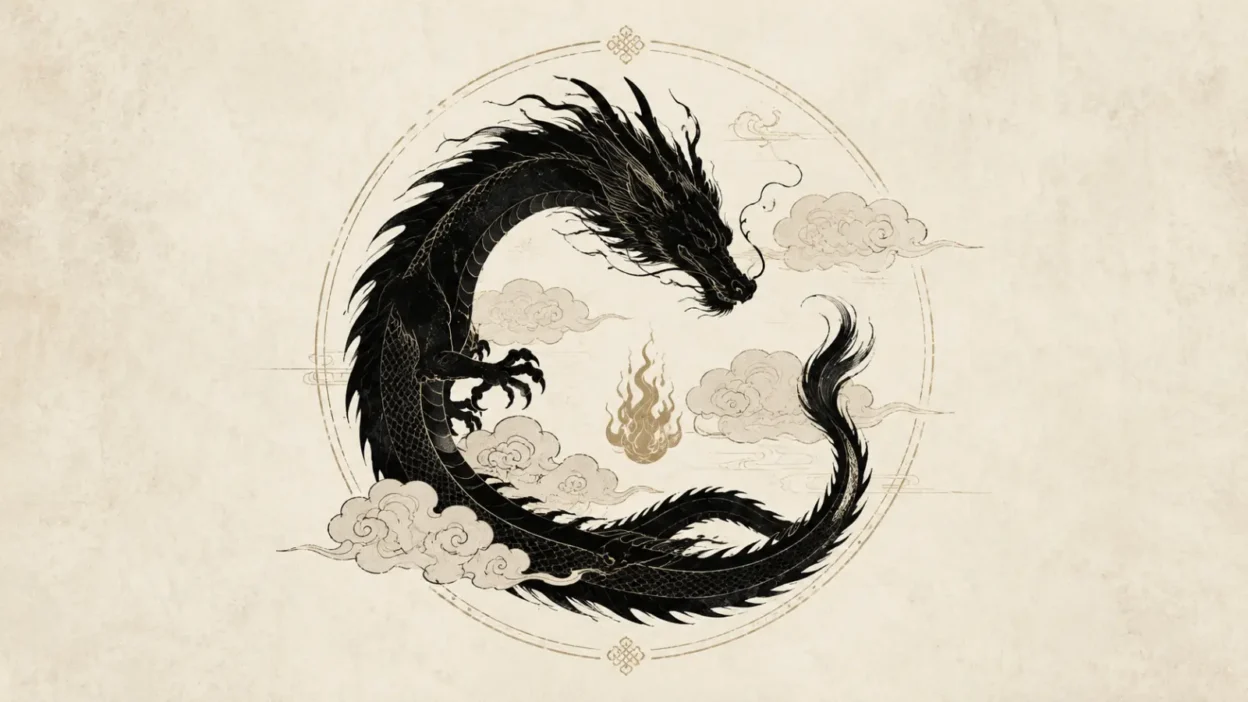
In Chinese tradition, the dragon is often linked with rain, rivers, clouds, fertility of the land, imperial authority, good fortune, and social rank. It is commonly shown as a long, flexible creature with horns, claws, scales, whiskers, and movement through air or water. It is not usually a cave monster waiting to burn a village.
That water connection helps explain its positive meaning. In farming societies, rain could mean survival. A being connected with water, clouds, and seasonal order could become a sign of blessing rather than destruction.
The imperial meaning developed in art, clothing, architecture, and court imagery. A dragon on a robe or palace object could signal rank, authority, and the ruler’s connection to order. This does not mean every dragon image was political, but it does show why the creature became a high-status emblem.
For many Chinese and Chinese American communities today, dragon imagery may also carry cultural pride, festival meaning, family memory, and celebration. A dragon dance in the U.S. is not just decoration. It can be part of a living cultural tradition, especially during Lunar New Year events.
European Dragons: Fear, Sin, Treasure, and the Hero’s Test
In many European stories, dragons are more likely to be dangerous. They may breathe fire, poison the land, guard treasure, demand sacrifice, or threaten a community.
This image grew stronger in medieval Christian art and legend, where dragons could stand for evil, sin, the devil, or chaos. Stories of dragon slayers, including saintly or heroic figures, often turn the dragon into a visible enemy. The fight becomes moral as well as physical.
The treasure-hoarding dragon also became important in heroic literature. Here, the dragon may symbolize greed, death, and the danger of wealth without wisdom. It guards riches but does not use them. That makes the dragon both frightening and spiritually empty.
Yet even in European tradition, dragons are not one-note symbols. Some appear in heraldry, local legend, flags, and family crests as signs of ferocity, protection, or identity. The red dragon of Wales, for example, is not read simply as evil. It carries national and cultural meaning.
For U.S. readers, the European dragon is the main ancestor of the fire-breathing fantasy dragon. That version still shapes how many Americans imagine dragons today.
Dragons in Religion, Myth, and Folklore
Dragons appear near religion and myth, but they should not be treated as one shared sacred symbol.
In some religious art and stories, a dragon-like creature represents chaos, evil, or a force defeated by divine power. In other traditions, serpent or dragon-like beings are connected with water, fertility, protection, or wisdom. The meaning depends on the tradition, the text, and the image.
Folklore also changes from place to place. A village dragon, river dragon, sea serpent, temple guardian, or monster in a hero tale may have a local meaning that does not apply elsewhere. Many stories were retold over centuries, so a dragon’s role could shift as religions, empires, trade, and art styles changed.
Dream and omen meanings need extra caution. Some people today read dragons in dreams as signs of inner power, anger, protection, or transformation. That can be useful as personal interpretation, but it is not proven evidence of a message or prediction.
The respectful approach is simple: name the tradition, avoid mixing everything together, and do not turn living beliefs into decoration only.
What Dragon Colors and Designs Can Change
A dragon’s style can shift its meaning. Color, posture, setting, and cultural design all matter. A curled dragon around water does not feel the same as a winged dragon over flames.
| Dragon style or context | Common meaning today | Caution |
|---|---|---|
| Long dragon with clouds or water | Luck, vitality, rain, protection | Often tied to East Asian traditions |
| Winged fire-breathing dragon | Danger, challenge, destruction, fantasy power | Mostly shaped by Western imagery |
| Dragon guarding treasure | Greed, secrecy, testing desire | Meaning depends on the story |
| Dragon with flowers or waves | Balance, beauty, change, endurance | Common in tattoo design |
| Dragon on a crest or flag | Identity, defense, pride | Read through local history |
Color meanings can be flexible. Red may suggest energy, danger, luck, or celebration depending on context. Gold can suggest wealth, rank, sacred value, or victory. Black may suggest mystery, fear, grief, or elegance. Green can suggest nature, poison, growth, or ancient life.
No color has one fixed dragon meaning. A red dragon in a fantasy game, a red dragon in Welsh identity, and a red dragon in festival art are not the same symbol.
Dragon Tattoos, Jewelry, and Personal Identity in the U.S.
Dragon tattoos are common because the image can carry both beauty and force. It moves well across the body, can wrap around an arm or back, and can be designed as fierce, graceful, protective, or mysterious.
In the U.S., a dragon tattoo may mean strength, survival, independence, protection, confidence, anger transformed into control, or respect for a cultural art style. The meaning is often personal. Placement, style, and added elements change the message.
A Japanese-inspired dragon with waves may suggest protection, motion, and endurance. A dark fantasy dragon may suggest power, rebellion, or danger. A small minimalist dragon may simply show a love of fantasy, gaming, or myth.
Cultural respect matters here. Designs drawn from Chinese, Japanese, Korean, Vietnamese, or other traditions are not just generic “Asian dragon” images. A thoughtful tattoo should avoid random sacred details, fake characters, or mixed motifs used only because they look exotic.
Jewelry works in a similar way. A dragon ring or necklace may feel protective, bold, or magical. In everyday fashion, it often signals confidence and a taste for mythic or fantasy style.
Dragons in Decor, Branding, Sports, and Digital Culture
Modern U.S. dragon use is often aesthetic. Dragons appear on posters, candles, notebooks, gaming gear, book covers, fantasy maps, children’s toys, and home decor. In these settings, the meaning may be less religious and more atmospheric.
In branding and sports, dragons suggest force, speed, intimidation, and high energy. A team or product using a dragon wants to feel hard to beat. The creature gives a name or logo instant drama without needing much explanation.
Digital culture has added softer meanings too. Animated dragons can be funny, loyal, cute, lonely, or misunderstood. Fantasy stories now often make dragons companions, teachers, endangered beings, or intelligent species rather than simple monsters.
This shift matters. Older Western stories often ask, “How do we defeat the dragon?” Modern fantasy often asks, “What if the dragon has its own story?” That change has made dragons easier to use as symbols of identity, friendship, and misunderstood strength.
For many Americans, the dragon is now both a monster and a mascot. That double role is a major reason the symbol stays popular.
Misuse, Oversimplification, and Respectful Interpretation
The biggest mistake is treating all dragons as if they mean the same thing. They do not.
Another mistake is turning cultural symbols into vague spiritual claims. Saying a dragon “always means wisdom” or “always means evil” erases real differences between traditions. It also makes the symbol less useful, not more.
There is also a translation issue. The English word “dragon” can flatten different creatures into one category. A Chinese long, a European dragon, a sea serpent, and a serpent-like religious figure may share features, but they are not identical.
Modern commercial use can cause problems when sacred, national, or community symbols are used with no context. A dragon on a festival banner, temple carving, imperial robe, tattoo flash sheet, and fantasy mug may look related, but the level of cultural meaning is not the same.
A respectful reading asks three questions: whose dragon is this, what tradition shaped it, and is it being used as heritage, faith, art, fantasy, or decoration?
How to Interpret a Dragon Symbol in Context
The best interpretation starts with the image itself. Is the dragon winged or serpent-like? Is it near water, fire, treasure, clouds, a sword, a flower, a pearl, a crown, or a human figure?
Next, look at the setting. A dragon in a church painting, a Lunar New Year parade, a fantasy novel, a tattoo studio, and a sports logo all speak different symbolic languages.
Then ask what emotion the dragon creates. Is it meant to scare, protect, bless, challenge, impress, or identify a group? Symbolism often begins with feeling, but it should not end there.
Finally, avoid making the meaning too neat. A dragon can hold opposites at once. It can be danger and protection, wisdom and greed, luck and fear, pride and warning. That tension is exactly why the symbol works.
FAQs
What does a dragon symbolize most often?
In modern U.S. use, a dragon most often symbolizes strength, danger, courage, and protection. In older traditions, the meaning changes widely, especially between East Asian water-and-luck associations and European monster-slaying stories.
Is a dragon a good or bad symbol?
A dragon can be either, depending on context. In many East Asian traditions it is often fortunate or protective, while in many medieval European stories it is threatening or morally negative.
What does a dragon tattoo mean?
A dragon tattoo often means strength, survival, independence, protection, or personal power. The exact meaning depends on the design style, added symbols, placement, and whether the tattoo draws from a specific cultural tradition.
What do dragons mean spiritually?
Spiritual meanings vary. Some people interpret dragons as guardians, inner power, transformation, or wisdom, but those readings should be framed as belief or personal interpretation unless they belong to a specific documented tradition.
Why are Chinese dragons associated with luck?
Chinese dragons are often linked with rain, water, seasonal balance, high rank, and blessing. Because rain and water were tied to life and farming, the dragon became a positive sign of vitality and good fortune in many contexts.
Why do Western stories often show dragons as evil?
Many Western stories connect dragons with danger, chaos, greed, sin, or a threat that a hero must overcome. Medieval Christian art and saint legends helped strengthen the image of the dragon as a visible form of evil or disorder.
Conclusion
Dragons remain useful symbols because they do not reduce easily. They gather fear, strength, luck, wisdom, wealth, danger, and protection into one imagined creature.
The clearest dragon symbolism meaning is power under pressure: power that may protect, threaten, bless, test, or transform depending on the culture and setting. A careful reading does not ask what dragons mean everywhere. It asks what this dragon means here.
That is the difference between a flat answer and a responsible interpretation.