Symbolism in mythology is the way myths use gods, animals, objects, places, journeys, monsters, and natural forces to express ideas larger than the literal story. A serpent may be more than a snake. A mountain may be more than a setting. A journey underground may be more than travel.
People care about these symbols because they still show up in daily life. They appear in tattoos, fantasy books, superhero films, museum art, jewelry, school literature units, brand names, sports mascots, and spiritual language. In the United States, many people meet myth first as entertainment or education, then discover that the images carry older religious, cultural, and emotional layers.
The most common modern reading is simple: mythic symbols help people talk about fear, power, death, change, wisdom, protection, temptation, and renewal. The harder part is knowing when a meaning is historically grounded, when it is a later artistic reuse, and when it is only a modern personal interpretation.
Quick Answer
In modern U.S. use, symbolism in mythology usually means using mythic figures, creatures, objects, and journeys as shorthand for big human experiences such as transformation, danger, wisdom, power, death, and renewal. Many of these meanings began in religious stories, ritual settings, oral tradition, art, and attempts to explain nature, but their meanings often changed as later cultures reused them.
TL;DR
- Mythic symbols are story images with layered meaning.
- Meanings depend on culture, period, and context.
- Many symbols began in religion or ritual.
- Modern use often becomes personal or decorative.
- “Universal” meanings should be treated carefully.
- Respect matters when symbols are sacred or living.
What Mythic Symbols Mean
A mythic symbol is a story element that carries more meaning than its surface role. It can be a character, animal, plant, weapon, number, color, place, gesture, or event. The symbol works because it points beyond itself.
For example, fire in a myth may be literal fire. It may also suggest divine power, danger, purification, knowledge, anger, sacrifice, or creative force. The meaning depends on the story. Fire stolen for humans is different from fire used to destroy a city or fire burning on an altar.
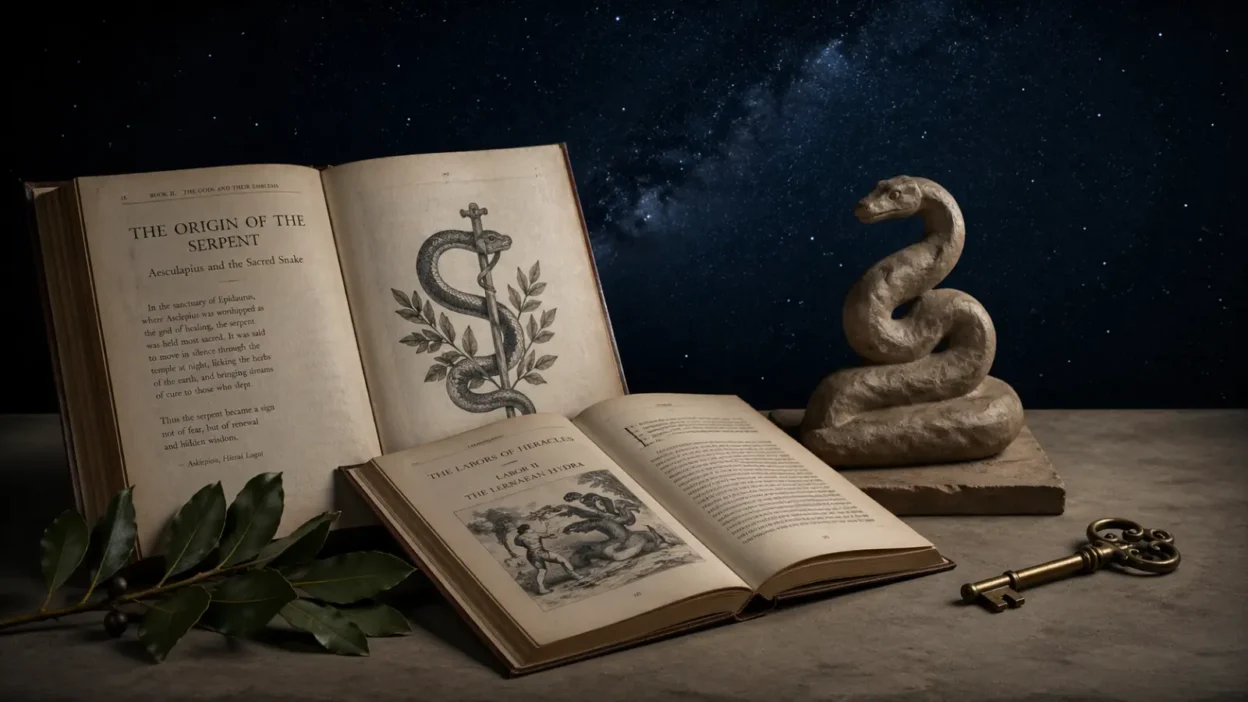
This is why mythic interpretation needs care. A symbol does not have one fixed meaning across all cultures. Even within one tradition, the same image may shift from one story to another. A snake can suggest danger in one place, healing in another, wisdom in another, and rebirth in another because it sheds its skin.
A good reading asks three questions: What does the symbol do in the story? What did it mean in its cultural setting? How are people reusing it now?
The Core Meaning Today: Big Ideas Made Visible
For many U.S. readers today, mythic symbols work like visual shortcuts. They make abstract ideas easier to picture. Courage becomes a hero facing a monster. Chaos becomes a dragon or sea creature. Wisdom becomes an owl, an old guide, or a difficult riddle. Renewal becomes a bird rising after destruction.
This does not mean the original cultures used symbols only as “metaphors” in the modern classroom sense. In many ancient settings, myths were tied to worship, seasonal rites, social order, royal authority, burial practices, or ideas about the sacred. The symbol was not just decorative. It could help explain how the world was thought to work.
Modern Americans often receive these symbols through books, films, games, museums, and online images rather than ritual life. That changes the meaning. A thunderbolt on a T-shirt may suggest power or speed. In an ancient religious setting, a thunderbolt could identify a sky god, express divine authority, or mark a force that humans could not control.
The clearest modern meaning, then, is communication. Mythic symbols give shape to experiences that are hard to explain directly.
Why These Meanings Developed
Mythic symbols developed because people used stories to organize a world that could be beautiful, frightening, and unpredictable. Storms, droughts, childbirth, disease, death, harvests, dreams, love, war, and political power all needed explanation. Myths gave these forces names, bodies, places, and patterns.
Natural traits often shaped symbolic meaning. The sun rises after darkness, so it easily becomes linked with return, order, sight, or kingship. The moon changes shape, so it often becomes linked with cycles, time, femininity in some traditions, night, mystery, or change. Birds move between earth and sky, so they can become messengers, omens, souls, or signs of divine presence.
Social life shaped meaning too. A crown, spear, throne, gate, road, or feast can become symbolic because people already understand its role in ordinary life. Myths lift familiar things into a larger story world.
Fear also matters. Many mythic creatures combine human and animal features. These mixed forms can show boundary-crossing: human and beast, life and death, land and water, beauty and danger, civilization and wilderness. They often appear where a culture is thinking about limits.
Common Symbol Families in Mythic Stories
Some images appear again and again because they are easy to recognize and flexible enough to hold many meanings. This does not make them universal in one simple sense. It means humans in different places often noticed similar natural features and used them in different symbolic systems.
| Symbol family | Common mythic role | Why it often developed | Needed caution |
| Water | Creation, danger, cleansing, crossing | Life depends on water, but floods and seas threaten life | Meanings differ sharply by tradition |
| Fire | Knowledge, sacrifice, anger, divine force | Fire warms, cooks, destroys, and transforms | Not every fire symbol means “purification” |
| Serpent | Danger, healing, rebirth, wisdom | Snakes shed skin and can harm suddenly | Avoid one fixed good-or-evil reading |
| Tree | Life, ancestry, cosmic order, fertility | Trees root below and rise upward | “World tree” ideas are not all the same |
| Underworld journey | Death, testing, hidden knowledge, return | Burial, caves, darkness, and grief shape meaning | Not every underworld is “hell” |
The table shows why context matters. A symbol’s visible traits may start the association, but culture decides how the image is used.
Gods, Monsters, Heroes, and Objects as Symbols
Myths often turn characters into symbolic roles. A god may stand for a natural force, a social value, a skill, a fear, or a sacred power. A sea god is not only “the ocean.” Such a figure can also represent danger, trade, travel, storms, abundance, and the limits of human control.
Heroes usually symbolize testing. Their stories often involve a crossing: leaving home, entering danger, receiving help, facing a monster, losing something, and returning changed. Modern audiences often read this as personal growth, but older versions could also express family duty, royal legitimacy, divine favor, social order, or the cost of pride.
Monsters are especially flexible. They may represent chaos, taboo, wilderness, punishment, invasion, disease, uncontrolled appetite, or the unknown. But they can also become sympathetic in modern retellings. In recent U.S. culture, figures once treated mainly as threats are often reimagined as outsiders, victims, survivors, or symbols of misunderstood power.
Objects matter just as much. A shield may mean protection, but also identity. A mirror may mean self-knowledge, deception, beauty, or danger. A key may suggest access, secrecy, initiation, or control. A cup, apple, bow, thread, ring, or mask can carry meaning because it changes what characters can know or do.
How Meaning Changes Across Cultures
The same image can look similar while meaning something different. This is one of the most important lessons in reading mythic symbols.
A dragon in one tradition may be a destructive monster. In another, a dragon-like being may be connected with rain, imperial power, wisdom, or good fortune. A raven may appear as a trickster, creator, messenger, battlefield bird, or clever survivor depending on the story system. A mountain may be a divine home, a place of revelation, a boundary, or a symbol of endurance.
Problems begin when modern readers flatten many traditions into one meaning. It is tempting to say “the serpent means transformation” or “the owl means wisdom.” Those readings may fit some contexts, but they are not complete. A careful article, tattoo design, classroom essay, or artwork should name the tradition when possible.
Cross-cultural comparison can still be useful. It helps readers notice patterns: skies often connect with height and authority, caves with hidden places, rivers with crossing, and dawn with return. But comparison should not erase local meaning.
Religion, Ritual, Folklore, and Later Interpretation
Many myths are connected to religion, but not every modern use of myth is religious. A symbol may begin in sacred narrative, move into temple art, appear in poetry, become a museum object, and later turn into a tattoo, logo, game character, or Halloween costume. Each stage changes the way people understand it.
Ritual use is different from decorative use. A symbol carried in a ceremony, placed on an altar, used in prayer, or connected with burial has a living or historical religious function. The same image printed on a mug or poster may be aesthetic reuse. That does not make the object meaningless, but it changes the kind of meaning it has.
Folklore and superstition also need separate treatment. If a bird, eclipse, dream, or animal sighting is called an omen, that is a belief tradition, not a proven fact about the future. The belief may be culturally important, emotionally real, and historically interesting. It should still be described as belief.
Later interpretation is another layer. Modern psychology, literary criticism, and internet spirituality often read myths as maps of the self. These readings can be useful, but they should not be mistaken for the original meaning of every story.
How U.S. Readers Encounter Mythic Symbols Now
In the United States, mythic symbols are often encountered through education and entertainment before they are encountered as religion. Students read Greek, Roman, Norse, Egyptian, Mesopotamian, Hindu, Indigenous, and other myths in simplified forms. Museums present myth through sculpture, pottery, painting, and classroom materials. Films and games turn gods, monsters, and quests into action stories.
This creates a mixed cultural memory. Many Americans know a thunderbolt, trident, phoenix, Medusa head, winged sandals, or underworld journey without knowing the full story behind it. The symbol becomes familiar even when the tradition is not.
Modern U.S. use also favors personal meaning. A phoenix may stand for surviving illness, divorce, grief, addiction recovery, or a career change. A Medusa image may be used by some people as a sign of protection, rage, trauma survival, or feminine power. A labyrinth may suggest anxiety, self-discovery, or a complicated life path.
These modern meanings are not “fake.” They are new uses. The key is not to pretend they are always ancient.
Tattoos, Decor, Fashion, and Branding
Mythic symbols work well in tattoos because they are compact and emotionally loaded. A small image can carry a whole story. People choose myth-inspired tattoos to mark survival, grief, strength, heritage, protection, rebellion, beauty, or a private turning point.
Common tattoo choices include phoenixes, serpents, ravens, wolves, gods, goddesses, tridents, thunderbolts, Medusa, Valkyrie-like figures, underworld imagery, laurel wreaths, and celestial symbols. The meaning depends on the wearer, the source tradition, and the design choices. A serpent wrapped around a staff is not the same as a serpent in a garden, on a shield, or biting its tail.
Decor and fashion often strip the symbol down to mood. Mythic imagery can make a room feel scholarly, gothic, celestial, romantic, heroic, or mysterious. Jewelry may use moons, snakes, wings, eyes, or stars because they are visually strong even when the wearer does not intend a specific religious meaning.
Branding works in a similar way. Companies and teams borrow mythic names and images to suggest speed, victory, strength, wisdom, beauty, endurance, or innovation. This can be effective, but it often simplifies the older story.
Misuse, Oversimplification, and Cultural Respect
The biggest mistake in mythic symbolism is treating every symbol as free-floating decoration. Some symbols come from living religions. Some belong to specific Indigenous nations, initiated communities, family lines, ceremonial roles, or sacred contexts. Others have been distorted by nationalism, racism, occult reinvention, commercial packaging, or internet misinformation.
Respect begins with naming limits. A person can admire a symbol without claiming full ownership of its meaning. A tattoo, logo, costume, or product design deserves extra thought when the image comes from a tradition that has been colonized, mocked, suppressed, or commercially exploited.
Oversimplification is also a problem. “Goddess energy,” “warrior symbol,” “tribal design,” and “ancient protection mark” are often too vague to be responsible. They can erase the people, languages, ceremonies, and histories that gave the symbol meaning.
There is also a difference between reuse and misuse. Artists have always retold myths. New meanings are part of cultural life. Misuse happens when a symbol is stripped of context, sold as exotic, attached to false history, or used in a way that harms the people who hold it sacred.
How to Interpret a Mythic Symbol Responsibly
Start with the story, not the image alone. Ask what happens before and after the symbol appears. A crown in a myth may not simply mean power; it may mean burden, inheritance, corruption, divine approval, or a dangerous desire to rule.
Next, identify the tradition as specifically as possible. “Greek,” “Norse,” “Maya,” “Yoruba,” “Hindu,” “Buddhist,” “Celtic,” or “Native American” are not interchangeable labels. Some of those terms are themselves broad umbrellas covering many languages, places, and time periods.
Then separate layers:
- historical or religious meaning
- folklore or omen belief
- literary interpretation
- modern personal meaning
- decorative or commercial reuse
- internet trend meaning
Finally, use modest language. Say “can symbolize,” “is often associated with,” “in this tradition,” or “in modern use” when the evidence calls for it. That small caution makes the interpretation more accurate, not weaker.
Why Mythic Symbols Still Feel Useful
Mythic symbols last because they are flexible. They can carry old stories into new settings without losing all connection to the past. A symbol can be religious in one place, literary in another, personal in another, and decorative somewhere else.
They also help people speak about change. Many of the most popular mythic images today involve crisis and return: the phoenix, the descent into the underworld, the monster battle, the broken crown, the storm, the guiding star, the guarded gate. These images remain useful because people still need language for fear, loss, ambition, grief, recovery, and hope.
But flexibility has limits. A symbol becomes clearer when it is tied back to its story. Without context, it becomes only an aesthetic. With context, it becomes a doorway into how people made meaning.
FAQs
What does mythic symbolism mean?
Mythic symbolism means that a figure, object, place, creature, or event in a myth carries meaning beyond its literal role in the plot. It may point to ideas such as danger, protection, wisdom, death, renewal, power, or social order.
Is mythic symbolism the same in every culture?
No. Some images repeat across cultures, but their meanings are not identical. A snake, bird, tree, or flood can have different meanings depending on the tradition, story, region, and period.
What are common symbols in mythology?
Common examples include water, fire, serpents, trees, mountains, caves, birds, suns, moons, weapons, crowns, gates, and journeys into the underworld. These symbols are common because they connect to visible parts of nature and human life.
What does a mythology tattoo usually mean?
A mythology tattoo usually expresses a personal link to a story, figure, or theme such as strength, survival, wisdom, protection, grief, or transformation. The meaning is stronger and more respectful when the wearer understands the symbol’s cultural and religious background.
Are mythological symbols spiritual?
Some are spiritual or religious within their original traditions. Others are mainly literary, artistic, decorative, or personal in modern use. The safest answer depends on the specific symbol and the community connected to it.
Can mythic symbols have negative meanings?
Yes. Many mythic symbols hold both positive and negative meanings. Fire can warm or destroy, water can cleanse or drown, and a monster can represent danger while also revealing what a culture fears.
Why do modern movies and games use mythological symbols?
Movies and games use them because they are recognizable and dramatic. A mythic symbol can quickly suggest power, destiny, danger, mystery, or transformation, even when the story is not retelling an ancient myth directly.
Conclusion
Mythic symbols are not just old images attached to old stories. They are ways of giving shape to forces people still recognize: fear, change, death, desire, wisdom, protection, and return.