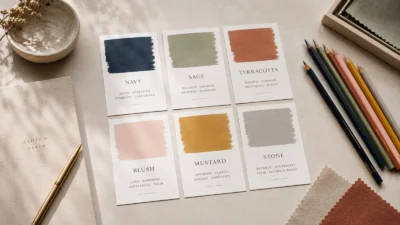

Color symbolism blog ideas usually begin with a simple question: what do colors mean? The better answer is not a fixed chart. Colors carry meaning through culture, nature, language, religion, fashion, politics, design, and memory.
That is why color symbolism matters in everyday life. People choose colors for weddings, tattoos, logos, home decor, sports teams, protest signs, awareness ribbons, and holiday traditions. Even when they are not thinking about symbolism, color is helping shape the message.
In the United States, many color meanings feel familiar. Red can suggest love or danger. Blue can suggest trust or sadness. Black can feel elegant, serious, mournful, or rebellious. But these meanings are not automatic. They depend on shade, setting, culture, and who is looking.
Quick Answer
In modern U.S. culture, color symbolism blog ideas usually point to the way colors express emotion, identity, warning, celebration, belief, and style. Many meanings come from visible nature, religious and artistic traditions, national symbols, fashion habits, and repeated use in media and design.
TL;DR
- Color meanings change by culture and context.
- U.S. meanings often come from holidays and design.
- Shade can change the message.
- Spiritual meanings should be framed as belief.
- Branding claims need careful limits.
- Strong articles explain why meanings developed.
What Color Symbolism Blog Ideas Really Cover
Color symbolism is the use of color to stand for an idea, mood, value, identity, or message. It can appear in art, clothing, flags, flowers, tattoos, interiors, logos, films, rituals, and online aesthetics.
A strong article about color symbolism should do more than list “red means passion” or “blue means calm.” Those shortcuts can be useful, but they become misleading when they ignore context.
A color can carry several meanings at once. Red may suggest romance on Valentine’s Day, danger on a stop sign, excitement in advertising, political identity on a campaign map, or good fortune in some cultural traditions. The color did not change. The setting did.
For a general U.S. reader, the most useful approach is practical and careful. Explain common meanings first. Then explain where they come from, how they are used now, and when the meaning is uncertain or culture-specific.
The Core Meanings Readers Usually Look For First
Most readers begin with the major colors. They want a quick sense of what each color usually suggests in modern American life. The table below gives a starting point, not a universal rule.
| Color | Common U.S. Associations | Contexts That Change the Meaning |
|---|---|---|
| Red | love, urgency, danger, courage, anger | romance, politics, warnings, sports, sales |
| Blue | trust, calm, sadness, stability, patriotism | business, uniforms, music, flags, decor |
| Green | nature, money, growth, luck, envy | finance, environmentalism, St. Patrick’s Day |
| Black | elegance, mourning, power, rebellion | funerals, fashion, luxury, protest, horror |
| White | purity, simplicity, peace, cleanliness | weddings, medical spaces, minimal design |
| Yellow | warmth, joy, caution, attention | school buses, signs, sunshine, anxiety in some uses |
These meanings are familiar because Americans see them repeated. Red roses, red sale tags, and red stop signs all reinforce different parts of red’s symbolic range. Blue appears in banks, uniforms, flags, and corporate logos, which helps support its public image as steady and trustworthy.
But the table should not be treated like a dictionary. A pale blue nursery wall, a dark navy suit, and the phrase “feeling blue” do not communicate the same thing. Symbolism works through use, not color alone.
Why Colors Took On Symbolic Meaning
Many color meanings began with ordinary observation. Red is linked to blood, fire, heat, and ripe fruit. Green is linked to plants, spring growth, and living landscapes. Blue is linked to sky and water. Brown is linked to soil, wood, leather, and earth.
Other meanings came from material history. Some colors were once hard or expensive to produce. Purple is the classic example. In many ancient and medieval settings, deep purple dyes were rare and costly, so purple became tied to status, luxury, and authority. That association still echoes in modern ideas of purple as royal, dramatic, or spiritual.
Religion and art also shaped color meaning. In Christian art, blue has often been connected with holiness, heaven, and the Virgin Mary. White has been used to suggest purity, peace, and light. These meanings were never the only meanings, but they helped shape Western visual culture.
Public systems added another layer. Traffic lights, warning signs, sports uniforms, national flags, and school colors all teach people to read colors quickly. Over time, repeated use can feel natural, even when it is really learned.
Color Symbolism Is Not the Same as Color Psychology
Color symbolism and color psychology overlap, but they are not identical.
Color symbolism asks, “What does this color represent in this culture or situation?” Color psychology asks, “How might this color affect perception, emotion, or behavior?” The second question is harder to prove.
It is reasonable to say that many Americans associate blue with calm or trust. It is less careful to say that blue will automatically make every person calm. Mood depends on memory, lighting, shade, culture, personal taste, and the situation.
This distinction matters for writers. A person may love black because it feels elegant. Another may connect it with grief. A brand may use green to suggest health or sustainability, but that does not prove the product is healthy or sustainable.
Good color writing avoids turning associations into laws. It treats color as a language shaped by culture, not as a button that controls people.
U.S. Color Symbolism in Holidays and Public Life
In the United States, public color symbolism is especially visible during holidays and civic events.
Red, white, and blue are strongly tied to the American flag, patriotism, elections, military ceremonies, July Fourth, Memorial Day, and Veterans Day. Many Americans read the palette as national before they read each color separately.
Other holidays have their own color systems:
- Red and pink often mark Valentine’s Day through hearts, roses, candy, and romance.
- Orange and black signal Halloween through pumpkins, night imagery, costumes, and seasonal decor.
- Green appears around St. Patrick’s Day, luck, Irish-American celebration, and shamrocks.
- Red and green dominate Christmas decor in many U.S. homes and stores.
- Pastels often appear around Easter and spring.
Color also appears in politics, but U.S. political color meanings are newer than many people assume. Red states and blue states are now familiar shorthand, yet political color systems have shifted over time and are not ancient party symbols.
Awareness campaigns add another public layer. Pink ribbons are widely linked with breast cancer awareness. Red ribbons have been linked with HIV/AIDS awareness. Purple, teal, orange, and other colors are used by many causes. These meanings can be powerful, but they usually come from organized campaigns rather than ancient symbolism.
Shade Differences: Why One Color Can Tell Different Stories
A color’s shade can change its message. This is one reason simple color charts feel incomplete.
Light pink may suggest softness, affection, sweetness, or childhood. Hot pink can feel bold, playful, glamorous, or defiant. Dusty rose may suggest vintage romance or restraint.
Blue works the same way. Pale blue can feel airy or gentle. Navy can suggest authority, professionalism, or tradition. Electric blue feels more digital, energetic, or futuristic.
Green ranges widely too. Sage green is often used for calm interiors and nature-inspired design. Emerald can suggest richness and elegance. Neon green may feel artificial, sporty, toxic, or cyberpunk, depending on the setting.
Black also changes with texture and context. Matte black in a modern kitchen may feel sleek. Black lace may feel romantic or gothic. A black suit at a funeral reads differently from a black leather jacket at a concert.
This is a useful lesson for symbolism writers. Do not only ask what color appears. Ask which version of the color appears, where it appears, and what it is paired with.
Color Symbolism in Clothing, Weddings, Funerals, and Identity
Clothing is one of the most personal places where color symbolism shows up. People use color to signal mood, taste, group identity, gender expression, formality, rebellion, mourning, celebration, or belonging.
In many U.S. weddings, white is still linked with bridal tradition, even though modern couples use many colors. Brides may choose ivory, blush, champagne, black, red, or floral color palettes for personal reasons. The symbolism often mixes tradition with style.
At funerals, black remains common in the United States because it signals seriousness, grief, and respect. Still, some memorials request bright colors to honor the person’s personality. In those cases, color becomes less about mourning etiquette and more about remembrance.
Colors also shape identity and group visibility. School colors, team colors, pride flags, military uniforms, sorority and fraternity colors, and activist dress codes all use color to make belonging visible.
A careful article should avoid assuming one meaning for everyone. A red dress may feel romantic, confident, religious, cultural, political, or simply beautiful. The wearer’s intention matters.
Color Symbolism in Branding, Decor, and Digital Culture
Brands use color because color helps people recognize and remember them. A blue bank logo may aim for trust. A green grocery brand may suggest freshness or environmental care. A black luxury logo may suggest elegance or control.
But color does not work alone. Font, price, product quality, language, photography, and reputation all shape the message. A green label can imply “natural,” but it does not prove ethical sourcing. A calm blue app may feel trustworthy, but trust still depends on behavior.
In home decor, color symbolism is softer and more personal. Beige, white, and earth tones may suggest calm or simplicity. Dark green may feel grounded. Yellow can brighten a kitchen but may feel too intense in a bedroom. Black accents may add contrast and sophistication.
Digital culture adds trend cycles. A color can become popular because of a movie, a celebrity outfit, an app aesthetic, a meme, or a seasonal “core” trend. These meanings can spread quickly, but they may not last.
Useful color-symbolism writing can cover digital life, but it should name trends as trends. A viral color mood is not the same as a long-standing cultural meaning.
Spiritual, Religious, and Folklore Meanings Need Care
Many people search for the spiritual meaning of colors. This can include religious art, ritual dress, candles, aura readings, color magic, meditation, prayer, or personal signs.
These meanings should be handled with care. Some color meanings come from living religious traditions. Others come from folk practice, modern spirituality, or personal interpretation. They should not be blended into one vague spiritual system.
For example, green has important religious associations in Islam and is also used in modern environmental symbolism. Those are not the same thing. Orange may appear in Buddhist monastic clothing in some traditions, but it is also used in U.S. Halloween decor, traffic cones, sports teams, and prison uniforms. Context decides the reading.
Color magic and aura color meanings are belief-based systems. A respectful article can explain what believers associate with certain colors, but it should not present those claims as proven facts.
The safest rule is simple: describe the tradition, name the context, and avoid treating sacred use as an aesthetic shortcut.
Cross-Cultural Color Meanings Without Flattening Cultures
Color meanings do not travel cleanly from one culture to another.
In much of the United States, white is associated with weddings, peace, simplicity, and cleanliness. In some East and South Asian contexts, white can be associated with mourning or death. Red is tied to romance and danger in U.S. culture, while in many Chinese contexts it is strongly tied to luck, joy, celebration, and weddings.
These examples are useful, but they can also become too broad. “Asian culture” is not one culture. “Western culture” is not one experience. Religious background, region, generation, class, and personal history can all change how a color is read.
Cross-cultural writing should avoid treating color meanings like tourist facts. It should say where a meaning is common, where it is not, and when the claim is too broad to state safely.
This is especially important for symbols used in weddings, funerals, national flags, sacred clothing, and religious art. These colors can carry living meaning for people, not just decorative value.
Misuse, Oversimplification, and Controversial Color Codes
Color symbolism can be misused when writers make broad claims without context. “Black means evil,” “white means purity,” or “red means passion” may sound simple, but these phrases can carry cultural baggage.
Black is a good example. In U.S. fashion, black can mean elegance, seriousness, authority, mourning, rebellion, or minimalism. But language that constantly links blackness with badness can also echo racialized patterns. A responsible article can discuss black as a color without reinforcing harmful ideas about people.
White also needs nuance. It may symbolize purity, peace, or cleanliness in some settings. But when purity language is used around people, identity, or culture, it can become exclusionary or harmful. Keep the discussion tied to color use, not human worth.
Political colors can also be oversimplified. Red, blue, green, black, white, and orange have all been used by movements, parties, protest groups, and national symbols. Some uses are honorable. Some are harmful. Some are local. A color is not guilty by itself, but public history affects how people read it.
Sacred colors can be misused too. Taking a religious color only because it looks exotic or mystical can flatten a living tradition. When in doubt, explain the specific tradition and avoid treating sacred meaning as decoration.
Strong Blog Angles That Go Beyond a Basic Color List
The best color symbolism topics usually answer a real reader question and add context. Instead of repeating a chart, build articles around situations where people actually use color.
Strong angles include:
- What different colors mean in U.S. weddings
- Black color symbolism in fashion, mourning, and luxury
- Red symbolism in love, danger, and American holidays
- Why blue means trust, sadness, and patriotism
- Green symbolism in money, nature, luck, and envy
- White symbolism in weddings, peace, and minimal design
- Yellow symbolism in joy, caution, and visibility
- Purple symbolism in royalty, spirituality, and creativity
- Orange symbolism in autumn, energy, Halloween, and warning signs
- Color symbolism in tattoos and personal identity
- Color symbolism in flowers and gift-giving
- Color symbolism in flags and national identity
- How colors change meaning across cultures
- How brands use color without proving psychological control
- How internet aesthetics reshape color meaning
A strong article can also focus on one color and one context. “What does green symbolize in American culture?” is often more useful than “everything green means everywhere.”
The goal is not to make color mysterious. The goal is to show how people use color to communicate.
How to Interpret a Color Symbol Responsibly
Start with the setting. A color in a church window, a wedding dress, a sports jersey, a film scene, and a warning sign should not be read the same way.
Then look at the audience. A U.S. teenager, a funeral guest, a designer, a religious practitioner, and a historian may bring different meanings to the same color.
Next, consider the shade and pairing. Red with gold may feel festive or luxurious. Red with black may feel intense, dramatic, dangerous, or political. Blue with white may feel clean and civic. Blue with silver may feel cold, modern, or technological.
Finally, separate the layers:
- What is the documented historical use?
- What is the common modern meaning?
- What is religious or spiritual belief?
- What is personal taste?
- What is a recent trend?
- What is commercial messaging?
This method keeps color symbolism useful without making it rigid. It also helps readers avoid false certainty.
Why Color Symbolism Keeps Changing
Color meanings change because life changes. New technology creates new palettes. Fashion brings old colors back. Political events reshape public associations. Movies and social media turn colors into moods. Brands repeat certain palettes until they feel familiar.
Some meanings last because they are tied to recurring experiences. Green will likely keep its link to plants and growth. Red will likely keep ties to blood, heat, urgency, and love. Blue will likely keep links to sky, water, calm, and sadness.
Other meanings are more fragile. A trendy shade may dominate one year and feel dated the next. A brand color may become iconic only after years of repetition. A color used by a movement may gain new meaning after a major event.
This is why color symbolism should be written as a living language. It has history, but it is not frozen.
FAQs
What do colors symbolize in general?
Colors usually symbolize emotions, values, warnings, identities, seasons, beliefs, or social roles. The meaning depends on culture, shade, setting, and repeated use.
Are color meanings universal?
Some color meanings feel widespread because they connect to nature, such as green with plants or red with blood and fire. Still, cultural use can override those associations, so universal claims should be kept narrow.
What colors are most meaningful in U.S. culture?
Red, white, and blue are especially important because of the American flag and civic life. Black, white, green, red, pink, orange, and yellow also carry strong meanings through holidays, fashion, money, warnings, weddings, and mourning.
What color is best for a symbolism tattoo?
There is no single best color for a symbolism tattoo. Red may suggest passion or courage, black may suggest strength or remembrance, blue may suggest calm or loyalty, and green may suggest growth, but the design and personal story matter most.
What is the difference between spiritual color meaning and cultural color meaning?
Spiritual color meaning comes from religious practice, folk belief, ritual use, or personal spirituality. Cultural color meaning comes from shared social use, such as holidays, fashion, flags, advertising, and public customs.
Can a color have both positive and negative meanings?
Yes. Red can mean love or danger. Green can mean growth or envy. Black can mean elegance or grief. The setting tells the reader which meaning is most likely.
How should writers handle color symbolism from other cultures?
Writers should name the specific culture, religion, region, or tradition when possible. They should avoid broad claims, especially around weddings, funerals, sacred dress, national identity, and ritual use.
Conclusion
Color symbolism is useful because it helps people understand how meaning is built through everyday choices. A color can suggest love, grief, safety, danger, faith, wealth, rebellion, calm, or celebration, but it rarely does so alone.