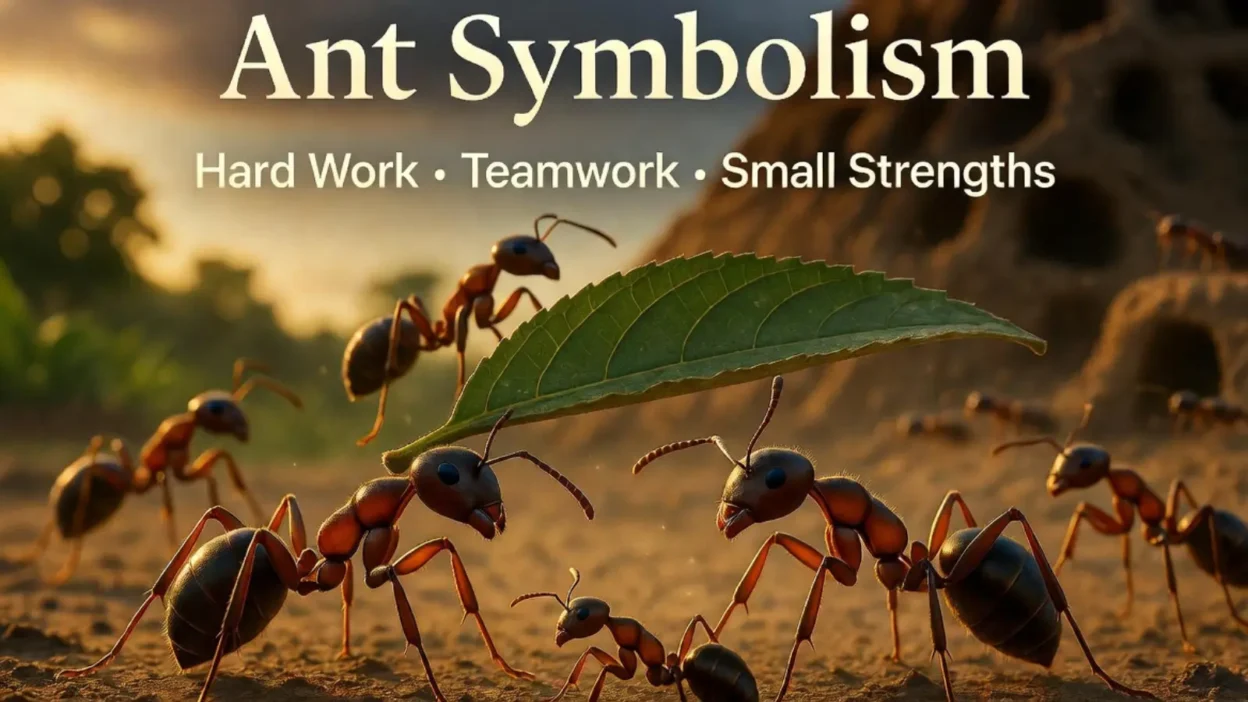
Ants are everywhere in American life. You spot them marching along sidewalks, trailing across kitchen counters, or building tiny hills in backyard gardens. Despite their small size, these industrious insects carry surprisingly strong symbolic weight for many people.
In the United States today, ant symbolism meaning is most commonly associated with hard work, teamwork, and the power of small but steady efforts. People are drawn to ants because they represent qualities that feel deeply practical and achievable: patience, cooperation, and quiet determination in the face of big challenges.
What makes the ant such a lasting symbol is how closely it mirrors values many Americans admire. In a fast-paced culture that often celebrates grand achievements, the ant offers a refreshing reminder that consistent, everyday work produces meaningful results. From childhood fables to workplace motivation, the ant’s example continues to resonate because it feels grounded in real life rather than abstract ideals.
Quick Answer
In the United States today, ant symbolism meaning centers on hard work, teamwork, and steady perseverance. These small creatures show how consistent effort and cooperation can achieve impressive results. Their meanings draw from ancient observations of their behavior, religious texts, and stories that continue to influence how Americans view diligence in daily life.
TL;DR
- Ants stand for hard work and patience.
- Teamwork is central to their symbolism.
- Bible praises their preparation.
- Native stories highlight community aid.
- Tattoos often mark personal grit.
- Real behavior inspires the lessons.
What Ants Represent in Everyday Understanding
Most Americans connect ants first with industriousness. When someone calls another person an “ant,” it usually means they are reliable, focused, and willing to put in steady effort. This view feels practical rather than mystical. It comes from watching ants carry loads many times their weight and work together without complaint.
Their colony structure reinforces ideas of order and shared purpose. One ant alone is limited, but hundreds or thousands create complex societies. This contrast between individual smallness and collective power appeals in a culture that values both personal responsibility and community support.
Why Ants Became Symbols of Industry
The association makes sense when you look at how ants actually live. They forage, build, defend, and store food with remarkable efficiency. A single ant can lift 50 times its body weight, and colonies manage resources carefully through seasons.
Early humans noticed these traits. The behaviors were visible, reliable, and impressive in their results. Over time, people used ants as models for human virtues like planning ahead and working without needing constant recognition. This grounded the symbolism in something observable rather than invented.
Biblical and Judeo-Christian Perspectives
The Bible offers one of the clearest early references in Proverbs 6:6: “Go to the ant, you sluggard; consider its ways and be wise.” The passage highlights the ant’s preparation and lack of overseer. It encourages self-motivation and foresight.
Christian traditions built on this, using ants as examples of humility and productive labor. The focus stayed on practical ethics rather than supernatural power. In American religious contexts, this often translates to sermons or teachings about stewardship, responsibility, and avoiding laziness. It remains a living reference for many families and communities.
Classical Myths and Fables
Greek and Roman stories added layers. The Myrmidons were legendary warriors said to descend from ants transformed by Zeus, emphasizing loyalty and discipline in battle. Aesop’s fable of the ant and the grasshopper contrasts preparation with carefree living, a tale still taught in U.S. schools.
Ancient reports of giant “gold-digging” ants in India were more legend than fact, reflecting wonder about distant lands. These stories show how ants inspired imagination about strength, community, and the unexpected power of small things. They influenced Western literature for centuries.
Ants in Native American Traditions
Several Native tribes incorporated ants into their stories with respect. In Hopi tradition, Ant People helped shelter humans during world-ending catastrophes and taught survival skills. Cahuilla stories credit ants with spreading soil for life on earth.
These accounts portray ants as allies who demonstrate cooperation and resilience. They differ from European views by embedding the insect in creation and survival narratives specific to the land and people. Today, these traditions remind us of the value of community support during hardship, while recognizing their living cultural importance.
Other Cultural and Global Associations
Different societies noticed similar traits but applied them in local ways. Some African traditions link ants to strength and social harmony. Hindu contexts sometimes connect anthills to other spiritual elements like nagas, though this remains distinct.
No single meaning spans all groups. The common thread is observation of ants’ organized, persistent nature. In the U.S., these global echoes appear mostly in diverse immigrant communities or general educational contexts rather than deep daily practice.
Ants in Dreams, Omens, and Superstition
Many people wonder what it means when ants appear in dreams or suddenly in the house. Common interpretations link them to upcoming work, the need for better organization, or feelings of restlessness (“antsy”). Some see them as signs of abundance or minor annoyances.
These views belong to personal belief and folklore rather than established fact. Regional superstitions vary, and modern psychology might read them as reflections of daily stress or tasks. It helps to separate cultural stories from literal predictions.
Ants in Contemporary American Life
Ant symbolism shows up in tattoos as reminders of grit and teamwork. Small ant designs appeal to people who value quiet determination over flash. In home decor, ant motifs appear in motivational art or organizational tools.
Brands sometimes use ants in logos for efficiency or collaboration themes. In sports or workplace culture, teams might reference “ant mentality” for relentless effort. Social media shares ant videos to celebrate productivity or unity. These uses blend ancient ideas with American values of hustle and community.
| Aspect | Symbolic Strength | Real-World Challenge |
|---|---|---|
| Size | Small but mighty | Often seen as household pest |
| Effort | Consistent labor | Can damage property or food |
| Teamwork | Colony success | Invading spaces unwanted |
| Preparation | Storage wisdom | Triggers extermination response |
| Persistence | Overcomes obstacles | Creates human frustration |
The Balance Between Strength and Annoyance
The symbolism has limits. While ants represent positive traits, they are also common pests that damage wood, invade kitchens, or bite. This creates a practical tension in U.S. life: admiration for their nature alongside the need to manage them.
Motivational content sometimes oversimplifies ants as purely heroic, ignoring the messier reality. Recognizing both sides keeps the meaning grounded. The symbol works best when it inspires without denying everyday experience.
Lessons from the Ant for Today
Ants offer a straightforward model. Break big goals into small, manageable steps. Value your role in larger efforts. Plan ahead and work with others when possible. These ideas fit well in American culture, from personal development to team projects.
FAQs
What does an ant symbolize?
In modern American culture, an ant most commonly symbolizes hard work, teamwork, patience, and perseverance. These meanings stem from the insect’s real-life behavior and appear in everything from Bible verses to motivational contexts.
What is the Biblical meaning of ants?
The Bible, particularly in Proverbs 6:6, uses the ant as a positive example of diligence, preparation, and self-motivation. It encourages people to learn from the ant’s industrious nature and avoid laziness.
What does it mean when you see ants spiritually?
Seeing ants often represents a reminder to stay focused, work hard, and collaborate with others. In spiritual and folk interpretations, it can signal a need for better organization or signal upcoming busy periods, though this remains a matter of personal belief.
What do ants mean in dreams?
Ants in dreams are frequently linked to feelings of hard work, teamwork, or minor daily stresses. Some interpret large numbers of ants as feelings of being overwhelmed, while others see them as signs of steady progress toward goals.
What does an ant tattoo symbolize?
An ant tattoo usually represents strength, determination, patience, and the power of small consistent efforts. Many people get them to honor personal resilience, discipline, or the importance of community and teamwork.
Are ants a good or bad omen?
Ants are generally viewed as a good omen connected to productivity and success through effort. However, in some superstitions, a sudden invasion can be seen as a warning about disorganization or minor upcoming troubles. Most interpretations are positive.
What do ants represent in Native American culture?
In several Native American traditions, such as Hopi stories, ants are seen as helpful beings who provided shelter and taught survival skills. They symbolize cooperation, resilience, and community support during difficult times.
Do different colored ants have different meanings?
Black ants are most commonly tied to general hard work and protection. Red ants sometimes carry stronger associations with irritation, defense, or higher energy. These distinctions are more common in modern spiritual interpretations than in traditional sources.
Conclusion
Ants continue to hold meaning because their symbolism is rooted in something real and observable. Across history, from ancient fables and Biblical wisdom to modern American life, they represent the power of steady effort, cooperation, and quiet perseverance.