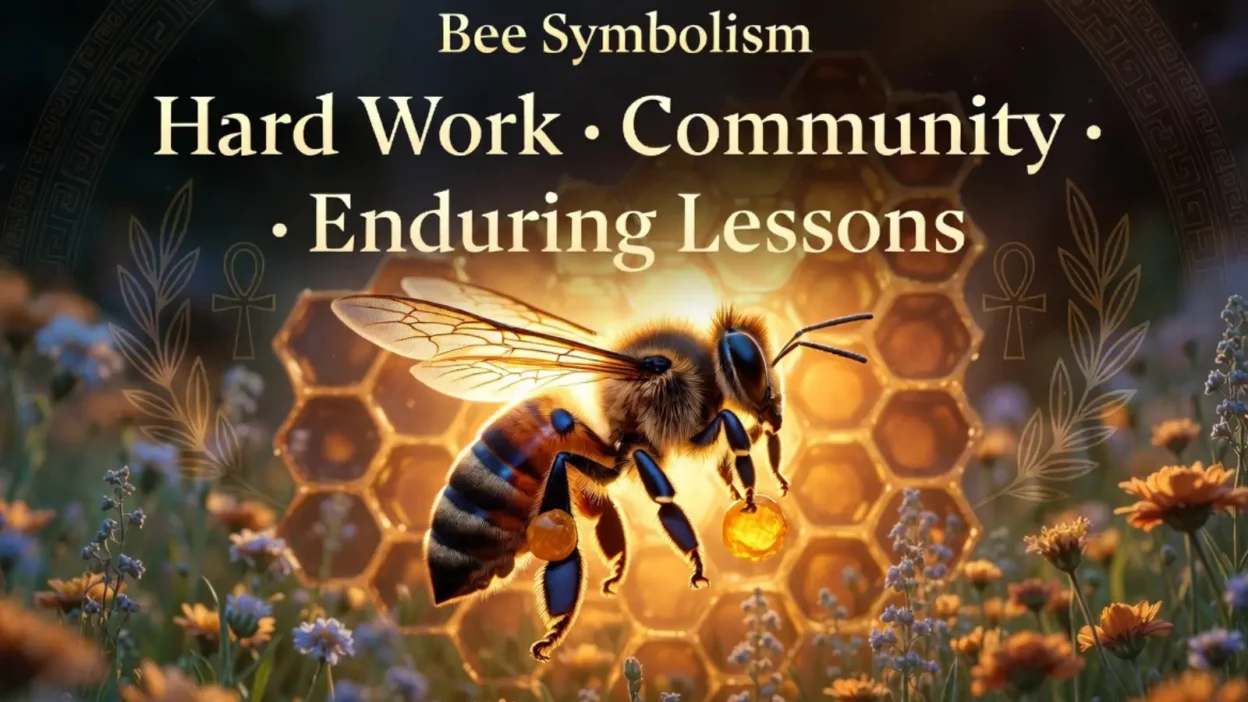
Bees are small but impossible to ignore. Whether buzzing around backyard flowers or featured on product packaging, they catch our attention. In the United States, people most often see the bee as a symbol of steady effort, teamwork, and building something worthwhile together.
This meaning feels practical and relatable. It connects to everyday ideas about getting things done and supporting your community. Yet these associations have deeper layers shaped by thousands of years of human observation and storytelling.
Quick Answer
Bees most commonly symbolize hard work, cooperation, and productivity in the United States today. People draw on their organized colony life and pollination role to represent diligence and community benefit. Historically, meanings also included royalty, resurrection, and divine order, though many modern uses focus on positive personal and social values.
TL;DR
- Bees stand for industriousness and teamwork.
- Ancient cultures linked them to royalty and gods.
- American history tied them to order and pioneering spirit.
- Beehives represent structured societies.
- Tattoos and decor use them for personal motivation.
- Conservation adds new environmental meaning.
What Bees Actually Are and How We Encounter Them
Bees, especially honey bees, are social insects that live in highly organized colonies. A typical hive contains one queen, thousands of worker bees, and drones. Workers handle foraging, nursing, and hive maintenance with remarkable efficiency.
We encounter them in gardens, parks, and farms where they pollinate crops and wild plants. This role makes them essential to food production and ecosystems. Their striped black-and-yellow bodies, translucent wings, and constant motion create a distinctive image that appears in logos, jewelry, and artwork.
The physical reality of their lives—dividing tasks, communicating through dances, and producing honey—directly shaped symbolic meanings. Humans noticed these behaviors early and used them as mirrors for human society.
Hard Work and Community: The Core Modern Meaning
In contemporary American life, the bee primarily represents diligence and collective effort. The phrase “busy as a bee” captures this perfectly. People admire how individual bees contribute to the hive’s success, often sacrificing personal comfort for group survival.
This meaning developed because bees visibly demonstrate productivity. They gather nectar from many flowers to create honey, store it efficiently, and protect their home. These traits translate easily to ideas about career dedication, family responsibility, and community involvement.
Today, the symbol feels optimistic and actionable. It encourages balance between individual initiative and working with others rather than pure competition.
Ancient Roots in Egypt and Royalty
Some of the earliest recorded bee symbolism comes from ancient Egypt around 3500 BCE. The bee hieroglyph represented the king of Lower Egypt. Pharaohs used it in titles and emblems, linking the insect to leadership and organized rule.
Egyptian mythology told that bees emerged from the tears of the sun god Ra when they touched the ground. Honey held sacred status for rituals, healing, and embalming, connecting bees to ideas of purity, resurrection, and the afterlife.
These associations arose from the bee’s practical value and mysterious-seeming behaviors. Egyptians observed their order and productivity and saw parallels to ideal governance and divine creation. This royal connection later influenced other cultures.
Greek, Roman, and European Mythology
In ancient Greece, bees linked to several deities. They fed the infant Zeus on Crete, tying them to divine protection and nourishment. Priestesses of Artemis and other goddesses were sometimes called “melissae,” or bees, suggesting purity and service.
Romans and later Europeans continued these themes. Bees appeared in myths as messengers between worlds. A notable European folk custom called “telling the bees” involved informing hives of family events like births or deaths. People believed neglecting this could cause the bees to leave or die. Immigrants brought this tradition to the United States.
These stories grew from close observation of bee life cycles and their role in nature’s renewal. Folklore treated bees with respect bordering on reverence, distinguishing them from ordinary insects.
Bees in Religious Traditions
Many faiths have incorporated bees. In Christianity, they sometimes symbolized the Virgin Mary or the soul’s industrious pursuit of virtue. The organized hive mirrored ideals of monastic life and communal faith. Honey represented sweetness of divine mercy.
Other traditions also found meaning here. Some Hindu and indigenous stories connect bees to fertility and messages from the spirit world. However, these interpretations vary widely and often reflect later cultural layering rather than original sacred texts.
Religious uses generally emphasize positive traits like diligence and harmony while distinguishing them from superstition. Not every faith claims bees as central symbols, and meanings remain tradition-specific.
The Beehive as a Model for Society
| Culture/Period | Beehive Symbolism | Key Association |
|---|---|---|
| Ancient Egypt | Royal order | Kingship & divine rule |
| Classical Greece/Rome | Ideal society | Productivity & harmony |
| Medieval Europe | Moral community | Virtue & cooperation |
| Early America | Democratic industry | Pioneering values |
| Mormon Utah | Deseret (industry) | Faith-based work ethic |
The beehive has long served as a metaphor for structured, productive communities. Different eras adapted it to fit their ideals—from monarchy to democratic cooperation. This flexibility explains its lasting appeal.
Bee Symbolism Shifts into the American Context
European settlers brought honey bees to North America in the early 1600s. They quickly became part of colonial life and symbolism. The Continental Congress used beehive imagery on currency to suggest stability.
In the 19th century, Mormon pioneers adopted the beehive as a central emblem for Utah, known as the Beehive State. It represented hard work, cooperation, and building a new society in challenging conditions. The symbol appears on Utah’s flag, seal, and many public buildings.
This American version moved away from strict royalty toward ideas of shared industry and civic order. Bees helped shape national narratives about progress and community resilience.
Modern Life: Branding, Tattoos, and Decor
Today, businesses use bee imagery to signal reliability and quality. From honey products to financial services, the insect suggests careful effort and trustworthy results. Fashion and home decor incorporate bees for cheerful, nature-inspired aesthetics.
Bee tattoos have grown popular. Many choose them to represent personal strength, loyalty to family, or commitment to goals. The design often includes realistic details or stylized elements with flowers or hives. Placement on arms or wrists makes the symbol visible as a daily reminder.
These uses blend historical respect with personal expression. They focus more on individual motivation than grand religious claims.
Environmental Awareness and New Layers of Meaning
Recent years added urgency to bee symbolism. Colony collapse and habitat loss highlighted their ecological importance. “Save the bees” became a call to action, linking the insect to broader environmental responsibility.
This shifts the meaning slightly from pure productivity toward sustainability and interdependence. Protecting bees now symbolizes caring for the planet that supports human life. Schools, gardens, and campaigns use the image to educate about conservation.
The symbol remains hopeful but carries a cautionary note about human impact on nature.
Misunderstandings and Cautions
Not all bee associations rest on solid ground. Some spiritual or dream interpretations treat sightings as direct messages or omens, but these are personal beliefs rather than established facts. Distinguish folklore from literal truth.
Commercial reuse sometimes flattens complex history into simple positivity. Real bees can sting and require careful management—reminders that symbols idealize nature. Avoid treating all cultures as having identical views. Meanings evolved differently across time and place.
Why Bee Symbolism Endures Today
Bees continue to resonate because their lives mirror human challenges. We all balance individual needs with group responsibilities. Their efficiency offers inspiration without demanding perfection.
In the United States, the bee connects personal ambition to community benefit and environmental care. It bridges ancient observation with modern concerns.
Bee symbolism meaning ultimately points to something practical: small, consistent actions create lasting results when done together. In a busy world, that message feels both grounded and hopeful.
FAQs
What is the main meaning of bees today?
Most Americans associate bees with hard work, teamwork, and productivity. These ideas come from observing colony life and pollination benefits. They feel relevant for career, family, and community contexts.
Are bee tattoos only about hard work?
Not exclusively. Many people choose them for resilience, loyalty, or personal growth reminders. Designs can add layers like flowers for renewal or specific cultural nods, making each tattoo unique.
Did ancient cultures see bees the same way?
No. Egyptians linked them strongly to royalty and creation myths. Greeks and Romans emphasized divine connections and social order. Meanings adapted to each society’s values.
What does the beehive represent in Utah?
It symbolizes industry, cooperation, and building community. Mormon pioneers adopted it as “Deseret” to reflect their work ethic and shared goals in settling the region.
Is seeing a bee an omen?
In folklore, bees sometimes carried messages about life events. Modern views treat such ideas as superstition or personal intuition rather than proven signs. Context matters most.
How has bee symbolism changed recently?
Environmental concerns added layers about conservation and planetary health. The symbol now includes urgency alongside traditional positive traits.
Can bees have negative meanings?
Occasionally, such as representing swarming chaos or danger from stings. However, positive associations strongly dominate in most U.S. contexts.
Conclusion
Bees offer one of the most practical and enduring symbols available. Their lives demonstrate how organization and shared purpose produce results far beyond individual effort.
Bee symbolism meaning continues evolving while staying rooted in observable qualities that humans have valued for millennia. Whether in a tattoo, garden, or state emblem, the bee quietly reminds us that steady work and connection matter. In uncertain times, that lesson remains worth carrying forward.