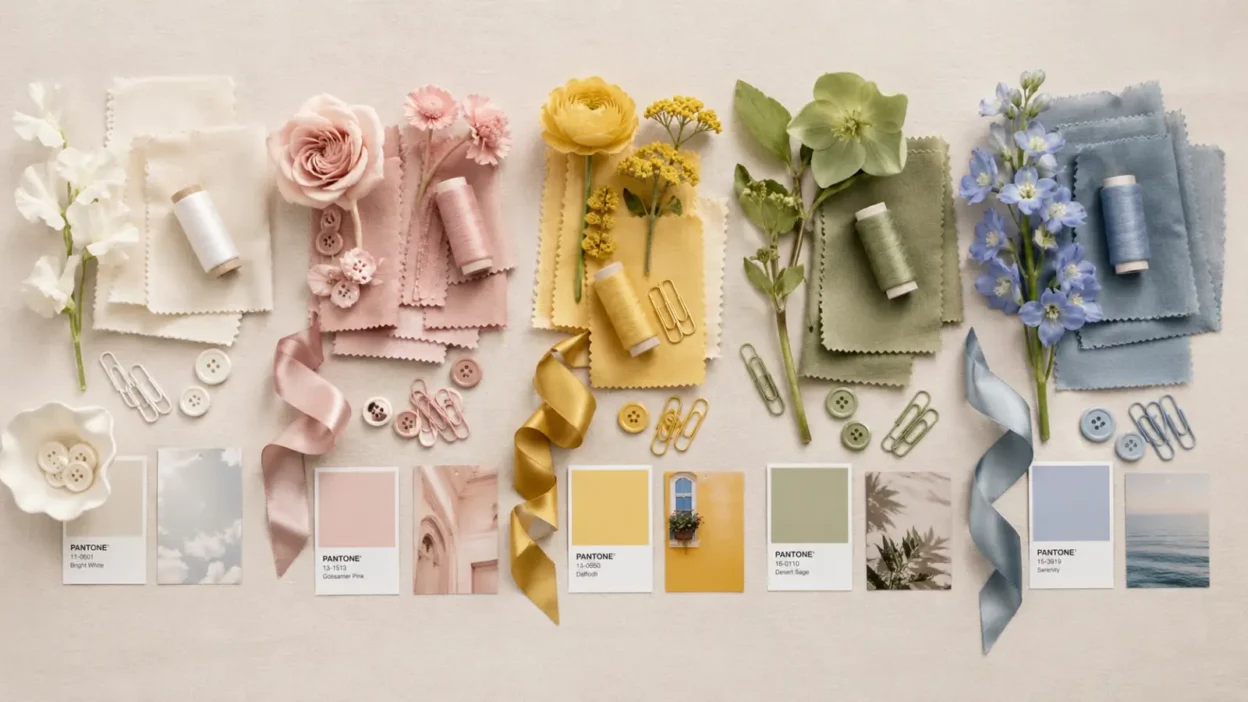
Colors are one of the fastest ways people read meaning. Before we notice a logo, outfit, room, ribbon, flag, or sign in detail, we often react to its color. That is why colors and what they mean matter in daily life, not just in art or design.
In the United States, color symbolism shows up everywhere. Red can mean love on Valentine’s Day, danger on a stop sign, or urgency on a sale tag. White can suggest a wedding, a clean kitchen, a blank page, or winter. Black can mean grief, elegance, rebellion, or formality.
Color meanings are real cultural tools, but they are not fixed laws. A color does not carry one meaning in every place or every period. Its meaning changes with shade, setting, material, religion, fashion, and the person looking at it.
Quick Answer
In modern U.S. culture, colors most often symbolize emotion, social signals, and practical cues: red suggests love or warning, blue trust or calm, green nature or money, black mourning or elegance, and white purity or simplicity. Colors and what they mean also depend on context, shade, culture, and use, so a wedding dress, a stop sign, a brand logo, and a religious garment can all change the reading.
TL;DR
- Color meanings change with context and culture.
- Red often signals love, danger, or urgency.
- Blue suggests trust, calm, or sadness.
- Green often means nature, money, or renewal.
- Black and white shift strongly by setting.
- Color psychology should not be overstated.
What Color Symbolism Means in Everyday Life
Color symbolism is the meaning people attach to color beyond its physical appearance. It is not only about taste. It is about shared signals.
A red light tells drivers to stop. A pink ribbon suggests breast cancer awareness. A black suit can look formal. A white dress may suggest a wedding. None of these meanings comes from color alone. They come from repeated use.
That is the key to understanding color symbolism. People learn color meanings from culture, language, religion, nature, advertising, family customs, and public systems. Some associations are old. Others are recent.
A color may also create a feeling before it carries a clear idea. Warm colors can feel active or attention-grabbing. Cool colors can feel calmer or more distant. But feelings are not the same as facts. A blue room does not guarantee calm, and a red logo does not guarantee excitement.
The safest way to interpret color is to ask four questions: Where is it being used? Who is using it? What shade is it? What does the surrounding culture expect it to mean?
The Quick Meaning of Common Colors in the United States
The table below gives common U.S. meanings, but it should not be treated as a universal code. These are strong patterns, not permanent rules.
| Color or Group | Common U.S. Meaning | Where It Often Appears |
| Red | Love, danger, urgency, passion | Valentine’s Day, stop signs, sales, sports |
| Blue | Trust, calm, sadness, authority | Banks, uniforms, flags, healthcare, tech |
| Yellow / Orange | Warmth, caution, energy, visibility | School buses, safety gear, autumn decor |
| Green | Nature, money, health, renewal | Finance, wellness, eco-design, spring imagery |
| Purple / Pink | Status, creativity, romance, identity | Beauty, weddings, youth culture, awareness causes |
| Black / White / Gray | Mourning, purity, formality, balance | Funerals, weddings, fashion, interiors, branding |
Red: Love, Urgency, Danger, and Attention
Red is one of the most intense colors in U.S. symbolism. It often points to strong feeling or immediate action.
Its link to love and passion is easy to see in modern American life. Red roses, hearts, lipstick, and Valentine’s Day displays all use red to suggest desire, romance, and affection. This meaning is emotional, visual, and commercial at once.
Red also means danger. Stop signs, brake lights, warning labels, fire alarms, and emergency graphics use red because it catches attention quickly. That does not mean red is “naturally” dangerous in every setting. It means people have learned to read red as urgent in public life.
The older roots of red symbolism are tied to blood, fire, heat, conflict, and life force. Those links help explain why red can feel alive and threatening at the same time. It can mean courage, anger, sacrifice, sexuality, celebration, or alarm depending on where it appears.
In U.S. politics and sports, red can also become a team or party color. In those settings, its meaning is less about ancient symbolism and more about identity. A fan wearing red is usually showing belonging, not making a statement about danger or passion.
Blue: Trust, Calm, Sadness, and Authority
Blue is often read as steady, calm, and trustworthy in the United States. It appears often in banks, healthcare, technology, uniforms, public agencies, and corporate logos. The message is usually reliability.
Part of blue’s meaning comes from nature. Blue can call to mind sky and water, which helps explain its connection with openness, quiet, distance, and calm. A pale blue bedroom feels very different from a navy suit, but both can carry a sense of control.
Blue also has a long emotional link with sadness. Phrases like “feeling blue” show how language can shape color symbolism. In music, “the blues” connects the color to sorrow, longing, and emotional expression.
In civic life, blue often suggests authority and order. Police uniforms, official seals, and patriotic designs use deep blue to create seriousness. That is why navy blue can feel formal even when it is not flashy.
Still, blue is not only calm or trustworthy. Bright electric blue can feel futuristic. Turquoise can feel tropical or playful. Dark blue can feel conservative. The shade changes the meaning.
Yellow and Orange: Warmth, Visibility, Caution, and Energy
Yellow and orange are warm, bright, and highly noticeable. In the United States, they often signal sunlight, optimism, creativity, caution, and movement.
Yellow is strongly linked to light. It can suggest happiness, warmth, youth, and attention. It also appears in caution signs, school buses, highlighters, and road markings. That double meaning matters. Yellow can feel cheerful in flowers and warning-based in public safety.
Orange sits between red and yellow, so it often carries energy without the same romantic or dangerous weight as red. It shows up in autumn leaves, pumpkins, construction cones, safety vests, sports teams, and youth-centered brands.
Common modern uses include:
- yellow for visibility, cheer, and warning;
- orange for activity, warmth, affordability, and fall;
- gold for wealth, achievement, divinity, or celebration.
These meanings work because they are repeated in familiar settings. A yellow smiley face and a yellow caution sign do not mean the same thing, but both rely on the color’s ability to grab attention.
Green: Nature, Money, Health, and Renewal
Green may be the most flexible positive color in modern U.S. life. It often suggests nature, growth, health, freshness, safety, and money.
Its nature meaning is easy to understand. Green is linked with grass, leaves, spring, gardens, and forests. Because of that, it often appears in environmental branding, wellness products, organic foods, and outdoor imagery.
In the United States, green also strongly suggests money. U.S. paper currency helped make green a financial color. That meaning appears in banking, investment apps, budget graphics, and phrases like “greenbacks.”
Green can also mean permission or safety. A green traffic light means go. Green check marks suggest approval. In healthcare and wellness design, green often points to balance, healing, freshness, or natural care.
But green is not always positive. It can suggest envy, inexperience, nausea, or artificial “eco-friendly” branding that may not match reality. A green package can look natural even when the product is not especially sustainable.
Purple and Pink: Status, Creativity, Romance, and Identity
Purple often suggests status, imagination, spirituality, and luxury. One reason is historical: some purple dyes were difficult and expensive to make, so purple became linked with wealth and high rank in parts of the ancient Mediterranean and later European symbolism.
In modern U.S. culture, purple still carries a sense of distinction. It appears in beauty branding, fantasy design, spiritual products, luxury packaging, and creative spaces. Deep purple can feel formal or royal. Lavender can feel gentle, nostalgic, or calming.
Pink has a different path. In today’s United States, pink is often linked with romance, softness, sweetness, girlhood, femininity, and care. But gendered color meanings have changed over time. Pink was not fixed as a “girl color” in all periods, and many modern uses now challenge or play with that association.
Pink also has a major role in awareness culture, especially breast cancer awareness. In that setting, pink is not only decorative. It can represent support, fundraising, survival, grief, and public advocacy.
Both purple and pink are common in tattoos, fashion, social media aesthetics, and identity expression. Their meanings can be personal. A purple flower tattoo might mean creativity to one person, remembrance to another, and spiritual devotion to someone else.
Black, White, and Gray: Mourning, Purity, Formality, and Balance
Black, white, and gray are often called neutral colors, but their symbolism is not neutral at all.
In the United States, black is strongly tied to mourning and funerals. It can also mean elegance, seriousness, mystery, rebellion, authority, or luxury. A black dress at a funeral and a black dress at a formal dinner can look similar but mean very different things.
White often suggests purity, cleanliness, simplicity, peace, innocence, or new beginnings. It is common in weddings, medical settings, minimalist design, winter imagery, and religious art. Yet white does not mean purity everywhere. In some cultures and rituals, white can be tied to mourning or death.
Gray sits between black and white. It can mean balance, maturity, restraint, uncertainty, boredom, professionalism, or emotional distance. In home decor and fashion, gray often reads as calm and modern. In storytelling, it can suggest ambiguity.
These colors show why context matters. Black can be grief or glamour. White can be sacred, sterile, bridal, or cold. Gray can be elegant or dull. The color alone does not finish the interpretation.
Why Color Meanings Change by Culture, Religion, and Time
Color symbolism is not one global language. It is more like a set of overlapping dialects.
A color can mean one thing in a U.S. wedding, another in a religious ceremony, another in a political flag, and another in a film scene. The meaning depends on tradition and setting.
Religion often gives colors formal meanings. White may be used for holiness, light, purity, or devotion in many Christian settings. Green has important associations in Islamic art and culture. Saffron, orange, or ochre robes can carry religious meaning in some Hindu and Buddhist contexts. These uses should not be treated as mere decoration.
Mourning colors also vary. Many Americans associate black with grief, but white has mourning meanings in several Asian traditions. That does not make either meaning more correct. It shows that color symbolism is learned inside communities.
Time changes color meanings too. Purple’s old association with expensive dye helped connect it to rank. Today, many people meet purple first through fantasy, beauty products, school colors, or digital design. Pink’s gender coding also shifted over modern history and continues to be debated, reused, and reworked.
This is why careful interpretation avoids claims like “red always means love” or “white always means purity.” Those claims are too broad.
How Brands, Clothing, Decor, and Digital Culture Use Color
Modern U.S. color symbolism is often practical. People use color to create a mood, send a social signal, or make something easier to recognize.
In branding, color helps shape first impressions. Blue often appears where trust matters. Green appears in wellness, finance, and environmental branding. Red appears where attention, appetite, speed, or urgency matters. Black and white often suggest simplicity or premium style.
In clothing, color can show mood, identity, group belonging, or occasion. Red can look bold. Navy can look professional. Black can look formal or edgy. White can look clean or ceremonial. Bright colors can feel playful, youthful, or expressive.
In home decor, colors shape atmosphere. Soft greens and blues are often chosen for calm rooms. Warm yellows and oranges can make a space feel lively. Dark colors can create intimacy, drama, or elegance. These effects depend on lighting, room size, texture, and personal taste.
Digital culture adds another layer. Color palettes now move quickly through social media, gaming, branding, and mood-board aesthetics. A pastel palette can suggest softness or nostalgia. Neon colors can suggest nightlife, cyberpunk, or bold self-expression. Beige and muted tones can suggest minimalism, calm, or lifestyle branding.
These modern meanings are real, but they can change fast. A color trend that feels fresh in 2026 may feel dated later.
Where Color Symbolism Gets Oversimplified or Misused
Color symbolism becomes misleading when it is treated as a fixed code.
One common mistake is turning psychology into certainty. A color may influence mood or attention, but it does not control people. Red does not make everyone angry. Blue does not make every person calm. Color works with memory, culture, lighting, setting, and expectation.
Another mistake is flattening religious or cultural meanings. Sacred colors belong to living traditions. Using them in fashion, decor, or branding without care can feel shallow or disrespectful, especially when the original context is ignored.
Awareness colors can also become confusing. Many causes use ribbons, and some colors overlap. Pink is widely recognized for breast cancer awareness, but other colors may represent several causes depending on the organization and context. A ribbon color alone may not tell the whole story.
Commercial use can distort meaning too. Green packaging may imply environmental care. Pink products may imply support for breast cancer advocacy. But the color does not prove the claim. The action behind the symbol matters.
The best approach is simple: read the color, then read the context.
FAQs
What do colors symbolize spiritually?
Spiritual color meanings depend on the tradition. White may suggest purity or light in some Christian settings, green may carry sacred associations in Islamic cultures, and saffron or ochre may appear in some Hindu and Buddhist contexts. These meanings should be understood within the living tradition, not treated as universal decoration.
What color means love?
In the United States, red is the color most strongly linked with romantic love, especially through hearts, roses, Valentine’s Day, and lipstick. Pink can also suggest affection, tenderness, sweetness, or care. The exact meaning depends on tone and setting.
What color means protection or safety?
Green often means safety or permission in U.S. public life, especially because green lights and green check marks signal “go” or approval. Blue can also suggest trust and protection in uniforms, healthcare, and civic design. These are learned social signals rather than universal laws.
What do color tattoos mean?
Color tattoos usually mix public symbolism with personal meaning. A red rose may suggest love, grief, beauty, or devotion, while blue waves may suggest calm, memory, or emotional depth. The design, wearer, and placement matter as much as the color.
Are color meanings the same in every culture?
No. Some associations repeat across cultures, but many colors change meaning by religion, language, period, and occasion. White is a good example: it may suggest weddings or purity in one setting and mourning in another.
What color means money or wealth?
In the United States, green commonly suggests money because of its link with U.S. paper currency. Gold also suggests wealth, success, status, and achievement. Green can feel financial and practical, while gold often feels ceremonial or luxurious.
Can colors really affect mood?
Colors can affect perception, attention, and emotional associations, but the effect is not automatic for everyone. Context, lighting, shade, personal memory, and culture all shape the response. It is better to say colors can influence mood than to say they control it.
Conclusion
Color symbolism is useful because it helps people read social signals quickly. A color can tell us whether something feels urgent, calm, romantic, formal, sacred, clean, playful, or serious before we study the details.