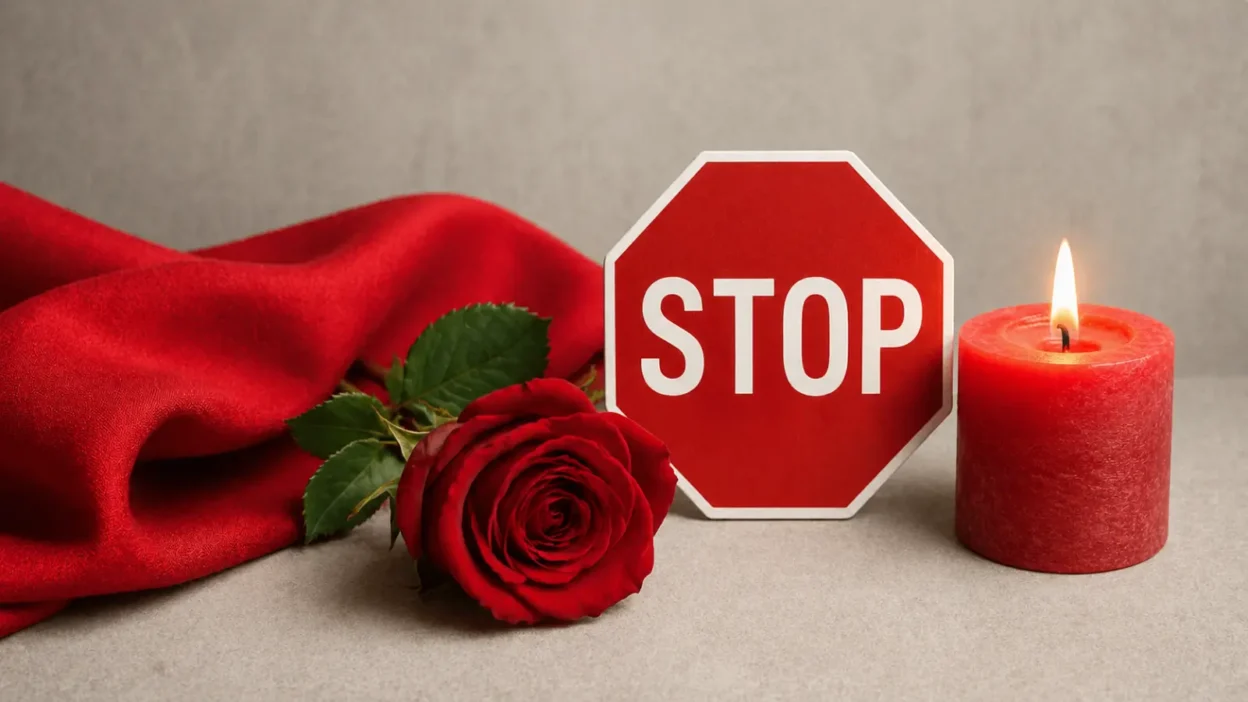
Red is one of the easiest colors to notice and one of the hardest to pin down. It can feel romantic on a rose, urgent on a stop sign, formal on a carpet, joyful in a holiday display, or severe in a warning label.
That is why red symbolism meaning depends so much on context. In the United States, red most often suggests love, passion, danger, anger, courage, power, and attention. None of those meanings cancels the others out.
Red matters because people use it when they want something to be seen. It appears in clothing, branding, flags, politics, sports, tattoos, health campaigns, religious settings, and home decor.
A responsible reading of red starts with a simple idea: red is not one symbol. It is a color that gathers meaning from the body, from nature, from culture, and from the moment in which it appears.
Quick Answer
In modern U.S. culture, red symbolism meaning most often points to passion, love, danger, energy, anger, courage, and visibility. Its meanings grew from red’s connection with blood, fire, warmth, warning, rare pigments, ceremony, and later public uses such as traffic signs, holidays, fashion, politics, and awareness campaigns.
TL;DR
- Red most often means passion, danger, and attention.
- Context decides whether red feels romantic or threatening.
- Red’s history is tied to blood, fire, and pigment.
- U.S. culture uses red in politics, holidays, and warnings.
- Religious meanings vary by tradition and setting.
- Red should not be treated as one universal symbol.
What Red Most Commonly Means Today
Today, red usually means intensity. That intensity can be warm, loving, brave, angry, urgent, festive, or dangerous.
For many Americans, the first meanings are love and warning. A red heart suggests romance. A red light tells you to stop. A red dress may read as confident. Red numbers on a bill may suggest debt. A red notification dot means something needs attention.
This is the key to reading red well: the color does not carry one fixed message. It signals importance first. The specific meaning comes from the object, place, shade, and situation.
| Context | Common Meaning | Why It Reads That Way |
| Red rose or heart | Love, romance, desire | Linked with the heart, Valentine’s Day, and courtship |
| Stop sign or alarm | Danger, warning, urgency | Red is highly visible and used in public safety systems |
| Red carpet | Status, honor, celebrity | Used ceremonially to mark importance and arrival |
| Red clothing | Confidence, boldness, attraction | The color draws attention to the wearer |
| Red political map | Republican-leaning state or region | A modern U.S. media convention |
Red is therefore best understood as a high-signal color. It rarely fades into the background. That is why it works so well for both love letters and emergency signs.
Why Red Became Linked With Love and Desire
Red’s link with love is easy to understand, but it should not be treated as timeless in the same way everywhere. In the United States, the romance meaning is shaped by hearts, roses, Valentine’s Day, lipstick, lingerie, wedding details, advertising, and popular media.
The body is part of this symbolism. Red is associated with blood, warmth, flushed skin, and the physical signs of attraction or excitement. That does not mean every red object is sexual or romantic. It means the color has a long visual connection with the body’s stronger feelings.
The red rose also helped make the meaning familiar. In Western flower language, red roses became strongly associated with romantic love. That association now shows up in grocery-store bouquets, wedding flowers, anniversary gifts, prom corsages, and social media posts.
In modern life, red can suggest desire in a direct way. Red lipstick, a red dress, red nails, or red heels may be used to express confidence and sensuality. But the meaning still depends on choice and setting. A red uniform, red winter coat, or red sports jersey does not automatically carry a romantic message.
The best reading is simple: red often intensifies emotional meaning. In romance, it makes affection feel warmer, bolder, and more visible.
Why Red Also Means Danger, Anger, and Warning
Red can feel loving in one setting and alarming in another. That shift is not a contradiction. It comes from the same base quality: red grabs attention.
In the United States, red is deeply tied to public warning systems. Stop signs, stoplights, fire alarms, hazard labels, brake lights, and emergency markings teach people from childhood that red means pause, notice, or act carefully.
Red also connects with danger because of blood and fire. A red wound, flame, burn, or warning light can signal risk. Over time, those material associations became symbolic ones.
Anger is another major meaning. Phrases like “seeing red” treat red as the color of rage. This makes sense because anger can bring heat, flushed skin, and a feeling of pressure or alarm.
Still, it is important not to overstate this. Red does not automatically make people angry. Color psychology is context-based. A red kitchen may feel lively. A red error message may feel stressful. A red rose may feel tender. The object matters as much as the color.
Red’s warning meaning is strongest when it appears with shapes, sounds, words, or situations that already signal risk. A red octagon means something very different from a red velvet cupcake.
Red as Power, Courage, Status, and Attention
Red has often been used where people want authority to be seen. That includes clothing, ceremony, military imagery, formal carpets, sports teams, and leadership styling.
Part of this comes from visibility. Red stands out from many backgrounds. It is hard to ignore in a crowd, on a flag, on a uniform, or on a stage. A person wearing red may appear more assertive because the color creates visual presence before they say anything.
Red also became associated with status because strong red dyes and pigments were not always easy to produce. In many places, brilliant red textiles or decorations required money, labor, trade, or specialized materials. That helped red become a color of rank, ceremony, and display.
In the United States, the red carpet is one of the clearest examples. It does not mean danger. It means importance, arrival, attention, and public recognition. Celebrities, dignitaries, and honorees walk on red because the setting turns the color into a symbol of status.
Red can also suggest courage. This meaning often comes from sacrifice, battle, endurance, and blood. It appears in military language, patriotic imagery, sports branding, and stories of bravery.
The same symbolism can become aggressive if the context changes. A red jersey can feel spirited. A red flag in a protest can feel defiant. A red tie can feel confident. A red-lit room can feel intense or even uneasy.
Red gives emphasis. What it emphasizes depends on the setting.
Blood, Life, Sacrifice, and Mourning
Red’s deepest symbolic roots are often tied to blood. Blood can mean life, birth, kinship, injury, sacrifice, death, and courage. That range explains why red can feel both alive and solemn.
In many contexts, red suggests vitality. It is the color of a beating heart, warm skin, and physical energy. This is why red can feel active, human, and immediate.
But blood also brings the meaning of pain and loss. In religious art, memorial symbols, war language, and martyr imagery, red may stand for sacrifice rather than romance. This is not decorative symbolism. It often points to suffering, devotion, or death.
That is why red should be handled carefully in contexts of mourning, trauma, national loss, or religious memory. A red flower at a memorial does not carry the same tone as a red balloon at a birthday party.
Red can also appear in health symbolism. In U.S. awareness campaigns, red is used for heart health, HIV/AIDS awareness, and other causes. In those cases, the color connects to blood, care, urgency, solidarity, and public action.
A careful interpretation asks: Is red pointing to life, love, injury, sacrifice, warning, or support? The answer depends on what the red object is doing.
Red in Religion and Sacred Traditions
Red appears in many religious settings, but it does not mean the same thing in every tradition.
In Christian contexts, red often relates to the blood of Christ, martyrdom, sacrifice, fire, the Holy Spirit, and Pentecost. In some churches, red vestments or decorations mark special days connected with fire, witness, suffering, or holy courage.
In some Asian cultural and religious settings, red can suggest good fortune, celebration, vitality, and protection. Red gates, red envelopes, red wedding garments, and red festival decorations may carry meanings of blessing, joy, and auspicious beginnings.
In Hindu and South Asian wedding contexts, red is often associated with marriage, fertility, prosperity, devotion, and auspicious transition. It may appear in bridal clothing, powders, bangles, and ritual objects. These meanings belong to living traditions, not just design trends.
This is where care matters. A red object used in a sacred or ceremonial setting should not be treated as a general aesthetic. It may carry meaning for a family, community, or faith tradition.
At the same time, red is not “spiritual” in one universal way. A red candle, red garment, red flower, or red thread may mean different things depending on the tradition. Some meanings are religious. Some are folk beliefs. Some are personal. Some are commercial adaptations.
The responsible approach is to name the context instead of flattening everything into one mystical meaning.
Red Across Cultures Without Flattening the Meaning
Red is used around the world, but its meanings shift widely. This is one reason broad claims about red can become misleading.
In some cultures, red is strongly festive. It may appear at weddings, New Year celebrations, dances, ceremonies, and family gatherings. In these settings, red can mean luck, happiness, beauty, fertility, or prosperity.
In other settings, red may mark danger, mourning, war, political revolution, religious sacrifice, or moral warning. A red flag can be a celebration marker, a political symbol, a warning sign, or a sign of protest.
Even within one country or tradition, red can hold more than one meaning. It may be joyful in weddings and serious in funerary or religious contexts. It may be lucky in one ritual and taboo in another.
This does not make red meaningless. It makes red context-rich.
For a U.S. reader, the safest cross-cultural rule is this: do not assume your local meaning is universal. A red wedding dress, red envelope, red powder, red thread, red temple gate, or red mourning object may carry a meaning shaped by a specific community.
When in doubt, interpret red through its setting, not through a single global definition.
Red in Modern U.S. Life: Holidays, Politics, Sports, and Causes
In the United States, red is everywhere because it is useful, emotional, and visible.
It appears in:
- Valentine’s Day hearts, roses, cards, and gifts
- Christmas decorations, stockings, ribbons, and Santa imagery
- Fourth of July flags, banners, fireworks, and clothing
- sports uniforms, school colors, mascots, and fan gear
- traffic lights, stop signs, brake lights, and warnings
- red carpets, award shows, and celebrity events
- health campaigns, awareness ribbons, and fundraising symbols
- election maps, political merchandise, and state labels
Politics is one of the most important modern U.S. meanings. Red is widely used for Republican-leaning states, candidates, maps, hats, signs, and media graphics. But that association is relatively recent. It became fixed through modern election coverage, not through an ancient symbolic rule.
This matters because red can now feel politically charged in some American settings. A red hat, red tie, red dress, or red state map may invite political readings, especially when paired with slogans, campaign imagery, or election timing.
But red should not be overread. Not every red outfit is a political statement. Not every red design is partisan. Context, words, symbols, and setting decide whether the political meaning is actually present.
Red also appears in public causes. The red ribbon became a major symbol of HIV/AIDS awareness and compassion. The red dress became a public symbol for women’s heart health awareness. These are modern symbolic uses with specific histories and goals.
In U.S. culture, red often says: look here. The reason for looking may be love, safety, pride, urgency, health, politics, celebration, or warning.
Red in Fashion, Beauty, Tattoos, and Personal Style
In fashion and beauty, red often means confidence. It draws the eye, frames the body, and makes a choice feel intentional.
A red dress can feel glamorous, romantic, rebellious, classic, or political depending on cut, shade, event, and wearer. Red lipstick can feel vintage, bold, elegant, sensual, or professional. Red nails may read as polished, festive, dramatic, or playful.
Shade changes the message. Bright cherry red feels lively and direct. Burgundy feels more mature and formal. Crimson feels dramatic. Rust red feels earthy. Scarlet feels sharp and theatrical. Soft red or rose can feel warmer and more romantic.
Red tattoos often carry meanings such as passion, strength, love, blood, fire, courage, survival, or intensity. A red rose tattoo usually leans toward love, devotion, beauty, or remembrance. A red dragon, flame, heart, thread, or abstract mark may carry a different message.
Tattoo meaning is especially personal. A red tattoo can honor grief, mark survival, celebrate love, or simply serve as a strong visual choice. It should not be interpreted without the design and the wearer’s story.
In personal style, red works because it refuses to be neutral. Wearing red often says that the wearer is willing to be noticed.
Red in Branding, Decor, and Digital Culture
Brands use red because it is fast to see and easy to remember. It can suggest energy, appetite, speed, excitement, urgency, affordability, or boldness.
That is why red often appears in sale signs, restaurant logos, sports branding, entertainment platforms, and emergency notices. It can make a message feel immediate.
In home decor, red is more complicated. A small red accent can warm up a room. A deep red wall can feel rich and intimate. Too much bright red can feel loud, restless, or overwhelming for some people. The shade, lighting, and room purpose matter.
In digital culture, red usually means attention. Red dots, badges, error messages, recording lights, and warning banners tell users to notice something. This is practical symbolism, not ancient meaning. It trains people to respond quickly.
Online, red can also be used aesthetically. It appears in mood boards, album covers, gaming visuals, romantic edits, horror graphics, and protest images. These uses borrow older meanings but reshape them for a fast visual environment.
The internet makes red more flexible, but also more shallow at times. A red filter can imply love, danger, lust, anger, nostalgia, or violence with no explanation. The viewer has to read the surrounding image.
How to Interpret Red Without Overreading It
Red is meaningful, but it is easy to overread. The color alone is rarely enough.
A responsible interpretation looks at several clues:
- Object: Is it a rose, sign, dress, candle, flag, or ribbon?
- Setting: Is it romantic, religious, political, commercial, or dangerous?
- Shade: Is it bright red, burgundy, scarlet, rust, crimson, or pink-red?
- Culture: Is the symbol part of a living tradition?
- Use: Is red decorative, sacred, official, personal, or commercial?
- Emotion: Does the setting suggest love, urgency, grief, pride, or anger?
Red usually means intensity first. The rest comes from context.
If a red symbol appears in a dream, artwork, tattoo, logo, or ritual, avoid one-size-fits-all meanings. Ask what red is doing there. Is it drawing attention? Marking danger? Showing love? Signaling blood or sacrifice? Creating beauty? Showing allegiance?
That approach keeps interpretation useful without turning every red object into a mystery.
FAQs
What does red symbolize most often?
Red most often symbolizes passion, love, danger, energy, anger, courage, and attention. In the United States, the most familiar meanings come from romance, warning signs, holidays, politics, fashion, and public awareness campaigns.
Is red a positive or negative color?
Red can be either positive or negative. It may suggest love, confidence, celebration, and courage, but it can also suggest danger, anger, debt, warning, or violence. The setting decides the tone.
What does red mean spiritually?
Red can have spiritual meanings such as sacrifice, life force, fire, protection, devotion, or blessing, but these meanings vary by tradition. It is better to name the specific religious or cultural context than to claim one universal spiritual meaning.
What does a red tattoo mean?
A red tattoo often suggests passion, strength, love, blood, fire, courage, or survival. The design matters more than the color alone, so a red rose, red heart, red flame, and red dragon can all carry different meanings.
Why does red symbolize love?
Red symbolizes love partly because of its connection with the heart, blood, warmth, attraction, roses, Valentine’s Day, and romantic display. Modern advertising and gift traditions have made that meaning especially strong in U.S. culture.
Why does red symbolize danger?
Red symbolizes danger because it is highly visible and has long associations with blood, fire, heat, injury, and urgency. In the United States, traffic signs, warning labels, alarms, and brake lights reinforce that meaning every day.
Does red mean the same thing in every culture?
No. Red can mean love, luck, celebration, sacrifice, warning, mourning, power, or political identity depending on the culture and setting. Treating red as one universal symbol erases important differences.
Conclusion
Red is one of the most flexible symbolic colors because it is tied to strong human experiences: love, blood, fire, danger, courage, celebration, and public attention. It can comfort, warn, honor, excite, or unsettle.