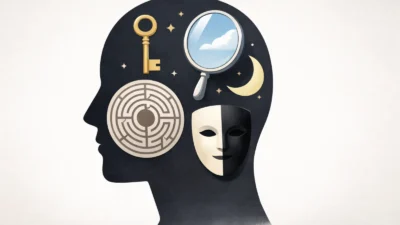
A symbol meaning dictionary sounds simple. You look up a sign, image, animal, color, or object, and you get the meaning. In practice, it is not that tidy.
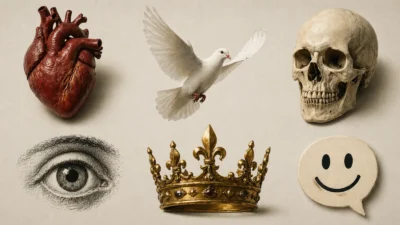
People care about symbols because symbols help carry ideas fast. A heart can suggest love. A skull can suggest death, danger, rebellion, or even humor. A dove can signal peace in one setting and religious meaning in another. The symbol stays the same, but the context changes the message.
That matters in modern U.S. culture. Americans run into symbols everywhere: tattoos, sports logos, emojis, jewelry, protest signs, holiday decor, school rituals, memorials, and social media. Many people want a quick answer, but a good explanation has to go a step further.
The real question is not just “What does this symbol mean?” It is also “Who is using it, where, and in what tradition?”
Quick Answer
Most often, a symbol meaning dictionary points readers toward shared associations people attach to signs, images, or objects, such as love, grief, luck, faith, protection, or identity. But those meanings do not come from one universal code; they usually develop through culture, religion, history, design, and repeated social use.
TL;DR
- Symbol dictionaries are starting points, not final verdicts.
- Meanings shift by culture, era, and setting.
- Sacred meaning differs from decorative reuse.
- U.S. usage often blends history and pop culture.
- Online lists often oversimplify complex symbols.
- Context matters more than one-line definitions.
What a symbol meaning dictionary actually is
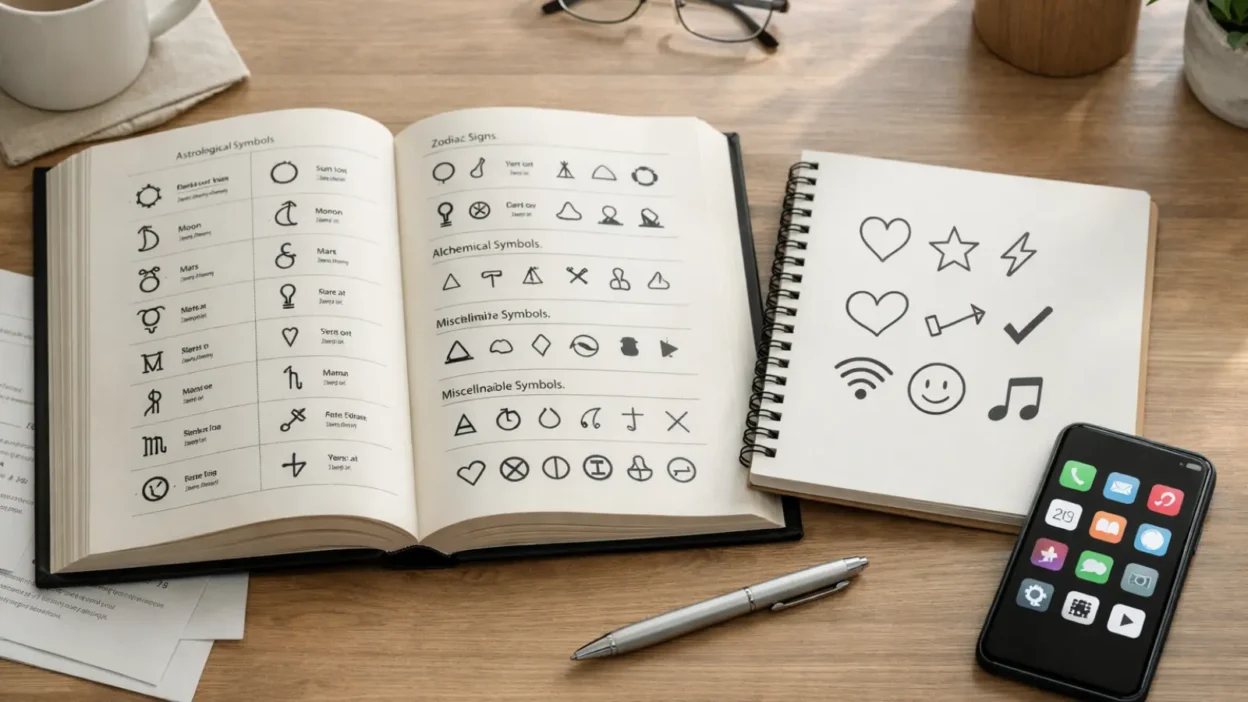
A symbol meaning dictionary is a reference tool. It collects symbols and gives short explanations of what people commonly connect with them.
Sometimes the symbol is visual, like a cross, crescent, heart, star, owl, snake, or lotus. Sometimes it is broader, like a color, number, flower, or gesture. Some dictionaries are printed books. Others are websites, wiki-style databases, art references, or tattoo guides.
The useful part is speed. A reader can quickly see the common associations around a symbol.
The limit is just as important. A dictionary entry can tell you the usual meaning, but it cannot fully explain every culture, religion, time period, or personal use. That is why the best symbol dictionaries are descriptive, not absolute.
Why symbols never stay fully fixed
People often talk about symbols as if each one has one stable meaning built into it. That is rarely true.
A symbol gains force because people repeat an association over time. A white flower may suggest purity in one setting because of older ritual or wedding use. The same flower may suggest mourning in another place because of funeral custom. A bird may symbolize freedom because it flies, but it might also symbolize a soul, a nation, a warning, or a seasonal change depending on the story around it.
In other words, symbols are learned. They do not float above history.
That is why the same image can feel clear in one setting and confusing in another. Meaning depends on pattern, memory, and shared culture. Religion shapes some meanings. Folklore shapes others. Marketing, film, politics, and internet culture reshape them again.
The most common meanings people look for today
Most readers are not looking for an abstract theory of symbols. They want to know what a symbol is likely to suggest in everyday life.
Common modern categories include:
- Love and connection: hearts, roses, rings, doves
- Protection and safety: eyes, shields, guardian figures, home charms
- Faith and devotion: crosses, crescents, stars, prayer-related imagery
- Peace and healing: olive branches, lotus flowers, soft-color motifs
- Luck and fortune: four-leaf clovers, horseshoes, lucky numbers
- Mourning and remembrance: candles, black ribbons, lilies, memorial emblems
- Strength and identity: lions, eagles, wolves, crowns, flags
- Rebellion or warning: skulls, flames, serpents, storm imagery
These categories are useful because they reflect how people search and use symbols now. But they still need context. A skull on a biker patch, a Día de los Muertos altar, a pirate logo, and a Halloween decoration do not carry the same message.
Where symbol dictionaries came from
Modern symbol dictionaries did not appear out of nowhere. They grew out of older efforts to classify meaning.
People have long explained symbols through religion, myth, heraldry, art, ritual, and moral teaching. Later, scholars, collectors, and reference-book writers tried to gather those meanings into organized systems. Some focused on Western graphic symbols. Others tried to cover global traditions, dreams, literature, art, or spiritual interpretation.
That history matters because many entries in today’s online symbol dictionaries are inherited from older reference habits. Sometimes that is helpful. Sometimes it produces a chain of repetition where one vague claim gets copied over and over until it sounds proven.
A solid modern reader should assume this: older does not always mean truer. Some meanings are well documented. Others are later summaries, modern spiritual readings, or broad cultural guesses.
Why one symbol can mean different things in different cultures
This is where many symbol guides go wrong. They act as if one neat meaning can travel everywhere unchanged.
It usually cannot.
A color can signal celebration in one culture and mourning in another. An animal admired in one tradition may be feared in another. A geometric figure may be sacred in one religion, decorative in another, and purely commercial in modern design.
Even within the United States, meaning can split. A symbol may carry one meaning in a church, another in a tattoo studio, another in a classroom, and another on social media. Immigration, religious diversity, regional custom, political conflict, and pop culture all affect how Americans read symbols.
So when a dictionary gives a single line like “the owl means wisdom,” that may be partly true in some contexts. It is not a complete answer.
A quick way to read symbol entries more responsibly
A good shortcut is to ask four questions before trusting any symbol entry.
| Question | Why it matters | Example of what changes |
| What tradition is this from? | Source shapes meaning | Sacred sign vs decor motif |
| What time period is meant? | Meanings shift over time | Ancient use vs modern tattoo use |
| Who is using it now? | Identity affects interpretation | Religious community vs brand |
| What is the setting? | Context changes tone | Memorial, protest, fashion, emoji |
This table sounds basic, but it solves many common mistakes.
It helps you see that “meaning” is not just attached to the symbol itself. Meaning also comes from usage. That is why a symbol dictionary works best when paired with context, not instead of it.
How Americans use symbol meanings now
In the United States, symbol use is highly mixed. People borrow from religion, history, family tradition, design culture, social activism, and online trends all at once.
In tattoos, people often choose symbols to stand for memory, faith, survival, grief, ancestry, love, or personal change. The chosen meaning may be deeply personal, even if the symbol has a broader public history.
In home decor and fashion, symbols often get softened into style. A crescent moon may suggest calm, femininity, or mysticism in a bedroom design. An evil eye motif may be used as a protection charm by some people and as a trend item by others. A serpent may signal danger, healing, or edgy style depending on the brand or wearer.
In public life, Americans also use symbols to build identity fast. Flags, seals, school mascots, ribbons, sports emblems, and protest graphics do a lot of emotional work in a small visual space.
That makes symbol dictionaries appealing. They promise quick clarity in a culture that uses symbols constantly. But in the U.S., quick clarity can still miss social context, especially around religion, race, national history, or cultural borrowing.
Religion, folklore, and superstition are not the same thing
This distinction is one of the most important parts of reading symbol meanings well.
A religious symbol has meaning inside a living faith tradition. That meaning may be tied to theology, ritual, sacred text, law, devotion, or communal identity.
A folklore symbol usually belongs to story, custom, proverb, regional belief, or inherited practice. It may overlap with religion, but it is not the same as official doctrine.
A superstitious or omen-based symbol belongs to belief about luck, warning, protection, or prediction. People may treat it seriously, casually, or not at all.
Online symbol pages often blur these together. They may put a sacred symbol, a folk charm, and a dream-sign reading in the same paragraph as if they carry equal authority. That flattens real differences.
For U.S. readers, this matters most when sacred symbols get reused as jewelry, tattoos, or decor. A symbol can still carry spiritual weight for one community even when another group uses it mainly for style.
The digital age changed symbol reading again
Today, many people learn symbols through screens before they learn them through books.
Emoji are an obvious example. A heart, folded hands, fire, skull, sparkle, or broken heart can shift tone based on age group, platform, joke style, or subculture. Some symbols become more emotional online than they ever were in print.
App icons and interface symbols also teach people how to read visual signs quickly. A bell means alerts. A gear means settings. A check mark means done. A cloud means storage or syncing. These are not ancient meanings. They are design conventions that became familiar through repetition.
Memes add another layer. A symbol can get ironic, political, affectionate, or absurd depending on how it is reused. That does not erase older meanings, but it does create new ones.
For Americans especially, this means a symbol dictionary now has to account for both older cultural meaning and fast-moving digital meaning. A good guide should tell readers when a symbol’s current online use is recent, unstable, or highly subcultural.
When symbol dictionaries go wrong
Most bad symbol explanations fail in predictable ways.
- They claim universality too fast.
Phrases like “in all cultures” are usually a warning sign. - They treat belief as fact.
Omen claims, dream readings, and manifestation language should be presented as belief, not proof. - They erase living religious meaning.
A sacred symbol is not just an attractive shape. - They confuse old evidence with modern reuse.
A symbol may have ancient roots, but the way Americans use it now may be recent. - They copy popular myths.
Repeated claims can look authoritative even when documentation is thin. - They flatten sensitive histories.
Some symbols carry both older meaning and later harmful use. Good explanations should not erase either side.
This is also where controversy enters the picture. Some symbols have been politicized, commercialized, or appropriated. Others have been stripped of context and sold back as generic spirituality. A responsible symbol guide should say that plainly.
What a good symbol meaning dictionary should help you do
The best symbol dictionary does not just hand you a definition. It helps you ask better questions.
It should help you tell the difference between a long-standing religious meaning and a recent lifestyle meaning. It should help you spot when a claim is broad, modernized, or weakly supported. It should help you notice whether a symbol is being used devotionally, aesthetically, commercially, or ironically.
That kind of dictionary is not less useful. It is more useful.
In real life, symbols are messy because people are messy. We inherit old meanings, adapt them, forget parts of them, and create new ones. A good guide respects that process instead of pretending the answer is always one sentence long.
FAQs
What does a symbol meaning dictionary usually include?
It usually includes a symbol name, a short description, and a few common interpretations. Better ones also mention cultural setting, historical use, and whether a meaning is religious, folkloric, or modern.
Are symbol meanings universal?
Usually not. Some symbols travel widely, but their meanings still change by culture, time period, religion, and social use. A broad pattern is not the same thing as a universal rule.
Can I use a symbol dictionary to choose a tattoo?
Yes, but it should be a first step, not your only step. Tattoos stay with you, so it helps to check the symbol’s cultural background, current associations, and whether it has sacred meaning in a living tradition.
Do spiritual symbols and religious symbols mean the same thing?
Not always. “Spiritual” is often used broadly in modern lifestyle language, while religious symbols may have specific meanings inside a faith community. Treating them as interchangeable can blur important differences.
Why do online symbol meanings often contradict each other?
Because many sites summarize older books, popular beliefs, design trends, and modern internet interpretations all at once. Contradictions often show that the symbol has multiple histories, not that one side is automatically false.
Are symbols in the U.S. mostly historical or mostly modern?
They are usually both. Americans often use symbols with older roots in very modern ways, through branding, protest culture, tattoos, school traditions, digital communication, and personal identity.
Conclusion
The clearest way to think about a symbol is this: it is a shared sign whose meaning grows through use. That meaning may come from religion, folklore, national history, design habit, internet culture, or personal memory, and those layers do not always agree.