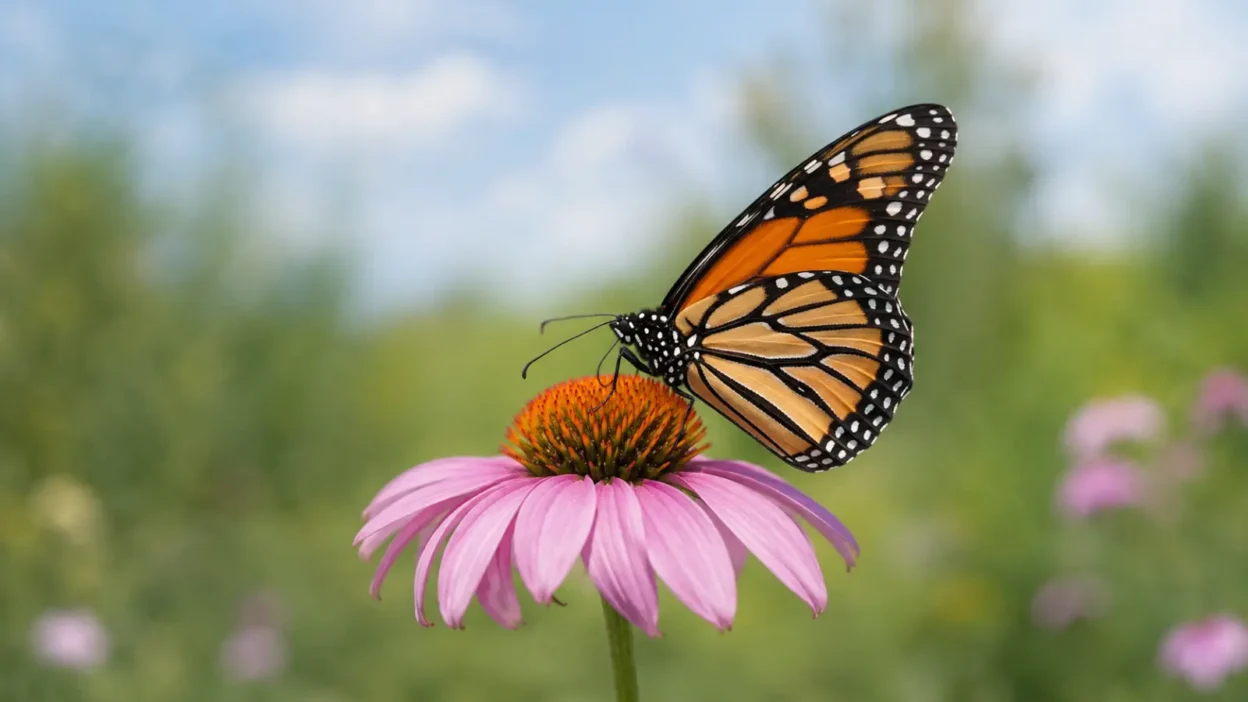
The butterfly symbolism meaning most people know today is transformation. A butterfly begins as a caterpillar, enters a hidden stage of change, and emerges with wings. That visible life cycle makes it one of the clearest natural symbols for personal growth.
People also connect butterflies with hope, freedom, beauty, the soul, and remembrance. These meanings show up in tattoos, jewelry, memorial art, home decor, fashion, and social media posts.
In the United States, butterflies are often used in deeply personal ways. Someone may choose a butterfly tattoo after surviving illness, grief, divorce, or a hard life change. A family may use butterfly imagery to remember a loved one. A brand may use it to suggest softness, renewal, or natural beauty.
Still, butterfly symbolism is not one single universal code. Its meaning changes by culture, religion, color, species, and personal context.
Quick Answer
In modern U.S. culture, butterfly symbolism meaning most often points to transformation, hope, renewal, and personal change. Historically, butterflies have also been linked with the soul, resurrection, and remembrance, but those meanings come from different traditions and should not be treated as one universal belief.
TL;DR
- Butterflies most often symbolize transformation.
- Their life cycle explains the meaning.
- Soul symbolism has classical roots.
- Monarchs carry special ancestor meanings.
- Tattoo meanings are usually personal.
- Color meanings depend on context.
What a Butterfly Symbol Refers To
A butterfly symbol can refer to the insect itself, a drawn butterfly, a tattoo, a charm, a logo, a pattern, or a repeated motif in art. Most people are not reading the butterfly as a scientific object. They are reading the image.
The symbol usually draws from what people notice first: wings, light movement, color, short life, seasonal appearance, and the dramatic change from caterpillar to adult butterfly.
That is why a butterfly often feels softer than symbols like lions, eagles, swords, or flames. It does not usually suggest force. It suggests movement, release, becoming, and emotional change.
But context matters. A butterfly on a sympathy card does not mean exactly the same thing as a butterfly on a prom dress, a nonprofit logo, a lower-back tattoo, or a child’s bedroom wall. The image is flexible, which is part of why it remains popular.
The Core Meaning Today: Change, Renewal, and Hope
The most common modern meaning of a butterfly is change. More specifically, it suggests change that leads to a new stage of life.
This is why butterflies are often used after major personal transitions. They can stand for healing after grief, confidence after insecurity, freedom after control, or a fresh start after a painful season.
The meaning is not simply “beauty.” Beauty is part of the image, but it comes after a process. A butterfly’s symbolic force comes from the idea that a fragile-looking creature has passed through a hidden transformation.
In everyday U.S. use, butterflies often carry these meanings:
- personal growth
- emotional recovery
- hope after hardship
- freedom from an old identity
- a new chapter
- gentle remembrance
- feminine beauty or softness, depending on context
Not every butterfly image is meant to be deep. Sometimes it is just decorative. But when people ask what a butterfly “means,” they are usually asking about this emotional pattern: something changed, and life opened again.
Why Metamorphosis Became the Main Symbolic Link
Butterflies symbolize transformation because their life cycle makes change visible.
A caterpillar is earthbound and focused on feeding. Then it enters the chrysalis stage, where it is hidden from view. Later, the adult butterfly emerges with wings. To human eyes, that looks like a complete shift in identity.
That visible contrast is easy to turn into metaphor. The caterpillar becomes the old self. The chrysalis becomes the difficult middle stage. The butterfly becomes renewal.
This is also why the butterfly is used in recovery language. People often describe hard periods as times when they were unseen, uncertain, or not yet ready to move forward. The butterfly gives that experience a gentle image.
Still, the symbol should not be confused with the animal’s actual purpose. A butterfly is not trying to “teach” humans about growth. The meaning comes from human interpretation of a real biological process.
That difference matters. It keeps the article grounded. The butterfly’s life cycle explains why people see transformation in it, but the symbolism itself is cultural, emotional, and poetic.
The Butterfly and the Soul in Classical Tradition
The link between butterflies and the soul is older than many modern blog explanations suggest, but it still needs careful wording.
In classical tradition, Psyche is associated with the soul and is often shown in later art with butterfly wings. The story of Psyche and Cupid became an important source for later images of love, trial, beauty, and the soul’s journey.
This does not mean every ancient person saw every butterfly in the same way. It also does not mean modern butterfly tattoos are direct copies of ancient belief. The connection is real, but it traveled through language, myth, art, and later interpretation.
The soul meaning also fits the butterfly’s appearance. A butterfly seems light, brief, and almost weightless. It moves between flowers and air. That made it easy for artists and writers to connect it with breath, spirit, and life beyond the body.
Today, this older meaning still appears when people say a butterfly represents a soul, a loved one, or a message from beyond. Those are living personal beliefs for many people. They should be described respectfully, but not presented as provable facts.
Mourning, Ancestors, and the Monarch Butterfly
Butterflies often appear in grief and memorial settings. In the United States, people use them on sympathy cards, funeral programs, memorial tattoos, keepsake jewelry, garden stones, and remembrance events.
The meaning is usually gentle rather than final. A butterfly can suggest that love continues, that the person is remembered, or that grief may eventually change shape.
The monarch butterfly has a more specific cultural layer. In parts of Mexico, monarch migration is connected with the return of ancestors around Día de Muertos. This meaning has also become visible in Mexican American communities, especially through art, altar imagery, murals, and public celebrations.
That meaning should not be flattened into “all butterflies mean dead relatives.” It is more precise to say that monarch butterflies can carry ancestor and remembrance meanings in Mexican and Mexican American cultural contexts.
In broader U.S. culture, monarchs may also symbolize endurance, migration, border-crossing, homecoming, and survival. For some undocumented immigrants and Dreamers, monarch imagery has become a symbol of movement across borders and the search for belonging.
That modern use is different from ancient folklore, but it is still meaningful. Symbols often grow because people find new ways to express old feelings.
Religious Meanings: Resurrection and Spiritual Renewal
In Christian use, the butterfly is often treated as a symbol of resurrection, renewal, and new life. The pattern is easy to understand: caterpillar, chrysalis, butterfly. Life, apparent stillness, and new emergence.
However, the butterfly is not one of the central biblical symbols in the way the cross, dove, lamb, vine, or fish are. It is better described as a later Christian teaching image or devotional metaphor.
That does not make it meaningless. It simply places it in the right category. For Christians who use butterfly imagery, the symbol may point to spiritual rebirth, Easter hope, life after death, or the belief that God can transform a person.
Outside formal religion, butterflies also appear in spiritual language about awakening, intuition, and personal growth. These meanings are common in modern wellness culture. They are usually personal interpretations rather than fixed religious teachings.
A careful reading allows both things to be true: the butterfly can be spiritually meaningful to people, and not every spiritual claim about butterflies has historical proof behind it.
Folklore, Omens, and Dream Interpretations
Butterflies are often treated as signs or omens in folk belief. These meanings vary widely.
Some people believe a butterfly appearing after a death is a sign from a loved one. Others see a butterfly near the home as a sign of good luck, change, or emotional guidance. In dreams, butterflies are often interpreted as symbols of growth, romance, freedom, or anxiety about change.
These readings are best framed as belief, folklore, or personal interpretation.
Common belief-based meanings include:
- A white butterfly may be seen as peace, protection, or a loved one’s presence.
- A black butterfly may be read as mystery, endings, or deep change.
- A butterfly entering the house may be seen as luck or transition.
- A dead butterfly may be interpreted as the end of a phase.
- A butterfly in a dream may point to change or emotional release.
None of these meanings should be treated as a rule. A butterfly in a dream may reflect a person’s memory, mood, culture, or recent experience. A butterfly near your window may simply be a butterfly near your window.
The symbolic reading belongs to the person and the context.
Butterfly Symbolism in the United States Today
In the United States, butterfly symbolism is most visible in personal expression. It appears in tattoos, jewelry, memorial gardens, greeting cards, graduation designs, mental health campaigns, baby names, nursery decor, wall art, and fashion.
The symbol works well because it feels hopeful without being harsh.
Butterflies also appear in environmental and conservation contexts. Monarch butterfly imagery, in particular, may point to habitat protection, native plants, pollinator gardens, migration, and ecological care.
In branding, the butterfly often suggests change, lightness, beauty, wellness, femininity, or natural products. Beauty brands, therapy practices, coaching services, and lifestyle businesses use butterfly imagery for that reason.
In home decor, butterflies often soften a space. They can suggest spring, growth, childhood wonder, garden life, or a peaceful mood.
The same image can be meaningful or merely pretty. A framed butterfly print may be a memorial for one person and just a design choice for another.
Tattoos, Jewelry, and Personal Identity
Butterfly tattoos are popular because they let people mark change without explaining every detail. A butterfly can say, “I survived,” “I changed,” or “I am free now,” while still looking graceful.
For some people, a butterfly tattoo honors a loved one. For others, it marks recovery, gender expression, a new identity, motherhood, sobriety, healing, or independence.
Placement can change the tone, but not in a fixed way. A small hidden butterfly may feel private.
Jewelry works in a similar way. A butterfly necklace may be a memorial gift, a coming-of-age gift, or a simple sign of hope. The meaning comes from the giver, the wearer, and the moment.
This is why it is risky to assume one person’s butterfly tattoo means the same thing as another person’s. The broad symbol is shared. The personal story is not.
Colors and Species: How the Meaning Can Shift
Color meanings are common, but they are not fixed laws. Most are modern associations shaped by mood, culture, design, and personal belief.
| Butterfly Type | Common Modern Reading | Caution |
|---|---|---|
| White butterfly | Peace, purity, spirit, remembrance | Often belief-based, not universal |
| Black butterfly | Mystery, endings, shadow change | Can be positive or unsettling |
| Blue butterfly | Calm, joy, rare beauty, hope | Often aesthetic or personal |
| Yellow butterfly | Happiness, warmth, new energy | Strongly context-dependent |
| Monarch butterfly | Migration, endurance, ancestors, return | Has specific Mexican cultural meanings |
Species also matter. A monarch does not carry the same cultural weight as a generic pastel butterfly. A swallowtail may be chosen for elegance. A blue morpho may suggest rare beauty. A moth-like butterfly image may feel darker or more gothic.
The safest way to read color symbolism is to ask what the image is doing in context. Is it on a memorial card? A tattoo? A wedding invitation? A nursery wall? A protest sign? A conservation poster?
The same color can shift depending on use.
Common Oversimplifications to Avoid
Butterfly symbolism is easy to oversimplify because the transformation meaning is so strong. But good interpretation needs more care.
Avoid saying butterflies mean the same thing in all cultures. They do not. Many traditions use butterflies, but not always in the same way.
Avoid treating Indigenous meanings as one shared belief. Native nations have distinct languages, stories, histories, and living traditions. Broad claims like “Native Americans believed butterflies meant…” are usually too vague.
Avoid turning Día de Muertos monarch imagery into a generic aesthetic. Monarchs can carry ancestor meaning in Mexican and Mexican American contexts, but the tradition deserves more respect than a quick decorative reference.
Avoid presenting omen beliefs as facts. A butterfly may feel like a sign to someone. That feeling can be meaningful. But it is still a belief, not evidence.
Avoid assuming butterfly imagery is always soft or feminine. Many people use it for strength, survival, migration, grief, queer self-expression, or personal freedom.
The best interpretation is simple: start with transformation, then read the context.
FAQs
What does a butterfly symbolize most often?
A butterfly most often symbolizes transformation, renewal, hope, and personal change. The meaning comes mainly from its life cycle, where a caterpillar enters a chrysalis and emerges as an adult butterfly.
What does a butterfly tattoo mean?
A butterfly tattoo usually means change, freedom, healing, or a new chapter. It can also honor a loved one, mark survival after hardship, or represent a person’s identity and self-expression.
Do butterflies symbolize loved ones who passed away?
Many people interpret butterflies as signs of loved ones who have died, especially when one appears during grief or near a memorial. This is a personal or spiritual belief, not something that can be proven as fact.
What does a butterfly mean spiritually?
Spiritually, a butterfly often represents inner growth, rebirth, the soul, or release from an old stage of life. The exact meaning depends on the person’s faith, culture, and context.
What does a monarch butterfly symbolize?
A monarch butterfly can symbolize endurance, migration, return, and transformation. In Mexican and Mexican American contexts, monarchs may also be connected with ancestors and remembrance around Día de Muertos.
Are butterfly meanings always positive?
Most butterfly meanings are positive, especially hope, beauty, and renewal. But some readings, such as black butterflies or dead butterflies, may point to endings, grief, uncertainty, or deep change.
Do butterfly colors have fixed meanings?
No. Butterfly color meanings are usually modern, flexible, and context-based. White, black, blue, yellow, and orange butterflies can carry different meanings depending on culture, setting, and personal belief.
Conclusion
The clearest meaning of the butterfly is transformation. Its life cycle gives people a natural image for change, patience, emergence, and hope after a difficult stage.
At the same time, the butterfly can also carry meanings of the soul, memory, resurrection, beauty, freedom, migration, and personal identity. Those meanings are real in human culture, but they are not all from one source.