Animals appear everywhere in human culture. They show up in religion, flags, tattoos, sports teams, stories, dreams, and family traditions. People often connect animals with human traits like courage, intelligence, danger, loyalty, or freedom.
Today, animal symbolism and culture remain especially visible in the United States. Eagles represent national identity. Wolves appear in tattoos and outdoor branding. Owls are tied to wisdom in schools and media. Even internet culture constantly creates new animal meanings through memes and trends.
Still, these meanings are not fixed or universal. The same animal can symbolize protection in one tradition and fear in another. Some meanings come from religion or folklore. Others are modern inventions shaped by movies, advertising, or social media.
Quick Answer
Animal symbolism and culture usually connect animals with human ideas, emotions, or values. In modern American culture, animals often symbolize traits like strength, wisdom, freedom, loyalty, danger, or transformation, though those meanings developed differently across religions, myths, folklore, and historical traditions.
TL;DR
- Animals often symbolize human traits and emotions.
- Meanings change across cultures and time periods.
- Modern U.S. symbolism mixes history with pop culture.
- Tattoos and mascots shape current animal meanings.
- Religious and Indigenous meanings deserve careful treatment.
- Internet culture constantly reshapes symbolic associations.
What Animal Symbolism Means
Animal symbolism is the practice of connecting animals with ideas, values, emotions, or social roles. Sometimes the connection comes from real animal behavior. Other times it comes from mythology, religion, fear, admiration, or storytelling.
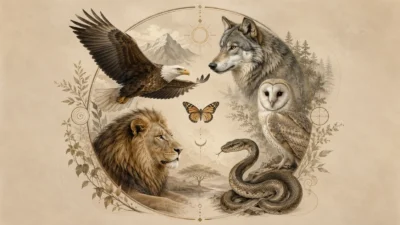
For example, lions are often linked with leadership and courage because they were seen as powerful predators. Owls became connected with wisdom partly because they are active at night and appear observant and mysterious. Snakes have long carried mixed meanings because they can represent both danger and renewal.
People do not only use animal symbols in ancient myths. Modern culture uses them constantly:
- Sports teams use aggressive animals for strength and competition.
- Companies use animals in logos to suggest speed or reliability.
- Tattoos use animals to express identity or personal history.
- Schools and governments use animals as mascots and emblems.
Animal symbolism works because humans naturally look for meaning in the world around them. Animals become visual shortcuts for ideas people already understand emotionally.
Why Humans Give Animals Symbolic Meaning
Humans have lived beside animals for most of history. Long before modern science, people watched animal behavior closely because survival depended on it.
Certain traits became symbolic through repeated observation:
- Wolves hunted in groups, so they became linked with loyalty or teamwork.
- Eagles flew high above the ground, making them symbols of vision and power.
- Foxes moved quietly and unpredictably, leading to associations with cleverness.
Not all symbolism came from accurate observation. Fear also shaped meaning. Snakes, spiders, ravens, and bats often became connected with danger, death, or the supernatural because people feared them or did not fully understand them.
Storytelling reinforced these patterns over generations. Once a culture repeated an animal image in myths, art, religion, or proverbs, the meaning became easier to recognize and pass down.
That process still happens today. Modern movies, sports culture, and social media continue creating symbolic animal associations.
How Ancient Civilizations Used Animal Symbols
Ancient civilizations often connected animals with gods, rulers, or cosmic order. These meanings were usually tied to religion, politics, or survival.
In ancient Egypt, cats were associated with protection and sacred order. Falcons became linked with divine kingship through the god Horus. Crocodiles symbolized both danger and sacred power because of the Nile’s importance.
In ancient Greece, owls became connected with wisdom through the goddess Athena. Snakes were linked with healing and renewal partly because they shed their skin.
In parts of ancient China, dragons symbolized authority, protection, and imperial legitimacy. Unlike many Western dragon stories, Chinese dragons were often viewed positively.
Animal symbols also appeared in Indigenous traditions across the Americas, though meanings varied greatly between nations and regions. There was never one unified “Native American animal symbolism” system.
Many online articles flatten these traditions into a single list of meanings. Historically, the reality was far more diverse and specific.
Animal Symbolism in Religion and Spiritual Traditions
Religious traditions often use animals symbolically, but the meanings depend heavily on context.
In Christianity, lambs are associated with innocence and sacrifice. Doves are linked with peace and the Holy Spirit. Serpents can represent temptation, but snakes also appear positively in some biblical healing imagery.
In Hindu traditions, animals frequently appear alongside deities and spiritual concepts. Cows are associated with care, life, and reverence in many Hindu communities. Elephants, especially through the deity Ganesha, are connected with wisdom and obstacle removal.
In Buddhism, animals may symbolize mental states, virtues, or lessons about suffering and compassion.
Some Indigenous traditions treat certain animals as spiritually significant relatives, guides, or clan symbols. These meanings are often tied to living cultural practices rather than generalized personality categories.
Modern American culture sometimes borrows these symbols without understanding their original context. That can turn sacred traditions into aesthetics or entertainment.
Common Animal Symbols and Their Modern Meanings
Some animal meanings have become especially recognizable in modern American culture, even if their historical roots are more complex.
| Animal | Common Modern Meaning | Historical Roots | Modern U.S. Use |
|---|---|---|---|
| Eagle | Freedom, strength | Roman and national emblems | Patriotism, sports |
| Wolf | Loyalty, independence | Folklore and hunting culture | Tattoos, outdoor brands |
| Owl | Wisdom, intelligence | Greek mythology | Education imagery |
| Lion | Courage, leadership | Royal and religious symbolism | Team mascots |
| Snake | Danger, transformation | Religion and renewal myths | Tattoos, fashion |
These meanings are not universal truths. They are cultural patterns shaped by history and repetition.
For example, wolves were feared in many European traditions because they threatened livestock. Modern American culture often presents wolves more positively, connecting them with wilderness, resilience, and independence.
Snakes also show how meanings can split sharply. Some traditions connect snakes with evil or betrayal. Others connect them with healing, fertility, or transformation.
Why the Same Animal Can Mean Different Things
Animal symbolism changes because cultures experience animals differently.
A predator may symbolize fear in farming societies but admiration in warrior cultures. An animal considered sacred in one religion may appear negative in another.
Owls are a good example. In much of modern Western culture, owls symbolize intelligence. But in some folklore traditions, owls were associated with death, bad luck, or nighttime spirits.
Ravens show similar contrasts. Norse traditions connected ravens with wisdom and divine knowledge through Odin. In some later European folklore, ravens became linked with death and disaster.
Environment matters too. Cultures living close to deserts, forests, mountains, or oceans developed different relationships with local animals.
This is why claims about “universal animal meanings” are usually too simplistic.
Animal Symbolism in American Culture Today
Animal symbolism is deeply woven into modern American life.
The bald eagle remains one of the strongest national symbols in the United States. It represents independence, authority, and patriotism. Bears, bulls, hawks, and wolves also appear heavily in sports branding because they suggest aggression, resilience, or dominance.
Common modern uses include:
- College and professional sports mascots
- Military insignia
- Outdoor and survival brands
- Car logos
- Political cartoons
- Social media aesthetics
- Children’s media
American culture also tends to romanticize certain wild animals. Wolves, horses, and eagles are often connected with freedom and self-reliance. That reflects larger American ideas about wilderness and independence.
At the same time, internet culture changes meanings quickly. Animals can move from sacred or serious symbolism into humor, memes, or aesthetic trends within a few years.
Animal Tattoos and Personal Identity
Animal tattoos are often deeply personal, even when common symbolic meanings exist.
A wolf tattoo might represent survival for one person and family loyalty for another. A snake tattoo may symbolize transformation, recovery, danger, or rebellion.
Some popular tattoo associations include:
- Lions for confidence or leadership
- Butterflies for personal change
- Ravens for mystery or memory
- Bears for protection and endurance
- Tigers for determination and intensity
Tattoo meanings are rarely fixed. Personal experience often matters more than historical symbolism.
Still, cultural context matters. Some symbols have sacred or ceremonial meanings in living traditions. Using them only as decoration can create tension or disrespect, especially when people ignore the original cultural meaning.
Spirit Animals, Totems, and Cultural Respect
The phrase “spirit animal” became extremely common in American pop culture during the 2010s. People used it casually to describe favorite animals or personality traits.
However, many Indigenous people and scholars have criticized this usage because it can detach spiritual concepts from their original cultural and ceremonial contexts.
The word “totem” also has specific roots in Indigenous traditions, especially among certain Native nations. Historically, totems were not simply personality quizzes or aesthetic symbols.
That does not mean people cannot feel emotionally connected to animals. Humans have always identified with animals symbolically. The issue is mainly about context, respect, and avoiding oversimplified borrowing from living traditions.
A more careful approach is to speak generally about personal animal symbolism unless discussing a specific cultural tradition accurately and respectfully.
Internet Culture and Modern Animal Meanings
Social media has changed animal symbolism dramatically.
Some animal meanings now spread through memes faster than through religion or folklore. Frogs, cats, crows, capybaras, and raccoons have all developed strong online identities in recent years.
Internet culture often values animals for emotional tone rather than historical symbolism:
- Cats may represent sarcasm or emotional distance.
- Dogs often symbolize loyalty and emotional comfort.
- Raccoons are tied to chaos or humor.
- Capybaras became symbols of calmness online.
This creates a strange overlap between ancient symbolic habits and modern digital behavior. Humans still assign personality traits to animals, but now the process happens through viral media instead of oral storytelling.
Some meanings fade quickly. Others become lasting parts of culture.
Why Animal Symbolism Still Matters
Animal symbolism survives because it gives people a simple way to express complicated ideas.
A single image can communicate identity, fear, pride, grief, rebellion, or hope much faster than a long explanation. That is why animals remain powerful in religion, politics, advertising, sports, and personal art.
At the same time, modern readers are becoming more cautious about oversimplified symbolism claims. Many people now want clearer distinctions between history, folklore, spirituality, and internet trends.
That shift matters. It encourages a more respectful and historically grounded understanding of how animal meanings develop.
FAQs
What do animals usually symbolize?
Animals often symbolize human traits, emotions, or social values. Common examples include strength, intelligence, freedom, danger, loyalty, or transformation, though meanings vary across cultures and time periods.
Are animal symbolism meanings universal?
No. Some meanings appear widely across cultures, but very few are truly universal. The same animal may symbolize wisdom in one tradition and bad luck in another.
What is the difference between a spirit animal and a totem?
In modern casual language, people often use both terms loosely. Historically, though, “totem” and related spiritual concepts came from specific Indigenous traditions and carried cultural and ceremonial meaning beyond personality symbolism.
Why are animal tattoos so popular?
Animal tattoos allow people to express identity visually. Many choose animals connected with personal experiences, admired traits, emotional survival, or family symbolism.
Why do American sports teams use animal mascots?
Animal mascots create strong emotional associations. Predators and powerful animals are especially common because they suggest competitiveness, aggression, endurance, or teamwork.
Can animal symbolism change over time?
Yes. Symbolic meanings constantly evolve through religion, migration, media, politics, and internet culture. Modern meanings are often very different from older historical associations.
Are negative animal symbols based on real animal behavior?
Sometimes partly, but not always. Fear, superstition, religion, and storytelling often shaped negative symbolism more strongly than scientific observation.
Conclusion
Animals continue to shape how people express identity, belief, emotion, and culture. Some meanings come from ancient religious traditions or folklore. Others come from modern branding, entertainment, and online communities.