A symbolism glossary is not just a list of pretty meanings. At its best, it is a practical guide to how symbols work, why people attach meaning to them, and how those meanings change across time and place.
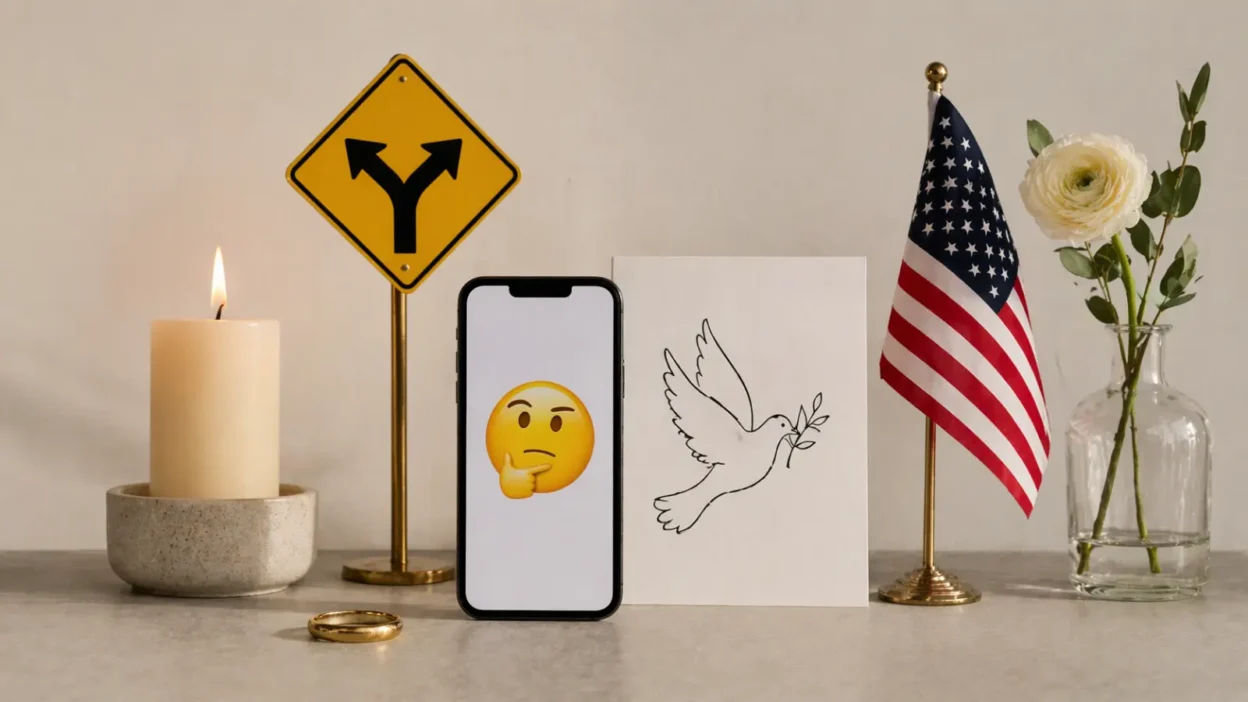
That matters because Americans run into symbolic language all day long. We see it in wedding rings, flags, sports mascots, memorial flowers, warning signs, emojis, tattoos, and brand marks. Some of those meanings feel obvious. Others are inherited, learned, debated, or misunderstood.
The tricky part is that symbols are rarely as fixed as the internet makes them sound. A shape, color, animal, or object can carry one meaning in religion, another in folklore, and something else again in design or pop culture.
So a useful guide should do more than say what a symbol “means.” It should explain where the meaning came from, what kind of meaning it is, and how people in the United States tend to read it now.
Quick Answer
In modern U.S. use, a symbolism glossary usually refers to a plain-English guide to symbols and the terms people use to interpret them. It helps readers understand what symbols commonly suggest today while also showing that meanings come from culture, history, religion, habit, and context rather than from one fixed universal code.
TL;DR
- Symbols point beyond literal objects.
- Meanings come from shared use.
- Context changes interpretation fast.
- Sign, icon, and symbol differ.
- Sacred meaning is not decor.
- Modern meanings can be very recent.
What a symbolism glossary actually covers
A good symbolism glossary explains the language around meaning. It does not just hand out one-line definitions like “owl equals wisdom” or “red equals passion” and stop there.
Instead, it helps answer better questions. Is the meaning old or modern? Is it religious, literary, commercial, or social? Is it widely recognized in the United States, or mostly tied to one tradition, region, or online subculture?
That is why a responsible glossary is partly about symbols and partly about interpretation. It teaches readers how to think about symbols, not just how to repeat stock meanings.
In practice, that means a symbolism glossary usually includes both terms and examples. The terms help you understand the system. The examples show how that system works in real life.
The core difference between a symbol, sign, icon, and index
Many people use these words as if they mean the same thing. They do overlap in everyday speech, but they are not identical.
A sign is the broadest term. It is anything that communicates meaning. A symbol is one kind of sign. An icon usually resembles what it refers to. An index points to something by a direct link, trace, or cause.
Here is a simple way to sort them:
| Term | What it does | Simple example | Why it matters |
|---|---|---|---|
| Sign | Communicates meaning broadly | Stop sign | Umbrella category |
| Symbol | Stands for an idea by shared meaning | Wedding ring | Depends on convention and culture |
| Icon | Resembles what it represents | Restroom figure on a door | Works through likeness |
| Index | Points by evidence or connection | Smoke for fire | Works through direct link |
| Emblem | A formal symbolic badge or mark | National seal | Often tied to institutions |
This matters because not every meaningful image is symbolic in the same way. A heart emoji, a company logo, a church cross, and a storm cloud can all carry meaning, but they do not do it through the exact same mechanism.
That distinction also protects against overreading. Sometimes a thing is symbolic. Sometimes it is just functional. Sometimes it is both.
How symbols get their meanings in the first place
Symbols do not usually come from nowhere. Their meanings grow through repeated use.
Sometimes the meaning comes from visible traits. Fire can suggest danger, warmth, destruction, or purification because people have real experiences with fire. A tree can suggest life, rootedness, or growth because of the way it lives and changes.
Sometimes the meaning comes from social convention. A wedding ring carries force because people agree on what it marks. A flag matters because a group treats it as a sign of shared identity. Money itself works symbolically because people trust what it represents.
Sometimes the meaning comes from story or ritual. Religious traditions, national histories, myths, and memorial practices all teach people how to read certain objects and images.
And sometimes the meaning comes from design and repetition. A logo becomes symbolic because people see it again and again until it stands for a company, movement, or attitude.
That is why symbols often feel natural even when they are learned. Repetition turns a convention into something that feels obvious.
Why the same symbol can mean different things
One of the most useful things a glossary can teach is that symbols are not fixed in all settings.
The same image can shift meaning because of:
- Culture: one society may treat an animal as lucky while another treats it as ominous
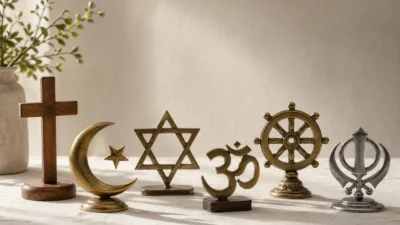
- Religion: a symbol may be sacred inside one tradition and decorative outside it
- Time period: meanings that feel old may actually be modern
- Medium: a symbol in poetry works differently than in branding or texting
- Audience: people bring different memories, politics, and beliefs to the same image
Take the color white. In many American settings, white suggests weddings, cleanliness, or simplicity. In other cultural settings, it can be tied more strongly to mourning or death. Neither reading cancels out the other. They belong to different histories.
That is why phrases like “the universal meaning of” usually need caution. Some associations are widespread. Very few are total.
A practical starter symbolism glossary
If you only learn a few terms, learn these:
- Symbol: something that stands for more than itself
- Sign: any marker that communicates meaning
- Icon: a sign that works through resemblance
- Index: a sign that works through direct connection
- Emblem: a formal symbol linked to a group, office, or nation
- Motif: a repeated image, object, or idea in a work
- Metaphor: a comparison that treats one thing as another
- Allegory: a larger narrative structure built through layered symbolic meaning
- Archetype: a recurring character type, image, or pattern that appears across many stories
- Attribute: an object regularly associated with a figure, saint, deity, or role
- Convention: a shared rule or habit that helps a meaning stick
- Context: the setting that shapes how a symbol is read
These terms matter because they stop everything from being flattened into “symbolism.” Once you know the vocabulary, interpretation gets more precise.
It also becomes easier to spot weak claims. If a website jumps from “this appears in many places” to “therefore it has one timeless meaning,” that is usually a sign to slow down.
Historical roots: from early symbolic behavior to modern interpretation
Human beings have used symbolic forms for a very long time. People marked bodies, objects, surfaces, graves, tools, and spaces with meaning long before modern dictionaries or design theory existed.
But that does not mean every modern symbol comes with one ancient master explanation. That is where many bad symbol guides go wrong.
Some meanings have deep roots in religion, kinship, burial, ritual, or political identity. Others are much newer than they look. A symbol may feel ancient because it uses an old shape, even if its current meaning was sharpened by modern marketing, nationalism, internet culture, or contemporary spirituality.
It also helps to remember that scholars do not always agree on origin stories. The evidence for symbolic behavior in human history is strong. The evidence for one exact meaning attached to one object thousands of years ago is often much thinner.
So history matters, but modesty matters too.
How Americans use symbolism in everyday life now
In the United States, symbolism is not limited to literature or religion. It is woven into daily culture.
You can see it in at least five common areas:
- Public life: flags, seals, memorial objects, protest imagery, awareness ribbons
- Relationships: rings, flowers, anniversary gifts, wedding colors
- Identity: tattoos, sports symbols, school emblems, clothing, jewelry
- Commerce: logos, mascots, packaging, luxury marks, color branding
- Digital life: emojis, reaction symbols, profile images, memes
American culture also tends to mix layers freely. A dove can appear in religion, anti-war art, home decor, greeting cards, and tattoo design. A heart can signal romance, health, solidarity, or platform engagement depending on where it appears.
Digital culture has made this even more fluid. Emojis work like fast-moving symbols. Some keep stable meanings. Others shift by age group, platform, or tone. A symbol that reads as warm in one text can read as sarcastic in another.
That does not make modern symbolism shallow. It just means symbolic meaning now travels faster, mutates faster, and depends even more on context.
Religion, folklore, and superstition are not the same thing
This is one of the biggest missing pieces in weak glossary pages.
A religious symbol belongs to a living tradition, belief system, or sacred practice. Its meaning is not just decorative. It may be tied to worship, doctrine, moral teaching, ritual memory, or community identity.
A folkloric symbol comes more from storytelling, custom, proverb, seasonal practice, or local tradition. It may still be deeply meaningful, but not in the same way as formal doctrine or liturgy.
A superstitious or omen-based meaning is different again. It belongs to belief, habit, luck tradition, or popular interpretation. It should not be presented as proven fact.
Readers often see these layers collapsed online. A page may take a sacred symbol, strip out its internal meaning, add a vague “spiritual” gloss, and present the result as universal truth. That is not clarity. It is flattening.
A better glossary keeps those categories separate and names them honestly.
When symbols get oversimplified, commercialized, or misused
Symbols are useful because they are portable. That also makes them easy to flatten.
One common problem is commercial reuse. A sacred, historical, or culturally specific symbol can get turned into jewelry, wall art, fashion print, or branding texture. Once that happens, the original meaning may not disappear, but it often gets blurred.
Another problem is internet oversimplification. A symbol with layered history may get reduced to one shareable sentence: “This means healing,” “this means feminine power,” “this means protection.” Those claims can be partly true in some settings and badly misleading in others.
There is also harmful co-option. Some symbols are reused by extremist groups or hate movements, which can distort public understanding. That later misuse does not always erase the older meaning, but it does change how the symbol may be seen in public.
That is why responsible interpretation asks two questions at once:
What did this symbol mean in its original or long-standing setting?
And what does it signal to people now?
Both matter.
How to read a symbol responsibly
You do not need to be an academic to read symbolism carefully. You just need a simple method.
Start with these questions:
- What is the object, image, or sign literally?
- Where is it appearing: ritual, story, tattoo, ad, protest, meme, gift?
- Who is using it?
- What audience is expected to recognize it?
- Is the meaning historical, religious, folkloric, commercial, or personal?
- Is the claimed meaning widely documented or mostly repeated online?
- Has the symbol changed meaning over time?
This approach prevents two common mistakes. The first is assuming every object is deeply symbolic. The second is assuming a popular meaning is the only meaning.
Good interpretation is not about sounding mystical. It is about matching the claim to the context.
What makes a good symbolism glossary worth using
The best glossary is clear without being simplistic. It gives readers a direct answer, then explains the limits of that answer.
It also tells you why a meaning developed. That is the part many pages skip. They tell you what a raven, circle, candle, or key can suggest, but not why those meanings took hold.
A strong guide also keeps categories separate. It does not blur sacred symbolism into decor, folklore into fact, or online trend language into ancient wisdom.
Most of all, a good symbolism glossary helps readers become better interpreters. It gives enough structure to be useful, enough history to be grounded, and enough caution to stay honest.
FAQs
What does a symbolism glossary mean?
A symbolism glossary is a guide to symbols and the words used to explain them. It usually covers both common meanings and interpretation terms, such as symbol, sign, icon, motif, and allegory.
Is a symbolism glossary the same as a dictionary of symbols?
Not exactly. A dictionary of symbols usually focuses on entries for specific objects, colors, animals, or images, while a symbolism glossary often also explains the language and method of interpretation.
Are symbol meanings universal?
Usually not in a strict sense. Some associations are widespread, but most symbols are shaped by culture, religion, history, and context, so the same image can be read differently in different settings.
Does symbolism in tattoos mean the same thing as symbolism in religion?
Not always. A tattoo may borrow from religious, cultural, or historical imagery, but personal body art often adds new meaning that differs from the symbol’s original setting.
Why do Americans use so many symbolic objects in everyday life?
Because symbols help compress meaning. In the U.S., they show up in public identity, sports, branding, romance, memorial culture, politics, and digital communication because they communicate ideas quickly.
Can a symbol have both positive and negative meanings?
Yes. Many symbols are double-sided or contested. Fire can suggest warmth or destruction, and a symbol with sacred or historical value can also carry painful associations because of later misuse.
How can I tell if a symbol meaning is reliable?
Look for context, history, and specificity. Be careful with claims that sound universal, ancient, or certain when they do not explain which culture, period, or tradition the meaning comes from.
Conclusion
A good symbolism guide does more than match objects to meanings. It explains how meaning is made, how it travels, and why it changes.