Crows are among the most recognizable birds in the United States. With their shiny black feathers and sharp presence, they appear in cities, small towns, and open countryside alike. Many people pause when they see one because these birds seem to watch back with unusual awareness.
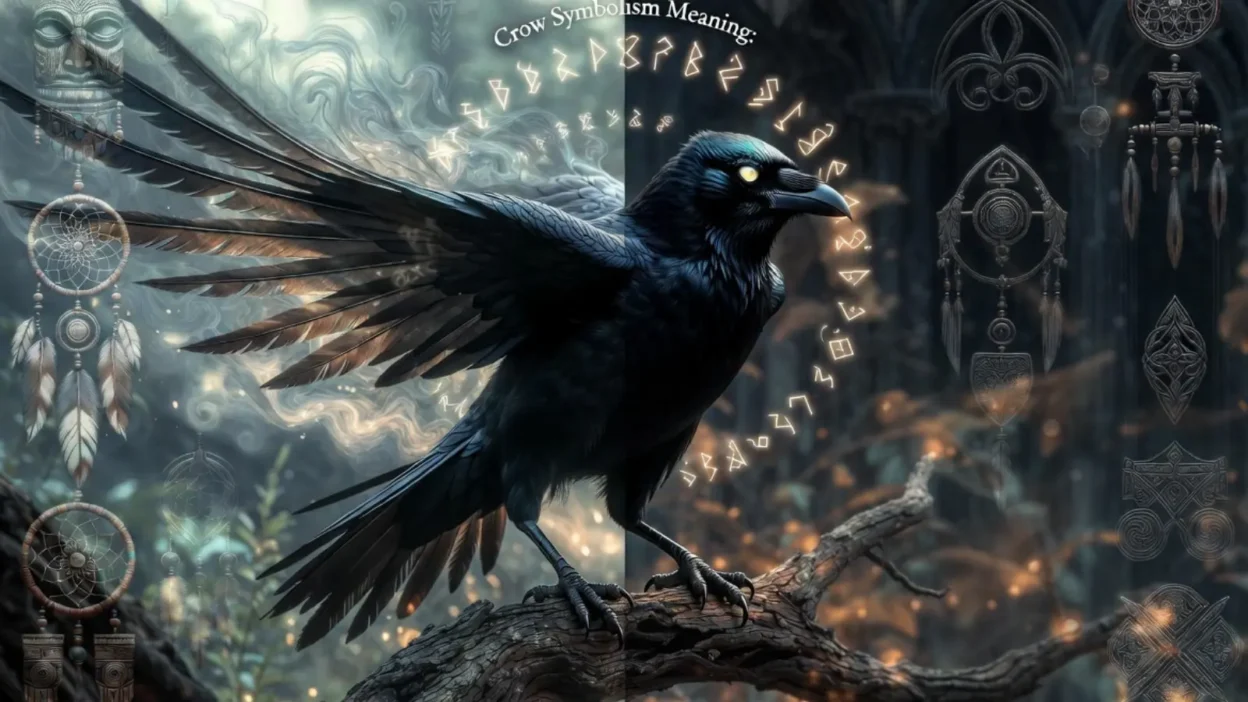
Crow symbolism meaning has grown in interest as Americans look for ways to understand the natural world around them. These birds do not hide in remote forests. They live alongside us, raiding trash cans, solving problems, and calling loudly from power lines. This closeness has turned them into symbols that feel relevant to everyday life.
Today, the dominant view links crows to intelligence and the ability to handle change. Yet their story includes older layers of death, mystery, and wisdom that differ across cultures. Sorting these layers helps avoid oversimplification while showing why the bird continues to matter in modern America.
Quick Answer
Crows most commonly symbolize intelligence, adaptability, and transformation in the United States today. Their problem-solving skills and comfort in human environments support these associations. Historically, meanings have ranged from wisdom in some Native traditions to omens of change or loss in European folklore, but interpretations depend heavily on context and culture.
TL;DR
- Crows stand out for real intelligence and flexible behavior.
- Many US viewers link them to personal change and new opportunities.
- European roots often tie them to death through battlefield habits.
- Native American stories frequently highlight wisdom and creation.
- Tattoos use them for resilience and insight.
- Distinguish folklore beliefs from observable facts.
Main Article
What Crows Look Like and How We Encounter Them
The American crow is a sturdy, all-black bird that measures roughly 16 to 21 inches from beak to tail. Its feathers have a metallic sheen that catches light, especially in sunlight. The beak is strong and slightly curved, perfect for a varied diet, while the legs look powerful for walking and perching.
In flight, crows show broad wings and a fan-shaped tail. Their call is a familiar “caw-caw” that can sound harsh or conversational depending on the situation. They are highly social and often travel in family groups or larger gatherings called murders, particularly in winter when they roost in large numbers in trees near urban areas.
You encounter crows in many typical American settings. They forage in parking lots, follow farm equipment in fields, and nest in suburban backyards. In coastal regions like the Pacific Northwest or the Northeast, they compete with seagulls for scraps. Their comfort around humans sets them apart from more skittish birds and contributes directly to their symbolic reputation for boldness and cleverness.
This constant visibility matters. Unlike rare or distant animals given symbolic roles, crows earn their meanings through daily interaction. When someone sees a crow repeatedly on their morning commute, it feels like a personal encounter rather than a random event.
Intelligence and Adaptability: The Foundation of Crow Symbolism
Scientific studies confirm what many observers have long suspected: crows possess remarkable cognitive abilities. They can recognize individual human faces for years, remember who has threatened them, and teach this knowledge to their offspring. In laboratory tests, crows have fashioned tools from wire, solved puzzles that require multiple steps, and even traded items with humans for better rewards.
This intelligence forms the bedrock of positive crow symbolism. Early humans watching these birds probably noticed them dropping nuts on roads for cars to crack or using sticks to extract insects from crevices. Over time, these observations translated into human qualities: resourcefulness, quick thinking, and the ability to thrive when conditions shift.
In the United States, where change comes quickly through technology, job shifts, and social movements, this symbolism resonates. A crow might represent the neighbor who finds creative solutions during tough economic times or the student who adapts to new learning environments. The bird’s success in both wild and human-altered landscapes reinforces the idea that intelligence means more than book smarts—it includes practical wisdom for survival and growth.
Crow Symbolism in European and Christian Traditions
European folklore frequently connected crows to battlefields and death. These birds appeared in large numbers after conflicts to feed on remains, creating a lasting visual link between crows and mortality. In some Celtic and Norse stories, they appeared alongside war figures, though ravens often took the more prominent role in those tales.
Christian interpretations added another dimension. The Bible mentions a raven sent by Noah from the ark that did not return immediately. Some later commentators associated this with temptation or attachment to a fallen world, while others saw hope in the bird’s eventual return signaling renewal. Medieval bestiaries sometimes portrayed crows as symbols of watchfulness or even penance.
These associations developed logically from the birds’ scavenging behavior and presence during difficult periods in history. They were not abstract inventions but responses to real observations filtered through cultural and religious lenses. In early American settler communities with strong European roots, these ideas traveled across the Atlantic and mixed with new experiences on the continent.
Native American and Indigenous Perspectives
Native American relationships with crows and ravens show much greater diversity. In many Southwestern and Plains traditions, crows appear as clever beings who bring knowledge or assist humans. Some creation stories describe them helping to shape the world or stealing fire for people’s benefit.
Pacific Northwest nations, such as the Haida and Tlingit, feature Raven as a central culture hero who is both trickster and creator. These stories use the bird’s intelligence to explain how the world became ordered and how humans gained important skills. The trickster element teaches that cleverness can serve both helpful and disruptive purposes.
It is important to note that these are specific tribal traditions rather than a single Native American view. Meanings shift by region, language group, and individual storyteller. In contemporary US contexts, many Indigenous artists and writers continue drawing on these stories while adapting them to modern challenges like environmental protection, where crows represent resilience in changing ecosystems.
Crows in Asian and Other World Traditions
Beyond Europe and North America, crows hold varied positions. In Japan, the Yatagarasu is a three-legged crow that serves as a divine guide, famously associated with the guidance of Emperor Jimmu. This positive role emphasizes direction and sacred purpose.
Chinese mythology includes the three-legged sun crow, linked to solar energy and creation. In parts of India, crows connect with ancestral spirits. Families may offer rice balls to crows during certain rituals as a way to honor and feed the departed, viewing the birds as carriers between worlds.
These examples demonstrate how environment and cultural priorities shape symbolism. In sun-rich agricultural societies, connections to light and renewal make sense. Where ancestor veneration is strong, the birds’ role as messengers fits naturally. Such variety warns against claiming any single “ancient meaning” for crows worldwide.
Death, Omens, and Transformation: Sorting Folklore from Fact
The link between crows and death stems partly from diet. As opportunistic feeders, they consume carrion, which placed them at scenes of loss long before modern sanitation. Folklore in many regions developed counting rhymes: one crow for sorrow, two for mirth, and so on. These were local superstitions passed orally rather than consistent rules.
Modern interpreters often reframe death associations as transformation. The end of one thing creates space for something new. A crow appearing during a major life transition—divorce, career change, or grief—might be read as encouragement to adapt rather than a literal prediction of harm.
It is essential to separate these layers. The scavenging behavior is biological fact. The omen interpretations are cultural beliefs. The transformation framing is a contemporary psychological and spiritual reading that helps many Americans process change in a fast-moving society.
Comparison Table: Common Crow Symbolism by Tradition
| Tradition | Primary Associations | Key Reason | Modern US Takeaway |
|---|---|---|---|
| European Folklore | Death, battle | Scavenging on fields | Reflection on loss and cycles |
| Christian Interpretation | Sin, hope, renewal | Noah story variants | Personal moral lessons |
| Native American (varied) | Wisdom, creation, trickster | Cleverness in stories | Guidance and resilience |
| Asian Examples | Divine guidance, ancestors | Mythic messengers | Spiritual insight and connection |
| Contemporary US | Intelligence, transformation | Observed behavior + pop culture | Self-growth and adaptability |
Crows in Literature, Art, and Pop Culture
American literature has a complicated relationship with corvids. While Edgar Allan Poe used a raven in his famous poem, the dark, repetitive “nevermore” created a template for mysterious black birds that many later applied to crows. This influence lingers in horror writing and gothic aesthetics.
In visual art, crows appear in works ranging from 19th-century landscapes to modern street art. Their black forms create strong contrast, making them useful for artists exploring themes of presence and absence. Filmmakers use them in scenes suggesting impending change or watchful intelligence, from Westerns to thrillers.
Popular culture today mixes these references. Video games often feature crows as clever NPCs or collectible symbols. Music videos and album art employ them for edgy or thoughtful moods. This reuse keeps the symbolism alive while evolving it beyond strict historical meanings.
Crows in Contemporary American Life
In daily American experience, crows function as urban adapters. Cities like New York, Chicago, and Los Angeles support large crow populations that have learned traffic patterns and human schedules. This success story appeals to people facing their own adjustments to economic and climate shifts.
Brands occasionally use crow imagery to signal clever marketing or resilience. Garden stores sell crow statues for both decoration and pest control, since the birds’ territorial nature can deter smaller pests. During Halloween, crow motifs appear in wreaths and yard displays, blending seasonal tradition with everyday wildlife.
Sports teams in various states have adopted crow or raven nicknames, emphasizing strategy and toughness. This practical presence makes crow symbolism accessible rather than exotic.
Crow Tattoos and Personal Symbolism
Crow tattoos have gained popularity across the United States. Common designs include flying crows, birds holding keys, or silhouettes against moons. Wearers frequently describe the tattoo as representing a major personal transition—graduation, recovery, relocation, or loss.
The choice often combines the bird’s real intelligence with its cultural reputation for seeing what others miss. In tattoo shops from Seattle to Austin, artists report clients wanting crow pieces that balance darkness with hope. Some incorporate elements like clocks or broken chains to emphasize time and liberation.
Unlike more standardized symbols, crow tattoos tend to carry highly individual stories. The same image might mean “never forget” to one person and “keep learning” to another. This flexibility explains their appeal in a culture that values personal narrative.
Distinguishing Crows from Ravens in Symbolism
Though often confused, crows and ravens differ in important ways. Crows are smaller, travel in larger groups, and have higher-pitched calls. Ravens are larger, often solitary or paired, and produce deeper croaking sounds. Crows dominate most American suburbs and cities, while ravens prefer more remote or mountainous areas.
Symbolically, crows lean toward practical intelligence and group dynamics. Ravens connect more strongly to solitary wisdom, prophecy, and grander mythic roles such as Odin’s companions in Norse lore. This distinction gets lost in casual conversation, leading many Americans to use the terms interchangeably when discussing meaning.
Understanding the difference helps clarify symbolism. A backyard crow sighting likely carries everyday adaptability messages, while a rare raven encounter might feel more significant or otherworldly to the observer.
Why Crow Meanings Continue to Evolve
Crow symbolism keeps changing because both the birds and American society continue adapting. As cities grow smarter with technology, people see parallels in the birds that also master new environments. Wildlife cameras and citizen science projects reveal more about crow family structures, deepening appreciation for their social intelligence.
Social media plays a role too. Videos of crows solving puzzles or playing games spread quickly, reinforcing positive views. At the same time, older folklore resurfaces in podcasts and books, creating interesting blends of old and new.
This ongoing evolution prevents crow symbolism from becoming fixed or stale. It remains useful precisely because it can absorb new meanings while staying rooted in observable traits. The bird that once signaled battlefield loss now often signals personal resilience in twenty-first century America.
FAQs
What does seeing multiple crows usually mean?
Groups of crows often signal community or collective energy in modern views. Folklore sometimes assigned numbers specific outcomes, but these are regional superstitions. Focus on your own context and the birds’ natural social behavior.
Are crow tattoos only about death?
No. Many choose them for intelligence, change, or protection. While some designs reference darker themes, most wearers emphasize resilience and insight. The meaning comes from the person’s story.
How do crows differ symbolically from ravens?
Crows highlight adaptability and group cleverness. Ravens often connect more to solitude, prophecy, or grand mythology. Physical and behavioral differences support these slight shifts in cultural use.
Is there a Christian meaning for crows?
Interpretations link them loosely to the Noah account or ideas of temptation and renewal. The Bible does not assign them a single clear symbol. Views depend on tradition and personal reading.
Do crows represent good luck or bad luck in the US?
It varies. Some see them as signs of opportunity due to their smarts. Others recall older omen stories. Most contemporary Americans treat sightings as neutral or positive reminders of change.
Can crows be spirit animals or guides?
In personal spiritual practices, yes. People who connect with them often cite lessons in awareness and flexibility. This is individual belief rather than universal tradition.
Why are crows linked to transformation?
Their ability to thrive in changing conditions and their presence during natural cycles support this. Modern interpreters use it as a metaphor for letting go of the old to make way for growth.
Conclusion
Crows carry a mix of meanings shaped by observation, stories, and daily life. Their intelligence and flexibility stand as the most consistent threads across time.
In the United States, crow symbolism meaning often points toward using your mind to handle change. Whether you see them as clever neighbors or reminders of life’s cycles, they invite attention to the world around you. Pay attention next time one lands nearby—you might notice something useful.