
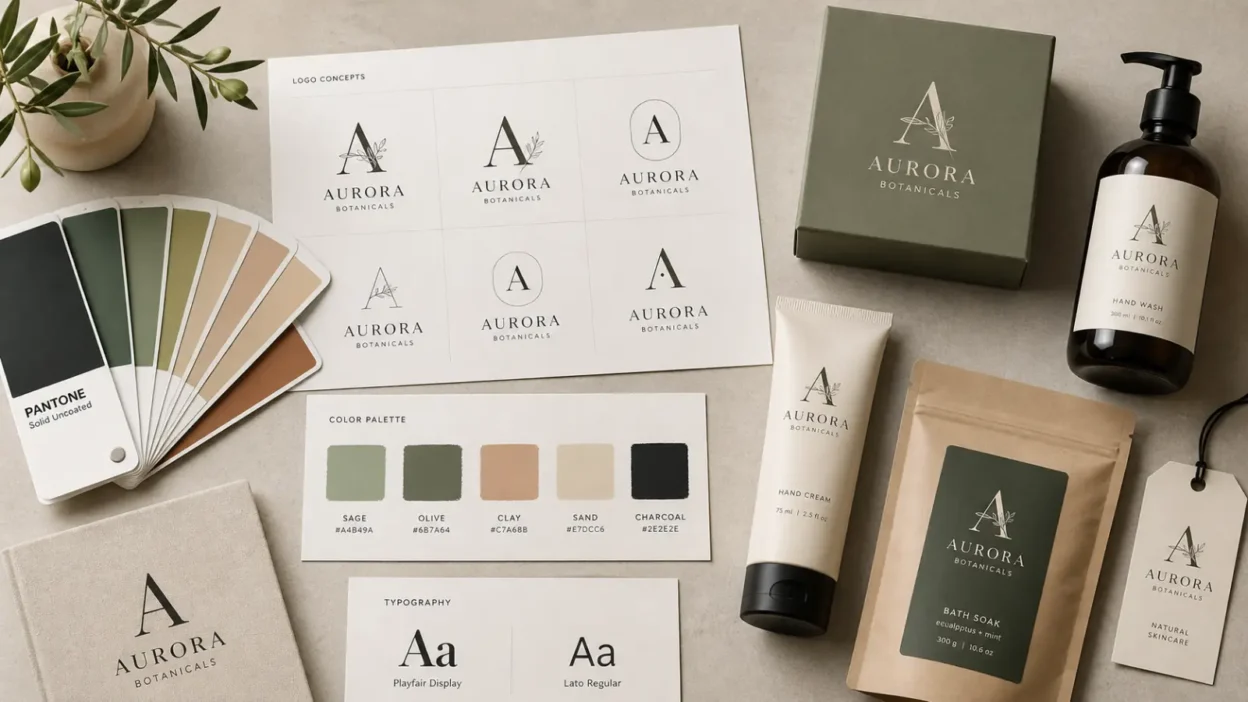
Color symbolism in branding is the way companies use color to suggest feelings, values, and identity before a customer reads a single word. A blue bank, a red fast-food sign, a green wellness label, and a black luxury box all send quick signals.
People care about brand colors because they make choice feel easier. Color helps us sort a crowded shelf, recognize a familiar app, or decide whether something feels playful, serious, affordable, ethical, or premium.
In the United States, brand color meaning is shaped by business culture, holidays, politics, sports, awareness campaigns, fashion, and digital life. Some meanings are widely understood. Others are learned through repeated use, personal memory, or current trends.
Quick Answer
In modern U.S. culture, color symbolism in branding usually represents a brand’s personality, mood, and promise: blue often suggests trust, red suggests energy, green suggests nature or money, and black suggests sophistication. These meanings come from a mix of visual perception, cultural habits, industry patterns, and repeated exposure rather than from one universal color code.
TL;DR
- Brand colors signal personality before words do.
- Color meanings depend on culture and context.
- Blue often suggests trust and competence.
- Green can mean nature, money, or health.
- Shade and contrast change interpretation.
- Color symbolism should not be treated as universal.
What Color Symbolism Means in Branding
Color symbolism in a brand is not the same as simply liking a color. It is the meaning a color gathers when it appears in a logo, package, website, uniform, storefront, app icon, or ad campaign.
A brand color works like a visual shortcut. It can suggest speed, calm, freshness, safety, rebellion, luxury, warmth, or seriousness. That does not mean the color proves those qualities are real. It means the color helps frame how the brand wants to be seen.
This is why color is both symbolic and strategic. A hospital may choose blue or green to feel calm and clean. A sports drink may choose orange or electric blue to feel active. A jewelry brand may use black, white, or a controlled shade of blue to feel refined.
The meaning is strongest when the color fits the brand’s actions, tone, product, and audience. A color cannot rescue a confusing identity. But it can make a clear identity easier to remember.
The Quick Meaning of Major Brand Colors
The table below shows common U.S. brand color associations. These are useful starting points, not fixed rules.
| Brand Color | Common U.S. Meaning | Where It Often Appears |
|---|---|---|
| Red | Energy, appetite, urgency, boldness | Food, retail sales, sports, entertainment |
| Blue | Trust, competence, calm, security | Banking, healthcare, technology, insurance |
| Green | Nature, health, money, sustainability | Wellness, finance, food, environmental brands |
| Black | Luxury, authority, simplicity, edge | Fashion, cars, beauty, premium goods |
| Yellow / Orange | Optimism, warmth, attention, affordability | Food, youth brands, delivery, discount retail |
| Purple | Creativity, imagination, rarity, indulgence | Beauty, sweets, wellness, artistic brands |
Color meaning changes when the color changes shade. A deep navy feels different from bright sky blue. Forest green feels different from neon lime. A soft blush pink feels different from hot pink.
Meaning also changes by industry. Green on a banking website may suggest money and stability. Green on a cleaning product may suggest nature. Green on a food package may suggest freshness or plant-based ingredients.
Why Brand Colors Carry Meaning at All
Brand colors carry meaning because people learn associations over time. Some of those associations come from the physical world. Red is highly noticeable. Green is tied to plants in many everyday settings. Blue is linked with sky and water, which can feel open or calm.
Other associations come from culture. In the United States, red, white, and blue often suggest national identity. Orange and black suggest Halloween. Pink is strongly linked with breast cancer awareness, though pink has many other meanings in fashion and design.
Branding adds another layer. When a company uses the same color for years, customers may begin to recognize the brand from color alone. The color becomes part of memory. This is why consistency matters.
But color does not work like a spell. A red button does not automatically make people buy. A green label does not automatically make a product ethical. Color shapes expectation, but the product, message, price, reputation, and customer experience still matter.
A Short History of Color as a Brand Asset
Color became more important in branding as mass production, packaging, print advertising, and retail displays expanded. When many products sat side by side, color helped one package stand out from another.
Early brand identity often depended on names, symbols, typography, and packaging shape. As printing improved and advertising spread, color became easier to repeat across signs, labels, posters, and later television. A brand could become associated with a visual system rather than a single mark.
By the late twentieth century, color had become a major part of corporate identity. Companies used brand guidelines to keep colors consistent across stationery, buildings, vehicles, packaging, ads, and uniforms.
Digital life made color even more visible. App icons, website buttons, social media graphics, and mobile screens forced brands to think about color at tiny sizes and across many devices. Today, a brand color has to work on a package, a billboard, a phone screen, and a dark-mode interface.
This history matters because many modern color meanings are not ancient truths. They are partly built by commerce, repetition, design trends, and public memory.
Red, Orange, and Yellow: Attention, Appetite, and Warning
Warm colors tend to feel active because they stand out quickly. In U.S. branding, red is often used when a company wants to feel bold, fast, emotional, or hard to ignore.
Red can suggest appetite, urgency, excitement, danger, romance, or aggression. That wide range is why context matters. Red on a sale tag feels urgent. Red on a sports logo can feel competitive. Red on a luxury perfume bottle can feel sensual. Red on a warning label can mean stop or risk.
Orange often feels more casual than red. It can suggest friendliness, motion, affordability, and approachability. Delivery brands, youth-focused products, and value-driven companies may use orange because it attracts attention without always feeling as severe as red.
Yellow is bright and visible, but it can be tricky. It may suggest optimism, warmth, youth, sunlight, or play. In other settings, it can suggest caution, cheapness, or visual strain. A soft golden yellow feels different from a harsh fluorescent yellow.
Warm colors often work when a brand wants to say:
- act now
- try this
- feel energized
- notice us
- expect warmth or speed
The risk is overload. Too much red, orange, or yellow can feel loud, anxious, or unserious if the product needs calm and trust.
Blue, Green, and Purple: Trust, Nature, Money, and Imagination
Blue is one of the most common brand colors in the United States because it is flexible. It can suggest trust, competence, security, cleanliness, calm, and professionalism.
That helps explain why many banks, insurers, hospitals, software companies, and corporate services use blue. A deep navy can feel established. A bright blue can feel modern. A pale blue can feel gentle or clinical.
Green carries several meanings at once. In the U.S., it often suggests nature, health, freshness, money, growth, and environmental responsibility. A grocery brand may use green to suggest freshness. A financial brand may use it to suggest wealth or growth. A wellness brand may use it to suggest balance.
Green’s weakness is that it can be too easy. A green package may imply natural or sustainable qualities even when the product does not fully support that impression. That is why green branding needs careful language and honest evidence.
Purple is less common, so it can feel distinctive. It has long associations with rarity, ceremony, imagination, beauty, and indulgence. In branding, purple often appears in sweets, cosmetics, wellness, creative services, and products that want to feel a little unusual.
Still, purple is not automatically spiritual, royal, or mysterious in every context. A lavender wellness brand, a bright purple candy wrapper, and a dark purple luxury label all tell different stories.
Black, White, Gray, and Brown: Luxury, Simplicity, Seriousness, and Earthiness
Neutral colors may seem quiet, but they carry strong symbolic weight in branding.
Black often suggests elegance, authority, control, luxury, rebellion, or seriousness. A matte black package can feel premium. A black band T-shirt can feel subcultural. A black car logo can feel powerful. The meaning depends on finish, typography, product category, and surrounding colors.
White often suggests simplicity, cleanliness, openness, purity, or modern minimalism. In U.S. branding, white space can make a brand feel calm and confident. It can also feel cold or empty if the design lacks warmth.
Gray sits between black and white. It can suggest balance, professionalism, technology, restraint, or neutrality. It is common in corporate and digital design because it does not compete with stronger accent colors. Too much gray, however, can feel dull or impersonal.
Brown suggests earth, wood, leather, coffee, chocolate, craft, reliability, or ruggedness. It often works well for food, outdoor goods, heritage brands, and handmade products. But brown can also feel old-fashioned if it is not handled with care.
Neutral colors are often used to slow the message down. They tell the viewer, “This brand does not need to shout.” That restraint can be powerful when it fits the product.
Shade, Saturation, and Pairing Change the Message
A color’s basic name tells only part of the story. Shade, saturation, brightness, texture, and pairing can change the meaning more than people expect.
Pastels often feel gentle, nostalgic, youthful, or soft. Neons feel energetic, digital, playful, or intense. Deep jewel tones can feel rich or ceremonial. Muted earth tones can feel natural, calm, or handmade.
The same color can shift meaning through pairing:
- Red with white can feel clean, bold, and classic.
- Red with black can feel dramatic or aggressive.
- Green with beige can feel organic.
- Green with metallic gold can feel financial or premium.
- Blue with white can feel clean and institutional.
- Blue with orange can feel active and friendly.
Texture also matters. Glossy black feels different from rough black paper. Kraft brown feels different from polished brown leather. Metallic gold feels different from flat yellow.
This is where simple color charts fall short. A brand is not just “blue” or “green.” It is a whole visual language.
U.S. Culture Shapes Brand Color Meaning
A U.S. audience brings American color memories into brand interpretation. Some are seasonal. Orange and black suggest Halloween. Red and green suggest Christmas. Pastels may suggest spring, Easter, baby products, or softness.
Other meanings come from public life. Red, white, and blue can suggest patriotism, civic identity, sports uniforms, or political messaging. Red and blue also carry political associations in the United States, especially during elections, though those meanings are relatively modern and context-specific.
Sports matter too. Team colors can shape local loyalty. In some cities, a color combination can instantly call up a school, college, or professional team. A brand using similar colors may benefit from that energy or accidentally step into rivalry.
Awareness campaigns also shape color symbolism. Pink is widely linked with breast cancer awareness. Red ribbons have been used for HIV/AIDS awareness. Purple is used in several causes, including domestic violence awareness and Alzheimer’s-related campaigns. These meanings can be powerful, but they are not the only meanings those colors have.
Retail culture adds another layer. Red tags often suggest sales. Green labels may suggest natural products. Black packaging may suggest premium goods. Over time, shoppers learn these patterns.
Where Color Symbolism Can Mislead People
Color symbolism becomes misleading when it is treated as a universal code. It is not safe to say that one color means the same thing to every person, in every culture, in every product category.
Green is the clearest example. A brand may use green to suggest sustainability, but color alone does not prove environmental responsibility. When green design implies more ethical behavior than a company can support, the result can feel deceptive.
Color can also create accessibility problems. Pale gray text may look refined but be hard to read. Red and green may create confusion for some people with color vision differences. A brand that depends only on color to communicate important information can exclude users.
Cultural mismatch is another risk. White may suggest simplicity or cleanliness in many U.S. brand settings, but it carries mourning associations in some cultures. Red may suggest luck or celebration in some contexts and warning or danger in others. International brands need more than a domestic color chart.
There is also a risk of stereotyping. Pink does not belong only to women. Blue does not belong only to men. Black is not only luxury. Brown is not only rustic. Color meanings are patterns, not cages.
The best branding uses color as one clue among many. It does not ask color to carry a message the company has not earned.
How to Read Brand Colors Without Overreading Them
A grounded reading of brand color starts with context. Ask what the company sells, who it serves, where the color appears, and what other design choices surround it.
A good interpretation looks at:
- the industry
- the audience
- the shade
- the color pairing
- the typography
- the product price
- the brand voice
- the cultural setting
- the company’s behavior
A black logo for a luxury watch means something different from a black logo for a heavy metal festival. A green logo for a bank means something different from a green logo for a vegan café. A red button on a website means something different from a red charity ribbon.
It is also worth asking whether the color is meant to stand out or blend in. Some brands use category colors to feel familiar. Others choose unusual colors to feel different. Both choices can work.
The safest rule is simple: color suggests meaning; it does not guarantee it. Read the color, then check the wider story.
FAQs
What is the main meaning of color in branding?
Color in branding mainly signals personality, mood, and recognition. It helps people form a first impression before they read the brand name, but its meaning depends on context.
What brand color means trust?
Blue is the color most often used to suggest trust, security, competence, and calm in U.S. branding. That is why it appears often in banking, healthcare, insurance, and technology, though blue does not automatically make a brand trustworthy.
What does red symbolize in a logo?
Red often symbolizes energy, urgency, appetite, passion, or boldness. It can also suggest danger or aggression, so the surrounding design and product category matter.
Is green branding always about nature?
No. Green may suggest nature, health, freshness, money, growth, or sustainability. In financial branding it may point to prosperity, while in food or wellness branding it may suggest natural ingredients or balance.
Can a company legally own a color?
In the United States, a company may gain legal protection for a specific color in a specific commercial context if the public strongly associates that color with the brand and the color is not functional. This does not mean ordinary colors are removed from public use.
Are color meanings the same in every culture?
No. Color meanings change across cultures, religions, languages, politics, and local traditions. A color that feels clean, lucky, formal, or mournful in one setting may carry a different meaning elsewhere.
How should a small business choose brand colors?
A small business should start with audience, product, tone, and industry expectations. The best color is not the one with the most popular meaning; it is the one that fits the promise the business can actually keep.
Conclusion
Brand colors work because people notice them quickly and learn their meanings through culture, memory, and repetition. They help a brand feel familiar, trustworthy, playful, premium, natural, urgent, or calm.