A color symbolism list can be helpful, but only if it does more than label red as love or blue as calm. Colors carry meaning because people connect them with nature, religion, status, danger, clothing, politics, holidays, grief, and memory.
In the United States, color symbolism appears everywhere. It shapes wedding palettes, sports uniforms, traffic signs, brand logos, awareness ribbons, school colors, home decor, tattoos, and holiday displays.
Still, colors do not mean the same thing in every place or every moment. A white dress, a red envelope, a black suit, a green logo, and a purple ribbon all depend on context. The best way to read color symbolism is to ask where the color appears, who is using it, and what tradition or setting gives it meaning.
Quick Answer
In modern U.S. culture, color symbolism list meanings usually connect colors with emotions, social signals, and familiar settings: red often means love or danger, blue suggests calm or trust, green points to nature or money, and black can suggest mourning, formality, or elegance. These meanings come from a mix of visible traits, historical materials, religion, design habits, and everyday use, but they are not universal across all cultures.
TL;DR
- Color meanings depend on context.
- Red has the widest symbolic range.
- Blue often signals trust or calm.
- Green links nature, money, and envy.
- White and black shift by culture.
- Shade changes meaning sharply.
What Color Symbolism Means Today
Color symbolism is the use of color to suggest meaning beyond the color itself. A red rose can suggest romance. A yellow traffic sign can warn drivers. A black dress can feel formal, elegant, mournful, or rebellious depending on the setting.
This is why color meanings are useful but easy to oversimplify. Colors do not carry one fixed message. They work like social cues. Their meaning depends on culture, time period, material, shade, object, and occasion.
For a U.S. reader, color symbolism is often practical. People ask what colors mean because they are choosing a tattoo, planning a wedding, decorating a room, designing a logo, reading a flag, dressing for an event, or trying to understand a dream or spiritual association.
The safest rule is simple: start with the common modern meaning, then check the context. Red at Valentine’s Day is not the same as red on a stop sign. White at a wedding is not the same as white in a funeral tradition. Green on a recycling logo is not the same as green in the phrase “green with envy.”
The Quick Color Symbolism List
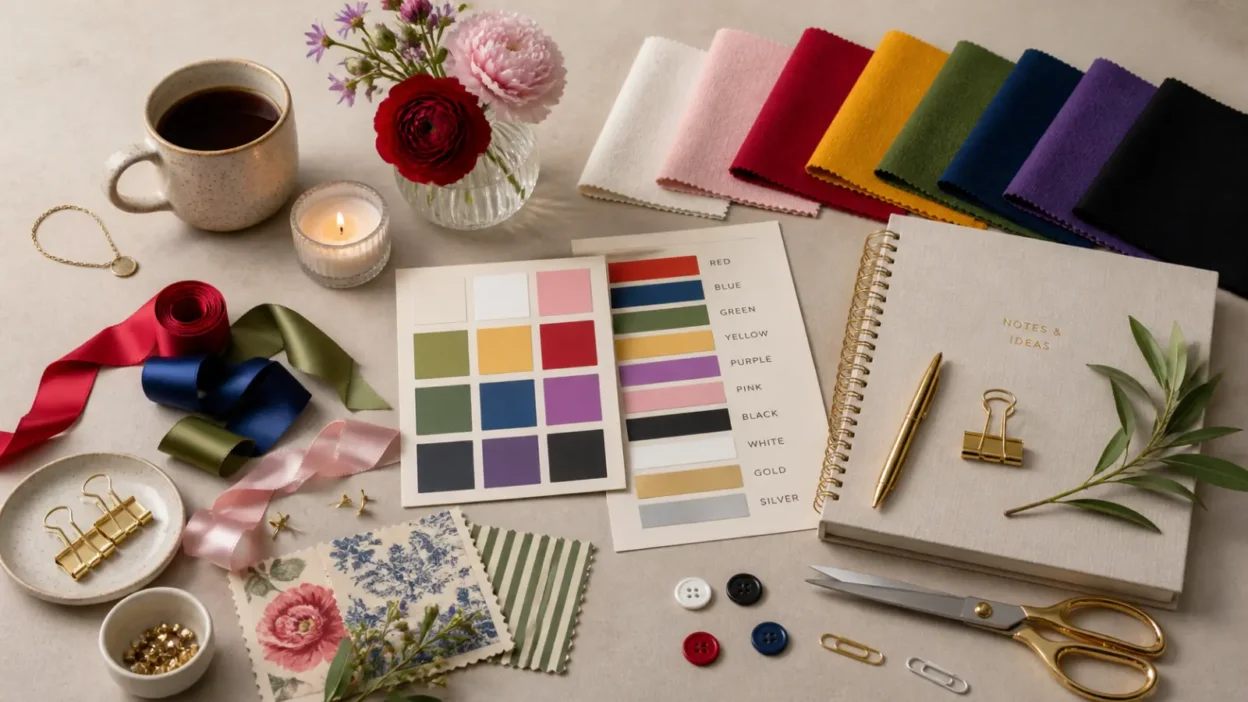
The table below gives the most common modern U.S. meanings for major colors. It is a guide, not a universal code.
| Color | Common U.S. Meaning | Context That Can Change It |
|---|---|---|
| Red | Love, passion, danger, urgency, power | Weddings, warning signs, politics, sports, luck in some cultures |
| Blue | Trust, calm, sadness, authority, loyalty | Police, corporate branding, water, sky, depression language |
| Green | Nature, growth, money, health, envy | Environmental causes, finance, illness, St. Patrick’s Day |
| Yellow/Orange | Joy, attention, warmth, caution, energy | School buses, safety gear, autumn, Halloween, affordability |
| Black/White/Gray | Mourning, purity, formality, neutrality, restraint | Weddings, funerals, minimal design, religion, fashion |
| Purple/Pink/Gold/Silver | Royalty, tenderness, luxury, value, celebration | Ribbons, jewelry, cosmetics, awards, spiritual settings |
A list like this is most useful when it points you in the right direction. It should not replace context. In real life, colors build meaning through repetition. The more often people see a color tied to a holiday, warning, cause, role, or emotion, the more symbolic weight it gains.
Why Colors Came to Carry Meaning
Color meanings developed from several overlapping sources.
The first source is nature. Red recalls blood, fire, ripe fruit, heat, and flushed skin. Green recalls leaves, grass, crops, and renewal. Blue recalls sky and water. Yellow recalls sunlight, flowers, gold, and sometimes sickly tones.
The second source is material history. Some pigments and dyes were once rare, expensive, or difficult to produce. That helped certain colors become linked with wealth, rank, or sacred art. Purple is the classic example because some purple dyes were historically costly. Gold and silver also carry value because they are tied to precious metals, not just visual color.
The third source is ritual and religion. Many traditions use color in clothing, altar cloths, festivals, mourning, icons, and sacred art. These meanings can be very specific. A color may have one meaning inside a religious calendar and a different meaning in fashion or home decor.
The fourth source is public systems. Traffic lights, signs, uniforms, flags, political maps, school colors, sports teams, and awareness ribbons teach people to read colors quickly. These systems are especially important in the United States, where color often marks identity, safety, affiliation, and belonging.
The fifth source is personal memory. A person may love blue because of a childhood bedroom, dislike yellow because of a school uniform, or connect purple with a grandparent. Personal symbolism can be real for the person even when it is not a broad cultural rule.
Red: Love, Danger, Power, and Celebration
Red is one of the strongest symbolic colors because it is visually intense and tied to high-stakes experiences. It can mean love, passion, anger, danger, courage, energy, sacrifice, celebration, or power.
In the United States, red is strongly tied to romance through roses, hearts, lipstick, Valentine’s Day cards, and formal romantic imagery. This link makes sense because red is associated with warmth, blood, desire, and emotional intensity.
Red also warns. Stop signs, emergency lights, fire alarms, danger labels, and urgent sale tags all use red to make people notice. In this setting, red does not mean romance. It means pay attention.
Red can also signal importance or status. Think of red carpets, red ties, red uniforms, and “red-letter” days. In sports, red often suggests aggression, energy, and team pride. In politics, red is linked with the Republican Party in modern U.S. electoral maps, though that association is historically recent compared with older color traditions.
Outside the United States, red can carry other important meanings. In some East Asian settings, red is connected with luck, celebration, and weddings. That does not erase red’s U.S. warning meaning. It shows why color symbolism should never be treated as one global dictionary.
Blue: Calm, Trust, Sadness, and Authority
Blue often feels calm because people connect it with the sky, water, distance, and coolness. In U.S. design, blue is widely used to suggest trust, stability, security, and professionalism.
That is why blue appears often in banks, insurance companies, hospitals, technology brands, uniforms, and government settings. It feels steady without being too loud. Dark navy can seem formal and authoritative. Light blue can feel open, clean, soft, or peaceful.
Blue also carries sadness. The phrase “feeling blue” gives the color an emotional shadow. In music, “the blues” points to a deep expressive tradition rooted in sorrow, endurance, and lived experience. This meaning is not the same as blue’s corporate meaning, but both are familiar to U.S. readers.
Blue can also suggest loyalty. Navy uniforms, school colors, flags, and formal suits all help reinforce blue as dependable and respectable. Still, shade matters. Electric blue feels modern and energetic. Pale blue feels gentle. Deep blue can feel serious, elegant, or distant.
Green: Nature, Money, Growth, and Envy
Green is one of the clearest examples of a color with both positive and negative meanings. In the United States, green most often points to nature, growth, health, freshness, and environmental concern.
This meaning comes from the visible world. Green is the color of leaves, grass, gardens, forests, and many living plants. That is why “green” can mean eco-friendly, organic, natural, or sustainable in branding and packaging.
Green also means money. U.S. paper currency helped strengthen the link between green and wealth, finance, profit, and luck. A green logo can suggest growth or financial success. The phrase “green light” means permission to move forward.
But green also has older negative associations. “Green with envy” links the color with jealousy. Green can also suggest sickness in phrases and cartoons, especially when a face is shown as green. This does not cancel green’s nature meaning. It shows how one color can carry opposite readings at once.
Green is also important in holidays and identity. St. Patrick’s Day has made green a major public color in March across the United States, even when the celebration is more cultural and festive than religious for many participants.
Yellow and Orange: Joy, Attention, Warmth, and Warning
Yellow and orange are bright, warm, and highly noticeable. They often feel cheerful, lively, and social, but they also appear in warning systems.
Yellow commonly suggests:
- sunlight and happiness
- caution and alertness
- youth and playfulness
- hope and optimism
- illness or cowardice in some older phrases
In U.S. life, yellow appears on school buses, caution signs, highlighters, smiley faces, sunflowers, and cheerful packaging. Its brightness makes it useful when something needs to stand out.
Orange often suggests:
- energy and friendliness
- autumn and harvest
- affordability and casualness
- safety and visibility
- Halloween when paired with black
Orange is common in traffic cones, safety vests, hunting gear, sports branding, and fall decor. It can feel warmer and less aggressive than red, but still more active than yellow.
Both colors change quickly by shade. Pale yellow can feel soft and nostalgic. Neon yellow can feel urgent. Burnt orange can feel earthy, vintage, or autumnal. Bright orange can feel playful, inexpensive, or loud.
Black, White, and Gray: Mourning, Purity, Formality, and Neutrality
Black, white, and gray are often called neutral colors, but their symbolic meanings are far from empty.
In the United States, black is strongly linked with mourning and funerals. It can suggest grief, seriousness, restraint, or respect. It is also a major color of elegance and formality, seen in black suits, evening dresses, tuxedos, luxury packaging, and minimalist design.
Black can also carry negative meanings: secrecy, threat, evil, rebellion, or heaviness. These readings depend heavily on context. A black ribbon, black leather jacket, black judge’s robe, and black luxury box do not say the same thing.
White often suggests purity, cleanliness, peace, simplicity, innocence, and new beginnings in U.S. culture. It appears in wedding dresses, hospitals, blank pages, doves, minimalist interiors, and religious clothing. But white can also feel sterile, cold, empty, or impersonal.
Cross-culturally, white is one of the clearest warnings against universal claims. In some traditions, white is associated with mourning or death rather than bridal purity. That does not make either meaning wrong. It means the color is read through custom.
Gray usually suggests neutrality, age, balance, practicality, or uncertainty. It can feel mature and calm, but it can also feel dull, detached, cloudy, or lifeless. In design, gray often works as a background color that lets brighter colors carry the emotional message.
Purple, Pink, Brown, Gold, and Silver: Status, Tenderness, Earth, and Value
Some colors gain symbolic meaning through materials, gender codes, fashion, and status.
Purple often suggests royalty, luxury, mystery, creativity, spirituality, or dignity. Its older status meaning is tied partly to the cost and rarity of some purple dyes. In modern U.S. life, purple also appears in awareness ribbons, cosmetics, sports teams, fantasy imagery, and spiritual branding.
Pink often suggests romance, softness, affection, sweetness, femininity, and care. In the United States, pink became strongly gender-coded over time, especially in children’s clothing, toys, and marketing. Today it can also be playful, ironic, bold, queer-coded, nostalgic, or rebellious depending on shade and use.
Brown suggests earth, wood, leather, coffee, soil, reliability, humility, and comfort. It can feel warm and grounded. It can also feel plain or old-fashioned if used without contrast. In decor, brown often reads as rustic, natural, traditional, or practical.
Gold suggests wealth, honor, achievement, sunlight, divinity, and celebration. Its symbolism comes from the metal itself as much as the color. Gold trophies, rings, medals, crowns, and religious objects all reinforce this link.
Silver suggests value, modernity, reflection, elegance, technology, and cool restraint. It can feel less warm than gold and more futuristic. Silver is common in jewelry, cars, electronics, awards, and winter decoration.
How Color Meanings Change by Shade and Setting
A color’s meaning changes when its shade changes. This is why a simple list can only go so far.
Dark red can feel romantic, expensive, bloody, dramatic, or formal. Bright red feels urgent and bold. Pink-red feels sweet or flirtatious. Rust red feels earthy and vintage.
Blue has a similar range. Navy blue suggests authority and tradition. Sky blue feels gentle and open. Turquoise feels tropical or fresh. Electric blue feels digital and energetic.
Green changes even more. Forest green feels natural and stable. Lime green feels youthful, artificial, or high-energy. Sage green feels calm and domestic. Neon green can feel futuristic, sporty, or toxic.
Context matters as much as shade. A white room may feel clean. A white hospital hallway may feel sterile. A white wedding dress may feel bridal. A white mourning garment may carry grief in another tradition.
The object also matters. Red lipstick, red roses, red warning lights, and red team jerseys all use the same color family, but they do not send the same message. Color symbolism works through the full scene.
How Americans Use Color Symbolism Now
In modern U.S. life, color symbolism is less like a secret code and more like a shared visual habit. People use color to signal mood, identity, season, values, and group belonging.
Common U.S. settings include:
- Branding: Blue often suggests trust; green suggests nature or finance; red suggests energy or urgency; black suggests luxury or edge.
- Clothing: Black can look formal or serious; white can feel crisp; bright colors can feel festive; muted colors can feel professional.
- Decor: Green and brown feel natural; white and gray feel minimal; gold adds warmth and ceremony; blue can calm a room.
- Weddings: White, ivory, blush, gold, green, navy, burgundy, and pastels all carry mood and seasonal meaning.
- Holidays: Red and green mark Christmas; orange and black mark Halloween; red, white, and blue mark U.S. patriotic events.
- Politics: Red and blue are now shorthand for major U.S. political parties, though the meaning depends on electoral context.
- Sports: Team colors create identity, loyalty, rivalry, and local pride.
- Awareness campaigns: Ribbon colors mark causes, illnesses, memorials, and advocacy efforts.
Color symbolism also appears online. A “clean girl” beige palette, a dark academia brown palette, a Barbie-pink outfit, or a neon cyberpunk graphic all use color as social shorthand. These meanings can spread quickly, but they are less stable than older ceremonial or public meanings.
Where Color Symbolism Gets Oversimplified
Color symbolism becomes misleading when people treat colors as fixed truths. A color can suggest a mood, but it does not control a person’s mind. A color can belong to a religious tradition, but it should not be stripped from that tradition and turned into a vague aesthetic claim.
This is especially important with sacred colors. Saffron, green, white, black, red, blue, and gold can all carry religious meanings in specific communities. Those meanings deserve context. They are not interchangeable with modern “spiritual color” lists.
Color symbolism can also be distorted by stereotypes. Claims such as “this color means this in all Asian cultures” or “this color has always meant evil” flatten real differences. Regions, religions, classes, time periods, and local customs matter.
Politics can also reshape color meaning. Red, blue, green, black, white, and orange have all been used in political movements, national flags, protests, and parties. A color may carry pride in one setting and harm in another.
The best interpretation stays humble. Ask what the color is attached to. Ask who is using it. Ask whether the meaning is historical, religious, commercial, personal, or internet-based. Color symbolism is useful when it helps us read context, not when it pretends context does not matter.
How to Interpret a Color Without Overreading It
When you see a color and want to understand its symbolism, begin with the setting. Is it on clothing, a flag, a tattoo, a logo, a ritual object, a flower, a room, a sign, or a social media image?
Then ask what the color is doing. Is it warning, honoring, mourning, decorating, selling, celebrating, identifying, softening, or separating one group from another?
Next, look at shade and combination. Red alone may feel intense. Red with white can feel romantic, medical, patriotic, or festive. Red with black can feel dramatic, dangerous, gothic, political, or elegant. Meaning often comes from the palette, not the single color.
Finally, leave room for personal meaning. A green tattoo may symbolize nature to one person, recovery to another, money to another, and a family memory to someone else. Public symbolism gives clues, but personal symbolism can change the reading.
Color Symbolism in Tattoos, Gifts, Decor, and Personal Style
People often use color symbolism when they want an object to feel personal. Tattoos, gifts, rooms, outfits, and jewelry all carry color choices that can say something without words.
In tattoos, red can suggest passion, courage, bloodline, or survival. Blue may suggest peace, loyalty, sadness, or protection. Green may suggest growth, healing, nature, or luck. Black can suggest grief, strength, memory, seriousness, or simplicity. The image matters as much as the ink color. A red rose, red snake, red heart, and red flame all read differently.
In gifts, color affects tone. Red roses feel romantic. Yellow flowers often feel cheerful or friendly. White flowers can feel elegant, bridal, peaceful, or memorial depending on the occasion. Pink gifts can feel affectionate or sweet. Gold packaging can feel celebratory or expensive.
In home decor, colors shape atmosphere. Blue and green are often chosen for calm. Yellow and orange can warm a space. White and gray can make a room feel open but may need texture to avoid coldness. Brown and beige can feel grounded, though too much can feel flat.
In personal style, color can signal mood, taste, role, or identity. Black can feel formal, artistic, private, or powerful. Bright colors can feel expressive. Neutrals can feel controlled and practical. None of these readings is automatic, but they shape first impressions.
Color Symbolism Across Cultures Without Flattening Them
Cross-cultural color symbolism is valuable, but it needs care. It is better to say “in some traditions” or name the specific setting than to claim a whole continent reads color one way.
Red is a good example. In much of U.S. life, red often signals love, danger, urgency, or political identity. In some Chinese cultural contexts, red is linked with luck, celebration, and weddings. In Christian liturgical settings, red can be connected with blood, sacrifice, fire, the Holy Spirit, or martyrdom depending on the occasion.
White is another example. In the United States, white often suggests weddings, purity, peace, cleanliness, or simplicity. In some East and South Asian mourning practices, white can be linked with death, grief, or ritual simplicity.
Purple may suggest royalty in many Western contexts, but it can also carry religious, mourning, artistic, or luxury meanings depending on the tradition. Green can suggest nature in U.S. marketing, but it also has religious and national meanings in some settings.
The point is not that color has no meaning. The point is that color has many meanings, and responsible interpretation names the setting rather than pretending one meaning covers everyone.
FAQs
What do colors symbolize in general?
Colors usually symbolize emotions, social signals, natural associations, and cultural customs. Red may suggest love or danger, blue may suggest calm or trust, green may suggest nature or money, and black may suggest grief, formality, or elegance.
What is the most symbolic color?
Red is often the most symbolically intense color because it is linked with blood, fire, love, danger, power, and celebration. Its meaning changes sharply by context, so it should not be reduced to only romance or only warning.
What color symbolizes healing?
Green is often used for healing because it suggests nature, growth, health, and renewal. Blue can also feel healing in U.S. design because it is associated with calm, care, water, and emotional steadiness.
What do colors mean in tattoos?
Tattoo colors usually combine public symbolism with personal meaning. Red ink may suggest passion or courage, blue may suggest peace or loyalty, green may suggest growth, and black may suggest memory, grief, strength, or simplicity.
Are color meanings spiritual?
Some color meanings are spiritual within specific religions or traditions, but not every color association is sacred. Modern spiritual color lists often blend religion, folklore, psychology, and personal interpretation, so they should be read with care.
Do colors mean the same thing in every culture?
No. Color meanings can change by country, religion, era, class, ceremony, and object. White is a clear example because it can suggest purity in some U.S. wedding contexts and mourning in some other traditions.
What color has both positive and negative meanings?
Green is a strong example. It can suggest nature, growth, health, luck, and money, but it can also suggest envy or sickness depending on the phrase or image.
Conclusion
Color meanings are strongest when they are read in context. Red can love or warn. Blue can calm or grieve. Green can heal, grow, or envy. Black can mourn or elevate. White can purify, simplify, or mark loss.