Totem animals list meanings are commonly used today to describe symbolic connections between animals and human traits. In modern U.S. culture, people often refer to these meanings when thinking about personality, identity, or emotional reflection.
The idea is not a single fixed system. Indigenous traditions involving animal totems vary widely, and modern interpretations often simplify or reinterpret those meanings for personal use, spirituality, or storytelling.
Because of this mix, the same animal can carry different meanings depending on culture, context, and belief. Today, totem animals are mostly used as symbolic tools for reflection rather than strict spiritual rules.
Quick Answer
Totem animals list meanings refer to symbolic interpretations of animals used to represent human traits like strength, intuition, or independence. In modern U.S. culture, they are mostly seen as personal reflection symbols rather than fixed spiritual truths.
These meanings come from a blend of Indigenous traditions, folklore, psychology, and modern interpretation, and they vary widely depending on context.
TL;DR
- Totem animals symbolize human traits through animal imagery
- Meanings vary across cultures and modern interpretations
- Wolf, bear, and eagle are most widely recognized symbols
- Indigenous systems are diverse, not a single universal list
- Modern use blends psychology, identity, and storytelling
- Popular in tattoos, art, and personal reflection
Understanding Totem Animals in Modern Symbolism
Totem animals today are often used as symbolic mirrors for personality and emotion. Instead of fixed spiritual systems, they are commonly understood as flexible interpretations of animal traits.
For example, a wolf might symbolize instinct and social connection, while a fox might represent adaptability and quick thinking. These meanings are based more on observation and storytelling than scientific or universal rules.
In the United States, this idea is often used in self-reflection, personality discussions, and creative expression.
Indigenous Roots and the Meaning of Animal Totems
Many Indigenous cultures have long-standing traditions involving animals as part of identity, storytelling, and spiritual life. However, these traditions are not identical across nations, and each community has its own meanings and practices.
Some systems use animals to represent family groups or clans, while others view animals as part of a respectful relationship with nature. These meanings are deeply tied to language, land, and cultural identity.
Modern summaries often oversimplify this diversity, which is why it is important to avoid treating Indigenous symbolism as a single universal list.
How Modern “Spirit Animal” Ideas Developed
The modern concept of a “spirit animal” became popular through a mix of psychology, self-help language, and internet culture. It often focuses on personality traits rather than cultural systems.
Instead of traditional structures, people now use animals as metaphors for how they think, feel, or behave. This makes the concept easy to share and understand, especially online.
However, this modern version is not the same as traditional cultural meanings and should not be treated as a replacement for them.
Wolf Totem Meaning and Symbolism
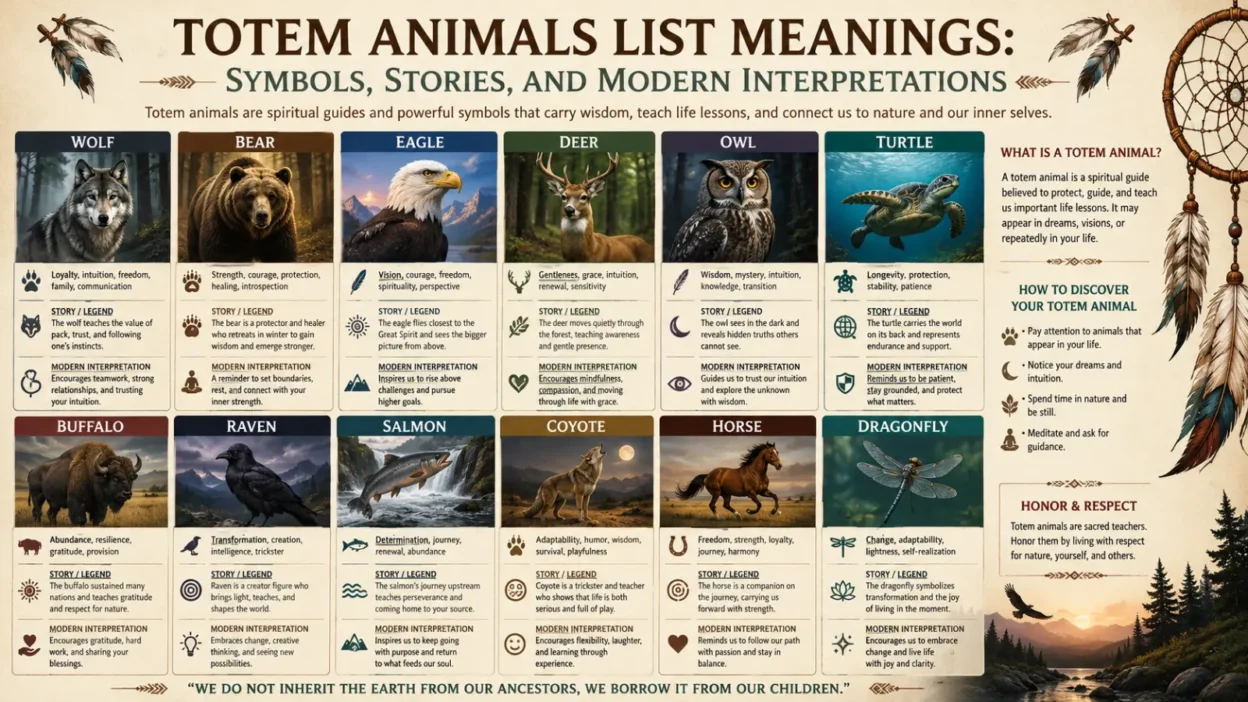
The wolf is often linked with instinct, loyalty, and social awareness. In symbolic interpretation, wolves represent both independence and strong group connection.
Common associations include:
- Strong family or group loyalty
- Heightened instinct and awareness
- Leadership within a group
- Independence balanced with cooperation
In modern usage, “lone wolf” symbolism is also popular, representing independence or emotional self-reliance. At the same time, real wolves rely heavily on social structure, which makes their symbolism more metaphorical than literal.
Bear Totem Meaning and Symbolism
The bear is widely seen as a symbol of strength and grounding. It represents both physical power and emotional resilience in symbolic systems.
Common meanings include:
- Strength and endurance
- Protection of self and others
- Solitude and introspection
- Emotional grounding and stability
The idea of hibernation is often used symbolically to represent rest, healing, or personal reflection. In modern interpretation, the bear can also represent recovery after difficult life phases.
Eagle Totem Meaning and Symbolism
The eagle is commonly associated with vision, clarity, and higher perspective. Its ability to fly at high altitudes makes it a natural symbol of observation and distance.
Key symbolic meanings include:
- Broad perspective and clarity
- Freedom and independence
- Leadership and responsibility
- Spiritual or aspirational awareness in some interpretations
In the United States, the eagle also carries strong national symbolism, which adds layers of identity and authority to its meaning in modern culture.
Owl, Raven, and Fox Symbolism Compared
These three animals often appear in symbolic lists, but their meanings shift depending on cultural and modern interpretation.
The owl is usually linked with awareness and observation, especially in low-light or hidden contexts. The raven is often associated with transformation or mystery, while the fox represents cleverness and adaptability.
| Animal | Common Symbolism | Modern Interpretation | Cultural Tone |
|---|---|---|---|
| Owl | Wisdom, night awareness | Intuition, insight | Calm, mysterious |
| Raven | Transformation, mystery | Change, intelligence | Ambiguous |
| Fox | Cleverness, adaptability | Strategy, flexibility | Neutral-positive |
These meanings are flexible and should be understood as symbolic patterns rather than strict definitions.
Animal Totems in Dreams and Psychology
In psychological interpretation, animals in dreams are often viewed as symbolic reflections of thoughts or emotions. These interpretations are not scientific facts but symbolic frameworks used in analysis.
A bear in a dream may represent emotional strength or pressure, while an owl might suggest awareness or reflection. A fox may indicate problem-solving or adaptability.
These meanings depend heavily on personal context and should not be treated as universal rules.
Totem Animals in Tattoos, Art, and Identity
In modern U.S. culture, animal symbolism is widely used in tattoos, design, and personal identity. People often choose animals that reflect traits they value or want to express.
Common uses include:
- Tattoos representing strength, resilience, or independence
- Sports teams using animals as mascots
- Personal branding and social media identity
- Decorative art and fashion symbolism
These uses are modern reinterpretations rather than traditional cultural systems, but they remain popular because they are visually strong and emotionally relatable.
Misuse, Oversimplification, and Cultural Sensitivity
The concept of “spirit animals” is sometimes used casually in everyday language, but it can oversimplify complex cultural traditions. Indigenous systems involving animals are diverse and deeply rooted in specific cultural contexts.
Reducing these systems to simple personality labels can remove important cultural meaning. It can also blur the difference between lived traditions and modern symbolic reinterpretation.
A respectful approach focuses on understanding symbolism without flattening cultural diversity into a single universal meaning system.
How People Interpret Their “Totem Animal” Today
Today, many people choose or identify with animals based on personality reflection or emotional connection. This is usually a personal and flexible process.
Some people feel connected to one animal over time, while others relate to different animals in different life stages. The meaning can shift depending on experience, growth, or emotional state.
Because of this flexibility, totem animals function more like symbolic mirrors than fixed identities.
Why Animal Symbolism Still Matters in Modern Life
Animal symbolism remains popular because it helps people describe complex human emotions in simple visual terms. Animals provide an easy way to communicate traits like courage, intuition, or independence.
In modern culture, especially in the United States, these symbols appear in art, storytelling, branding, and personal identity. Even when meanings are interpretive rather than scientific, they still help people express identity and meaning.
This is why animal symbolism continues to evolve rather than disappear.
FAQs
1. What is a totem animal in simple terms?
A totem animal is a symbolic representation of traits associated with an animal. In modern use, it reflects personality or emotional meaning rather than strict tradition.
2. Are totem animals part of Native American traditions?
Some Indigenous cultures use animal-based systems, but meanings vary widely between nations. It is not a single universal belief system.
3. How do people find their totem animal?
Modern approaches often involve personal reflection, emotional connection, or personality traits. There is no single official method.
4. Is a spirit animal the same as a totem animal?
They are often used interchangeably today, but the modern “spirit animal” concept is more informal and culturally simplified.
5. What does a wolf or bear totem mean?
A wolf often symbolizes instinct and connection, while a bear represents strength and grounding. These are interpretive meanings, not fixed definitions.
6. Can someone have more than one totem animal?
Yes. Many modern interpretations allow multiple animals depending on personality traits or life changes.
Conclusion
Totem animals list meanings are best understood as symbolic interpretations rather than fixed truths. They help people connect animal imagery with human traits like strength, awareness, and adaptability.
While these meanings are influenced by cultural traditions, folklore, and modern psychology, they are not universal rules. Their value today comes from personal reflection and storytelling.
Totem animal symbolism continues to evolve as people use it to better understand themselves and the world around them.